

Key Takeaways
- Intelligent Web Gateways (SWGs) have become indispensable for defending against increasingly sophisticated cyber threats.
- When integrated with Zero Trust Network Access (ZTNA), SWGs significantly improve real-time authentication and secure network access.
- Machine learning is enhancing SWG threat detection, enabling organizations to block advanced attacks proactively.
- The flexibility of cloud-based SWGs aligns security with modern hybrid and remote workforces.
Table of Contents
- The Role of Smart Web Gateways in Modern Cybersecurity
- Integration with Zero Trust Network Access
- Leveraging Machine Learning for Enhanced Threat Detection
- Cloud-Based SWGs for Scalability and Flexibility
- Addressing the Challenges of Encrypted Traffic
- Enhancing User Experience While Maintaining Security
- Compliance and Regulatory Considerations
- Future Trends in Smart Web Gateway Technology
The Role of Smart Web Gateways in Modern Cybersecurity
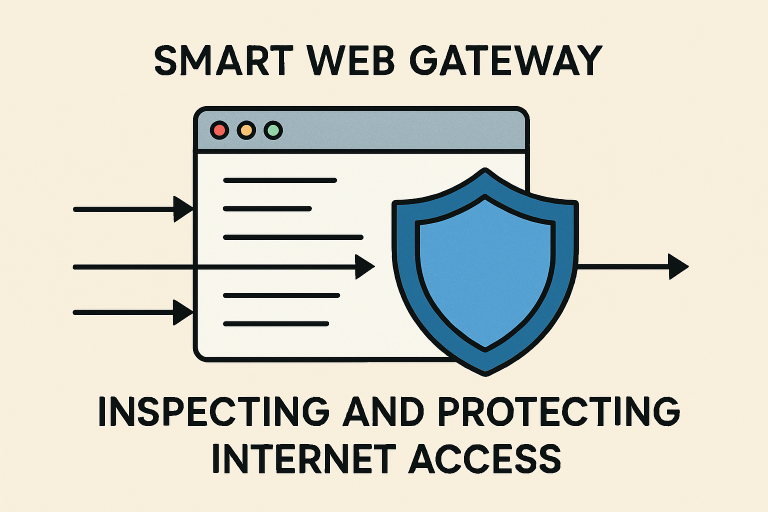
As organizations become more reliant on web applications and cloud technologies, the need for robust security at the network perimeter has never been greater. Intelligent Web Gateways (SWGs) serve as the first line of defense, scrutinizing every web request, filtering out malicious content, and safeguarding users against threats such as malware, ransomware, and phishing. By combining real-time traffic inspection with robust policy enforcement, an SWG (secure web gateway) ensures organizations stay one step ahead of cybercriminals.
Unlike traditional security tools, SWGs go beyond simple URL filtering. They analyze behavior, context, and intent, providing granular control over web access. Whether users are on-premises or remote, a Smart Web Gateway blocks dangerous downloads, scans web traffic for hidden exploits, and helps organizations comply with industry regulations. As cyberattacks become more targeted and persistent, SWGs are essential for reducing risk exposure.
Modern SWGs also facilitate safe access to cloud applications, empowering remote employees without compromising security. Their central role in a layered defense strategy ensures no connection or request goes unchecked, which is critical as employees now connect from a variety of managed and unmanaged devices across dispersed locations.
In an era where the threat landscape is constantly evolving, businesses rely on SWGs for both adaptive and proactive defense. By integrating with other security technologies, these gateways support comprehensive detection and response to incidents that could otherwise disrupt operations and cause reputational damage.
Integration with Zero Trust Network Access
The principle of Zero Trust—“never trust, always verify”—is driving significant changes in cybersecurity architecture. Integrating SWGs with Zero Trust Network Access (ZTNA) creates a seamless layer of security that continuously validates the identity of users and devices. This method eliminates implicit trust and ensures that only authorized entities gain access to resources, regardless of whether they’re working from the office, at home, or from another remote location.
Real-time authentication and adaptive policy enforcement are at the heart of this integration. SWGs paired with ZTNA dynamically assess risk, utilizing context such as device health, user behavior, and network location to make access decisions. This contextual approach dramatically reduces attack surfaces and mitigates risks, such as lateral movement of threats within the network—a tactic often exploited in modern cyberattacks. For an industry perspective, Security Info Watch provides insights into why Zero Trust is becoming increasingly critical in today’s IT environments.
Leveraging Machine Learning for Enhanced Threat Detection
The battle between cyber defenders and attackers is unceasing. As attackers utilize automation and AI for increasingly complex attacks, SWGs have adopted advanced machine learning algorithms to stay ahead. These algorithms enable the real-time identification of unknown threats by analyzing massive datasets for anomalies indicative of malicious activity.
Instead of relying solely on known signatures or reputation-based filters, machine learning-driven SWGs assess patterns, behaviors, and subtle changes in web traffic to spot new attack vectors. This enables the rapid containment of zero-day attacks and advanced persistent threats that conventional tools often miss, significantly improving the network perimeter’s resilience.
Cloud-Based SWGs for Scalability and Flexibility
The migration of businesses to remote and hybrid models demands agile security solutions. Cloud-based SWGs offer uniform protection for users, regardless of their location or device. Their ability to scale up or down on demand is a considerable advantage for organizations facing fluctuating bandwidth or growth. By delivering consistent enforcement of web security policies globally, these SWGs offer reliability and robust protection even for users connecting from unmanaged networks.
Host organizations also benefit from streamlined deployment and lower maintenance overheads, as cloud-based SWGs eliminate the need for heavy on-premises infrastructure. The cloud model also ensures that software updates and threat intelligence are rapidly propagated, keeping defenses sharp at all times. For further reading, InformationWeek discusses the expanding role of cloud security in remote work environments here.
Addressing the Challenges of Encrypted Traffic
Encryption is now ubiquitous, with over 90% of web traffic encrypted in recent years. While crucial for privacy, this surge in encrypted traffic poses new challenges for security tools, which often struggle to analyze malicious payloads concealed within SSL/TLS streams. Modern SWGs address this by performing SSL/TLS decryption and inspection at scale, thereby revealing threats that would otherwise remain undetected.
By inspecting both encrypted and unencrypted connections, SWGs stop malware infiltration, data exfiltration, and phishing attempts hidden inside secure tunnels. This capability allows organizations to enforce security without introducing user friction or significant performance degradation.
Enhancing User Experience While Maintaining Security
Security solutions are most effective when they operate invisibly—without obstructing workflow or internet speed. SWGs strike this balance by leveraging intelligent traffic management, caching, and prioritization techniques to optimize user experience. As a result, organizations can enforce stringent web usage policies and threat prevention safeguards without incurring noticeable latency for end-users.
Well-designed SWGs blend seamlessly with network infrastructure, making safe online access transparent and straightforward across the workforce. This approach ensures security teams can enforce company policies while keeping employees productive and satisfied.
Compliance and Regulatory Considerations
Increasing regulatory scrutiny means organizations must demonstrate rigorous adherence to data privacy and cybersecurity standards. SWGs simplify compliance by providing granular audit logs, usage analytics, and integrated reporting tools necessary for passing security assessments and regulatory audits. Whether an organization handles financial, healthcare, or personal data, SWGs play a crucial role in supporting compliance with regulations such as GDPR, HIPAA, and PCI DSS.
These gateways empower security leaders to adopt a proactive stance, enabling them to quickly identify suspicious activity, compromised accounts, or policy violations. Detailed documentation generated by SWGs also provides essential evidence for investigations, reducing time, cost, and risk exposure.
Future Trends in Smart Web Gateway Technology
The evolution of SWG technology continues at a rapid pace. The emerging integration with Secure Access Service Edge (SASE) marks a future where networking and security functions are unified within a single, cloud-based architecture. By combining SWGs, ZTNA, and other network protection mechanisms, SASE frameworks provide scalable, borderless security that is well-suited to modern enterprise needs.
Additionally, the continued infusion of artificial intelligence will drive even more precise and rapid threat detection. As attacks grow in scale and complexity, advanced analytics and automation will empower SWGs to recognize and neutralize new threats faster than ever before. By adapting alongside cybersecurity developments, Smart Web Gateways will remain pivotal in protecting organizations well into the future.

MOBI ROLLER is a tech enthusiast with a background in technology. He writes about the latest trends, tools, and innovations in the tech world, sharing insights based on both knowledge and experience.
You’ve absolutely nailed it — incredible writing!
I’m honestly speechless — this is THAT good!
Здесь доступны как классические игровые автоматы, так и современные видеослоты.
Pinco Casino
Играть на платформе удобно и безопасно.
https://888starz.net.co/
888Starz Colombia representa una plataforma de casino online y casa de apuestas que agrupa mas de 9.500 titulos, abarcando slots, mesas de crupier en directo asi como una extensa oferta deportiva que va desde la Liga BetPlay hasta la UEFA Champions League y las competiciones de esports.
https://ufc327odds.com/
The upcoming UFC 327 light heavyweight championship bout in Miami offers a classic pick’em for those placing wagers, as former titleholder Jiri Prochazka (-142) and on-a-roll knockout artist Carlos Ulberg (+120) gear up to square off for the open belt. The extremely close odds are a testament to how evenly matched these two finishers really are, making this fight where a investment on any side is simply a matter of which dynamic approach you think will emerge victorious.
https://bwin-bet.com.co/
Bwin Bet se presenta como un casino online y casa de pronosticos deportivos que opera en Colombia a partir de 2026 , operando bajo la autorizacion de Coljuegos , asegurando asi un ambiente legitimo y confiable para los jugadores .
Запой сопровождается комплексом нарушений: обезвоживание, колебания давления, тремор, тревожность, нарушение сна. При длительном течении состояние может усиливаться, и самостоятельный выход становится затруднённым. В таких случаях стационар рассматривается как безопасная среда, где можно контролировать динамику и оперативно реагировать на изменения.
Подробнее можно узнать тут – вывод из запоя на дому цена нижний новгород
This is exactly the type of information I needed today.
Your favorite deserve the best cancel care too. surf our shroom gummies survival craft specifically for dogs and Arabian tea postulate CBD for pet anxiousness or articulate substantiate. word with pet-safe element, our CBD positron emission tomography vegetable oil and CBD Canis familiaris address facilitate calm uneasy pets during ramp or locomotion. Give your brute organic CBD rilievo as they long time. prefer lab-tested CBD for frank, grease one’s palms preferred CBD on-line, and enjoy peace of psyche lettered your furry booster grow high-quality, safety CBD!