

Table of Contents
- Introduction to Antique Chess Sets
- Notable Antique Chess Sets
- Materials and Craftsmanship
- Caring for Antique Chess Sets
- Where to Find Antique Chess Sets
- Investing in Antique Chess Sets
- Final Thoughts
Steeped in centuries of tradition, chess is more than a celebrated pastime; it reflects a captivating blend of intellect, strategy, art, and culture. For collectors, the pursuit of antique chess sets becomes a tangible journey through history, capturing the creative expressions and distinctive craftsmanship of each era. Those interested in this rewarding pursuit often find their first inspiration by admiring a vintage chess set, which can reveal remarkable stories embedded in each intricately crafted piece.
Antique chess sets stand as silent witnesses to the evolution of societies and artistic sensibilities, cherished not just for their value but for the tales they tell. For both newcomers and seasoned collectors, studying these artifacts opens a world where every rook and knight is imbued with historical significance and artistic legacy.
The world of chess collecting connects modern enthusiasts with the architects of history. It offers an immersive way to uncover
Introduction to Antique Chess Sets
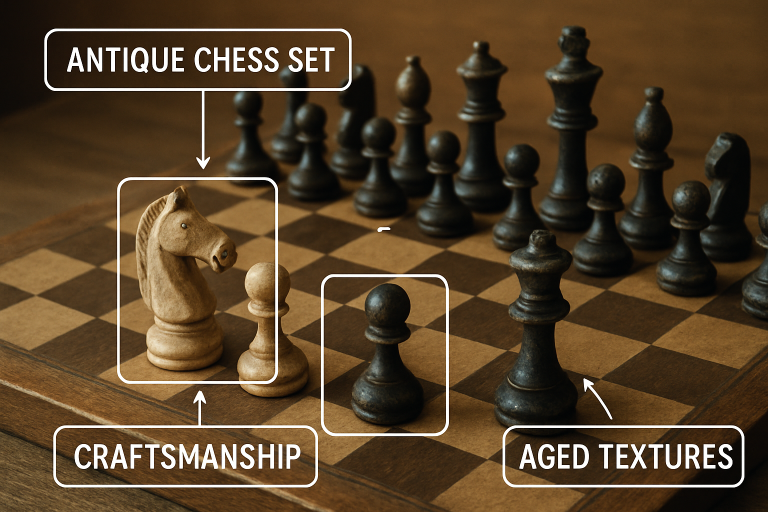
Antique chess sets are striking examples of how everyday objects can take on artistic and cultural significance. Crafted in diverse geographic regions, these sets showcase the values and aesthetics of their makers and users. Collectors are often drawn to their charm, eager to preserve and celebrate their historical meaning.
Examining antique chess sets reveals more than visual beauty; it invites exploration into the context that shaped their creation. In medieval times, ornate pieces reflected royalty and power, while simpler 18th-century designs mirrored rising industrial trends and greater accessibility to gameplay.
Notable Antique Chess Sets
Throughout history, certain chess sets have become legendary due to their origin, design, and stories:
- Lewis Chessmen: In 1831, the Isle of Lewis, Scotland, yielded one of the most famous chess discoveries. The Lewis Chessmen, likely crafted in Norway in the 12th century, feature expressive faces and detailed attire. Their artistry and mystery remain subjects of fascination, with most pieces now displayed in the British Museum and the National Museum of Scotland.
- Charlemagne Chessmen: These ivory pieces date back to the 11th century and are said to have been a regal gift from Caliph Harun al-Rashid to Charlemagne. With elaborate knight figures and delicate carvings, they remain on display at the Bibliothèque nationale de France.
- Selenus Chess Set: Named after a 17th-century chess author, Selenus sets, popular in Germanic regions before standardization, feature slim, ornamental forms produced by master woodturners.
Materials and Craftsmanship
The diversity in materials used for antique chess sets reflects both global reach and social context. Craftsmen relied on materials available to them, with each choice adding distinct tactile and visual characters:
- Ivory: Prized in medieval Europe and the Middle East for its workability and smooth finish, ivory pieces often carried intricate carvings and symbolic details.
- Wood: Ebony, boxwood, and other fine-grained woods enabled artisans to create both simple and elaborately turned pieces throughout the centuries.
- Metal: Bronze and silver chess sets embellished wealthy playrooms from the Renaissance onwards, sometimes inlaid with stones or precious metals for additional flair.
Techniques ranged from painstaking hand-carving to elegant turning on lathes, often echoing architectural motifs or heraldic imagery popular at the time.
Caring for Antique Chess Sets
Preserving an antique chess set takes both vigilance and restraint. Experts recommend using a barely damp cloth for wood, and a dry, lint-free cloth for ivory or metal. Direct sunlight, temperature extremes, and humidity should always be avoided to prevent cracking or fading.
- Store sets in padded containers with stable atmospheric conditions for optimal longevity.
- Handle pieces with clean, dry hands, and avoid frequent direct contact to minimize wear and surface oils.
- When in doubt, consult a conservator familiar with historical chess pieces before undertaking repairs or restoration.
Where to Find Antique Chess Sets
There are several accessible routes for collectors hoping to acquire a prized antique chess set:
- Antique Shops and Auctions: Bidding at reputable auction houses or visiting curated antique shops often yields remarkable finds, sometimes accompanied by certificates of authenticity.
- Online Marketplaces: Specialized sites and international marketplaces offer wide inventories but require diligence to ensure provenance and avoid replicas.
- Specialized Dealers: Experts focused on antique chess pieces can guide purchases, verify origins, and connect collectors to rare sets.
Investing in Antique Chess Sets
Aside from personal enjoyment, collecting antique chess sets holds genuine investment potential. Value is closely tied to age, rarity, originality, and well-documented provenance. For example, in 2019, a Lewis Chessman piece sold at auction for more than £700,000, proving that exceptional sets can dramatically appreciate in value. Prospective investors should research market trends and consult experts before significant purchases.
Final Thoughts
Collecting antique chess sets is an experience that transcends mere ownership, opening doors to culture, artistic exploration, and intellectual history. With careful study and proper care, enthusiasts become stewards of these unique artifacts, ensuring their stories endure for future generations. Each antique chess set bridges the past and present, embodying the enduring appeal and mystique of the game itself.

MOBI ROLLER is a tech enthusiast with a background in technology. He writes about the latest trends, tools, and innovations in the tech world, sharing insights based on both knowledge and experience.