
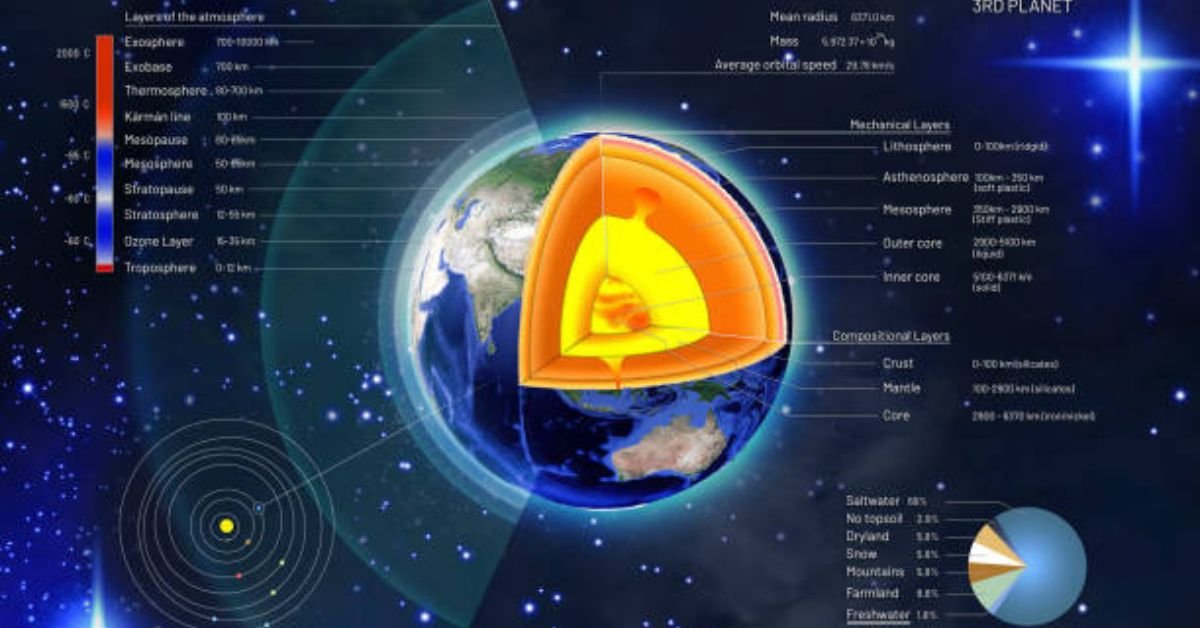
Edgenuity Earth and Space Science course. Rather than offering a random dump of multiple-choice answers, every section here is organized by unit and assessment type, so you can locate exactly what you need whether you’re checking a single warm-up answer or preparing for your end-of-semester test.
Every Edgenuity lesson follows a predictable sequence. Understanding this flow helps you know what type of question to expect at each stage:
Assessment Flow
Warm-Up
Prior knowledge activation
Instruction
Video lessons + interactive tools
Summary
Reinforce key ideas
Practice
Assignment questions
Mastery Test
Lesson-level assessment
Unit Test
Cumulative unit assessment
A Note on Academic Integrity
This guide is designed as a study and verification tool not a shortcut. Use it to check your reasoning after attempting questions yourself, and always read the explanations so you actually understand the material. Passing your class with genuine knowledge serves you far better in the long run.
Introduction to Earth and Space Science
This unit establishes the foundational vocabulary and systems thinking that underlies the entire course. Students are introduced to the scientific method, Earth’s major spheres, and the tools scientists use to study our planet.
Key Concepts & Vocabulary
Scientific Method
Geosphere
Hydrosphere
Atmosphere
Biosphere
Earth Systems
Remote Sensing
Topographic Maps
Unit1: Common Questions and Answers
Warm-Up & Instruction Questions
What are the four main spheres of Earth?
The geosphere, hydrosphere, atmosphere, and biosphere. Each sphere represents a distinct system: the geosphere encompasses all rock and solid land, the hydrosphere all water, the atmosphere the layers of gases surrounding Earth, and the biosphere all living organisms.
Tip: These spheres constantly interact. Rainfall (hydrosphere) erodes rock (geosphere) and nourishes plants (biosphere) a classic example of Earth Systems thinking.
Why is the scientific method important in Earth Science?
It provides a systematic, repeatable framework for asking questions, testing hypotheses, and drawing reliable conclusions. Without it, science cannot distinguish between fact and assumption.
Mastery Test Answers Unit 1
Which of Earth’s spheres includes all forms of water?
A) The Hydrosphere
The hydrosphere includes oceans, lakes, rivers, glaciers, groundwater, and atmospheric water vapor roughly 71% of Earth’s surface is covered by liquid water alone.
A scientist observes that plants near a river grow taller than plants further away. What is the next step in the scientific method?
B) Form a hypothesis e.g., “Plants near the river grow taller because they have greater access to water.”
Unit 2: Earth’s Structure and Plate Tectonics
One of the most concept-dense units in the course. Students explore Earth’s interior layers, the theory of continental drift, seafloor spreading, and the three major types of plate boundaries that shape our planet’s surface.
Key Concepts & Vocabulary
Crust
Mantle
Outer Core
Inner Core
Lithosphere
Asthenosphere
Continental Drift
Seafloor Spreading
Convection Currents
Alfred Wegener
Plate Boundaries
Subduction Zone
Practice Assignment Answers
Describe the process of seafloor spreading.
Seafloor spreading occurs at divergent plate boundaries (mid-ocean ridges), where magma from the mantle rises through cracks in the ocean floor. As the magma cools and solidifies, it forms new oceanic crust. The newly formed crust pushes the older crust outward, moving the tectonic plates apart. This process, first proposed by Harry Hess in the 1960s, provided key evidence supporting plate tectonic theory.
Evidence: Magnetic striping on either side of mid-ocean ridges mirrors each other perfectly a direct fingerprint of seafloor spreading.
Mastery Test Answers Plate Tectonics
At which type of plate boundary do two plates collide, with one sinking beneath the other?
C) Convergent boundary (subduction zone)
The denser oceanic plate subducts beneath the lighter continental plate. This process creates deep-sea trenches and volcanic mountain ranges such as the Andes.
What drives the movement of tectonic plates?
A) Convection currents in the mantle
Heat from Earth’s core causes rock in the mantle to rise slowly, spread laterally, cool, and sink forming giant convection loops that drag tectonic plates across the surface.
Alfred Wegener’s hypothesis was initially rejected. What was the main reason?
B) He could not explain the mechanism that moved the continents. Wegener lacked the evidence of seafloor spreading and convection to explain *how* continents moved, even though his evidence of *that* they moved was compelling.

Unit 3: Rocks, Minerals, and the Rock Cycle
This unit explores the building blocks of Earth’s geosphere. Students learn to identify minerals using physical properties and understand how igneous, sedimentary, and metamorphic rocks form and transform through the rock cycle.
Key Concepts & Vocabulary
Mineral
Luster
Streak
Hardness (Mohs Scale)
Cleavage & Fracture
Igneous Rock
Sedimentary Rock
Metamorphic Rock
Rock Cycle
Magma vs. Lava
“The rock cycle has no beginning and no end it is a continuous loop of creation, destruction, and transformation that has shaped Earth’s surface for billions of years.”
Lab Report Help: Mineral Identification
Lab Guide
How to Identify a Mineral
Use these five physical properties in sequence:
- Luster Does it look metallic or non-metallic (glassy, pearly, dull)?
- Color A starting point, but not definitive (many minerals vary in color).
- Streak Scratch the mineral on unglazed porcelain; the powder color is more reliable than surface color.
- Hardness Use the Mohs scale (1=talc, 10=diamond). Can a fingernail, coin, or glass scratch it?
- Cleavage/Fracture Does it break along flat planes (cleavage) or irregularly (fracture)?
Mastery Test Answers Rocks & Minerals
Which type of rock forms when magma cools and solidifies?
A) Igneous rock Intrusive igneous rocks (like granite) cool slowly underground forming large crystals; extrusive igneous rocks (like basalt) cool quickly at the surface forming small crystals.
What process turns sedimentary rock into metamorphic rock?
B) Heat and pressure deep within Earth’s crust change the mineral structure of existing rocks without melting them, creating metamorphic rocks like marble (from limestone) and quartzite (from sandstone).
Unit 4: Weathering, Erosion, and Deposition
Students examine how Earth’s surface is constantly broken down, transported, and rebuilt through mechanical and chemical weathering, erosion by wind and water, and deposition of sediments.
Key Concepts & Vocabulary
Mechanical Weathering
Chemical Weathering
Erosion
Deposition
Soil Horizons
Humus
Mass Movement
Glacial Erosion
What is the difference between weathering and erosion?
Weathering is the breakdown of rock in place; erosion is the transport of those broken pieces to a new location. Think of weathering as “destroying” and erosion as “moving.” Deposition is the final stage when transported material is dropped and settles.
Which agent of erosion creates U-shaped valleys?
C) Glaciers As glaciers move slowly downhill, they carve wide, flat-bottomed U-shaped valleys. Rivers, by contrast, create V-shaped valleys.
Unit 5: Geologic Time and Fossils
This unit gives students the perspective of deep time billions of years of Earth history. Topics include relative and absolute dating techniques, the geologic time scale, and how fossils help scientists reconstruct past life and environments.
Key Concepts & Vocabulary
Relative Dating
Absolute Dating
Radioactive Decay
Half-life
Index Fossils
Geologic Time Scale
Eons, Eras, Periods
Law of Superposition
According to the Law of Superposition, which rock layer is oldest?
A) The bottom layer In undisturbed sedimentary rock sequences, the oldest layers are at the bottom and the youngest are at the top, since each new layer is deposited on top of previous ones.
A fossil sample has gone through 3 half-lives of carbon-14 (half-life = 5,730 years). How old is it approximately?
C) ~17,190 years old (3 × 5,730 = 17,190). After each half-life, 50% of the remaining radioactive material decays, so after 3 half-lives, only 12.5% of the original carbon-14 remains.

Unit 6: Earth’s Fresh Water and Oceans
Covering the water cycle, groundwater, river systems, ocean currents, and marine resources, this unit emphasizes how water shapes landscapes and regulates Earth’s climate systems.
Key Concepts & Vocabulary
Water Cycle
Aquifer
Watershed
Runoff
Ocean Currents
Salinity
Tides
Thermohaline Circulation
What drives surface ocean currents?
B) Wind patterns (and the Coriolis effect) Prevailing winds drag surface water, while Earth’s rotation curves these currents via the Coriolis effect, creating large circular systems called gyres.
What is a watershed?
An area of land that drains all of its precipitation into a common body of water, such as a river, lake, or ocean. Every point on Earth is part of a watershed.
Unit 7: Atmosphere and Weather
Students explore the layers of the atmosphere, air pressure, humidity, cloud formation, weather fronts, and severe weather events. An understanding of atmospheric dynamics is central to this unit.
Key Concepts & Vocabulary
Troposphere
Stratosphere
Air Pressure
Humidity
Dew Point
Cold Front
Warm Front
Coriolis Effect
Tornado Formation
In which layer of the atmosphere does most weather occur?
A) The Troposphere The lowest layer of the atmosphere, extending from Earth’s surface to about 12 km altitude. It contains 75% of the atmosphere’s mass and nearly all of its water vapor.
What happens to air pressure as altitude increases?
C) Air pressure decreases The higher you go, the less air there is above you, so the weight pressing down decreases. This is why aircraft cabins must be pressurized.
Unit 8: Climate and Climate Change
Distinguishing weather from climate, this unit examines the factors that determine regional climates, the greenhouse effect, and the scientific evidence for human-driven climate change and its global impacts.
Key Concepts & Vocabulary
Climate vs. Weather
Greenhouse Effect
Greenhouse Gases
Global Warming
Carbon Cycle
Biomes
El Niño / La Niña
Ice Cores
What is the difference between weather and climate?
Weather is the short-term state of the atmosphere at a specific place and time; climate is the average weather patterns of a region over 30 or more years. A single cold day is weather; a region consistently experiencing cold winters is climate.
Which gas is the primary contributor to the enhanced greenhouse effect?
B) Carbon dioxide (CO₂) Released by burning fossil fuels, deforestation, and industrial processes, CO₂ traps outgoing infrared radiation in the atmosphere, causing global average temperatures to rise.
Unit 9: Astronomy The Solar System
This unit shifts focus to space, covering the formation of the solar system, characteristics of the planets, moons, asteroids, comets, and the Earth-Moon-Sun system that governs tides, seasons, and eclipses.
Key Concepts & Vocabulary
Nebular Theory
Terrestrial Planets
Gas Giants
Asteroid Belt
Comets & Meteors
Lunar Phases
Solar & Lunar Eclipse
Tidal Forces
Seasons
Kepler’s Laws
What causes Earth’s seasons?
B) Earth’s axial tilt (23.5°) as it orbits the Sun NOT its distance from the Sun. When the Northern Hemisphere is tilted toward the Sun, it receives more direct sunlight and experiences summer. Six months later, it tilts away, receiving less direct light, creating winter.
Common misconception: Many students think Earth is closer to the Sun in summer. Earth is actually slightly closer to the Sun in January (Northern Hemisphere winter).
During a lunar eclipse, what is the order of alignment?
A) Sun → Earth → Moon Earth’s shadow falls on the Moon. This can only happen during a full moon. A solar eclipse, by contrast, aligns Sun → Moon → Earth.
Which planets are classified as terrestrial?
Mercury, Venus, Earth, and Mars the four inner, rocky planets closest to the Sun. They have solid surfaces, high densities, and fewer moons compared to the outer gas giants.
Unit 10: Stars, Galaxies, and the Universe
Students zoom out to cosmic scales, studying stellar life cycles, the Hertzsprung-Russell (HR) diagram, types of galaxies, and the Big Bang theory and evidence for the expanding universe.
Key Concepts & Vocabulary
Big Bang Theory
Cosmic Microwave Background
HR Diagram
Main Sequence
Red Giant
White Dwarf
Neutron Star
Black Hole
Nebula
Galaxy Types
Light-Year
Electromagnetic Spectrum
On the HR diagram, where do most stars (including the Sun) spend most of their lives?
A) The Main Sequence A diagonal band running from hot, luminous blue stars (upper left) to cool, dim red stars (lower right). Stars remain on the main sequence as long as they are fusing hydrogen into helium in their cores.
What is the primary evidence for the Big Bang theory?
Three key pieces of evidence: (1) the expansion of the universe (Hubble’s Law galaxies are moving away from us), (2) the cosmic microwave background radiation (CMB), and (3) the abundance of light elements (hydrogen and helium) predicted by Big Bang nucleosynthesis.
What is the eventual fate of a star like our Sun?
C) It will expand into a Red Giant, shed its outer layers as a planetary nebula, and leave behind a dense White Dwarf. Only massive stars (8+ solar masses) end their lives as supernovae, then neutron stars or black holes.
Unit 11: Cumulative Exam and End-of-Semester Test Prep
The cumulative exam draws from every unit in the course. Below is a curated set of 10 high-priority practice questions that frequently appear in end-of-semester reviews, along with full explanations.
Cumulative Practice Questions
Which type of plate boundary is responsible for the formation of the Himalayan Mountains?
B) Convergent boundary (continent-continent collision) When two continental plates collide (neither subducts because both are buoyant), the crust crumples upward, forming massive mountain ranges.
A rock sample contains a radioactive isotope with a half-life of 10,000 years. If only 25% of the original isotope remains, how old is the sample?
C) 20,000 years After 1 half-life (10,000 yr), 50% remains. After 2 half-lives (20,000 yr), 25% remains. (50% → 25%)
Which layer of the atmosphere contains the ozone layer?
A) The Stratosphere The ozone layer (15–35 km altitude) absorbs most of the Sun’s harmful ultraviolet radiation, making life on Earth’s surface possible.
What evidence did Wegener use to support continental drift?
Matching coastlines of continents (especially South America and Africa), identical fossils found on separate continents, matching rock formations and mountain ranges across oceans, and evidence of ancient glaciation in tropical regions.
The Sun is classified as what type of star on the HR diagram?
B) A yellow dwarf (G-type main sequence star) It has a surface temperature of ~5,500°C and moderate luminosity compared to the range of stars in the universe.
Tips for Success on Your Edgenuity Exams
Exam Strategy
How to Maximize Your Score
- Review your mastery test results missed questions often reappear on unit tests.
- Use the platform’s glossary and interactive tools when stuck on vocabulary-heavy questions.
- For diagram-based questions, redraw the diagram by hand it forces active recall.
- Do the cumulative exam after revisiting weak units, not before.
- Pacing matters: don’t spend more than 90 seconds on a single multiple-choice question.
Frequently Asked Questions
Are Edgenuity Earth and Space Science answers available online?
Partial answer keys and study guides exist online, including resources like this one. However, Edgenuity regularly updates its question banks, so no single resource covers every possible question. The most reliable strategy is to understand the concepts, which allows you to answer any variation of a question.
How can I get answers for Edgenuity Earth and Space Science mastery tests?
Use this guide’s unit-by-unit breakdown to review the relevant concepts before your mastery test. Edgenuity mastery tests are largely concept-based, so a solid understanding of each unit’s key terms and processes will serve you better than memorizing specific answers.
Does Edgenuity track if you look up answers?
Edgenuity does not have a built-in mechanism to detect external browsing. However, the platform does track time-on-task, submission speed, and answer patterns. Unusually rapid completions or suspiciously perfect scores may be flagged for review by a teacher or administrator.
How do I find answers for Edgenuity lab reports?
Lab report answers depend heavily on the specific simulation or data set provided within your Edgenuity session. Focus on understanding the lab’s hypothesis and procedure. Sections like Unit 3’s mineral identification guide in this article can help you structure model answers for lab-style questions.
What topics are covered in the Edgenuity Earth and Space Science course?
The course spans geology (rock cycle, plate tectonics, weathering), Earth’s systems (hydrosphere, atmosphere, climate), and astronomy (solar system, stellar life cycles, cosmology). Our Table of Contents at the top of this page maps out all 11 major units.
How can I use answer guides to study effectively?
The most effective method: attempt the question first, then consult this guide. Read the detailed explanation alongside the correct answer not just the answer letter. This reinforces the underlying concept rather than just pattern-matching an answer choice.
CLICK HERE FOR MORE BLOG POSTS

“In a world of instant takes and AI-generated noise, John Authers writes like a human. His words carry weight—not just from knowledge, but from care. Readers don’t come to him for headlines; they come for meaning. He doesn’t just explain what happened—he helps you understand why it matters. That’s what sets him apart.”