

Key Takeaways:
- AI enhances data analysis, enabling traders to process vast datasets swiftly.
- Machine learning models improve predictive accuracy in market trend forecasting.
- AI-driven automation increases trading efficiency and reduces human error.
- Integration of AI with traditional methods leads to more robust trading strategies.
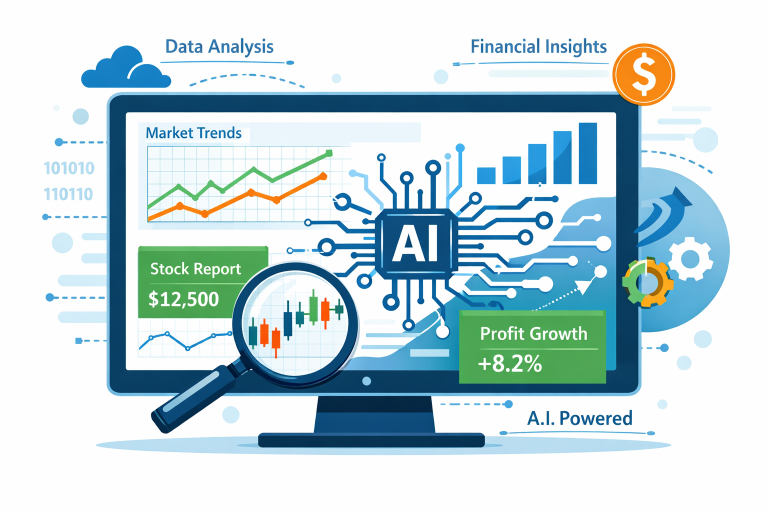
The rapid advancement of Artificial Intelligence (AI) is bringing unprecedented changes to financial markets and trading methodologies. Traders and investors are increasingly leveraging AI-powered insights to gain a competitive edge, swiftly analyze market movements, and execute smarter trades. The integration of AI with systems, such as an order management system trading platform, enhances strategic planning and enables market participants to navigate volatility with greater confidence.
Fueled by the need for more adaptive and dynamic decision-making, AI technologies are reshaping the architecture of trading strategies. These changes empower traders to move beyond conventional analysis and respond in real time to a constantly evolving marketplace, providing new levels of precision and efficiency.
Enhanced Data Analysis
A key advantage of AI in trading is its ability to process and analyze vast amounts of data in real time. Traditional methods, though valuable, often struggle to handle massive datasets and recognize intricate market patterns. In contrast, AI algorithms can swiftly sift through financial statements, economic indicators, historical prices, and even alternative data sources like social sentiment. This deep analysis uncovers subtle, otherwise hidden correlations, helping traders make more informed decisions and identify market opportunities faster than before.
Moreover, AI’s scalability means that it can continuously adapt to new types of data as they become available. For example, incorporating news articles, tweets, and satellite imagery expands the analytical reach of trading models, helping catch trends that might otherwise escape traditional data analysis. These advanced capabilities enable the detection of market signals and behavioral shifts that can drive superior trading returns. Over time, AI systems become increasingly capable of spotting anomalies or patterns that might otherwise go unnoticed, further differentiating AI-powered strategies from legacy approaches.
Improved Predictive Accuracy
Machine learning, a subset of AI, has brought substantial improvements to market trend forecasting. By continuously learning from vast sets of historical and real-time data, machine learning models refine their predictive capabilities over time. These models excel at detecting nonlinear relationships and adapting to changing market conditions. For example, combining technical indicators with machine learning can create models that make highly accurate stock predictions. The synergy of traditional expertise and advanced AI modeling delivers predictions that help traders stay ahead of market movements.
As these models self-improve, they become adept at incorporating unforeseen market drivers such as geopolitical developments, policy changes, or technological disruptions. This elasticity significantly elevates the potential of predictive analytics by continuously aligning forecasts with changing realities. Feedback loops inherent to machine learning help these models continually recalibrate, ensuring ongoing relevance and reliability, particularly in markets characterized by high complexity and unpredictability.
Automation and Efficiency
Automation driven by AI is rapidly transforming trade execution and operational efficiency. Systems powered by AI can quickly transform market analysis into executed trades, eliminating the lag between decision and action. This not only leads to faster, more accurate execution but also significantly reduces human error, which can be costly in volatile conditions. A prime example of this is high-frequency trading, where AI algorithms execute thousands of trades in milliseconds, exploiting even the smallest price movements to generate profits.
Furthermore, automated systems streamline post-trade processes, monitor compliance in real-time, and ensure continuous optimization of trading strategies. Back-office functions, such as reconciliation and reporting, are increasingly managed by AI, freeing teams to focus on higher-level strategy. The net effect is a trading environment characterized by agility, reduced transaction costs, and the ability to scale operations without corresponding increases in staff or manual oversight.
Integration with Traditional Methods
Rather than replacing classic trading techniques, AI augments them, creating hybrid strategies that are more resilient and adaptive. For instance, integrating technical indicators, such as moving averages or Bollinger Bands, with AI-driven models can create systems responsive to both quantitative data and market context. This hybrid approach improves both the robustness and flexibility of trading strategies. The interaction between AI’s real-time analysis and traditional experience often leads to better risk-adjusted returns, allowing traders to navigate periods of uncertainty more adeptly.
Such integration also facilitates a collaborative human-machine decision-making process, where human intuition and scenario analysis complement automated insights. This dynamic fosters a culture of innovation and supports iterative refinement, with lessons learned from live trading feeding into the continuous evolution of AI models, further strengthening trading outcomes.
Real-Time News Event Detection
Financial markets are highly sensitive to global news, economic releases, and shifts in sentiment. AI’s ability to ingest and analyze news feeds, official reports, and even social media discussions in real time allows traders to respond more quickly to impactful events. By evaluating sentiment and distinguishing between relevant and irrelevant headlines, AI systems provide actionable alerts, giving market participants an edge when unexpected news emerges. According to Bloomberg, many top trading firms have integrated AI for real-time event detection to minimize losses and capture new opportunities.
Risk Management
The dynamic nature of financial markets means risk is always present. AI-powered analytics improve risk management by constantly monitoring exposures, volatility, and correlations. Machine learning models adjust forecasts and update risk assessments as new data arrives. This helps traders and portfolio managers implement preemptive safeguards, make more informed allocation decisions, and better withstand sudden shifts in market sentiment. Enhanced risk detection not only protects capital but also enables more aggressive yet calculated strategies when market conditions are favorable.
Additionally, AI’s capacity to run complex scenario analyses and stress tests ensures portfolios are robust under a range of conditions. By simulating numerous “what if” scenarios, AI helps shape contingency plans and enforces discipline in risk protocols, minimizing rash decisions due to unforeseen market turbulence. These strengths make AI essential for both short-term speculative trading and long-term investment management.
Conclusion
The growing adoption of AI in trading strategy development underscores the technology’s transformative potential. By delivering fast, robust data analysis, boosting predictive capabilities, automating execution, and enhancing risk management, AI is ushering in a new era for financial markets. As AI tools evolve, they will play an even greater role in helping traders effectively navigate the complexities of modern trading. Staying updated on these innovations is crucial for anyone aiming to compete in today’s data-driven marketplace.
Looking ahead, the synergy between human expertise and AI-driven insights will likely define the most successful trading operations. The new frontier involves not just adopting technology but cultivating a mindset of continuous learning, adaptability, and ethical responsibility in its application. As regulatory frameworks adapt and computational power advances, those who can harness AI’s full potential will set the pace in an industry where speed, precision, and strategic innovation are more important than ever.
CLICK HERE FOR MORE BLOG

MOBI ROLLER is a tech enthusiast with a background in technology. He writes about the latest trends, tools, and innovations in the tech world, sharing insights based on both knowledge and experience.