

Table of Contents
- Overview: Criminal vs. Civil DUI Cases
- Criminal DUI Proceedings in Colorado
- Civil DUI Proceedings in Colorado
- Key Differences Between Criminal and Civil DUI Cases
- How DUI Cases Overlap and Impact Victims
- The Importance of Legal Representation
- Conclusion
Understanding the legal landscape surrounding DUI cases in Colorado is essential for anyone who drives in the state. Most people are aware that driving under the influence can result in criminal charges, but many do not realize that a single incident can also create civil liability. Whether you are facing charges yourself or seeking justice as a victim, knowing the distinction between criminal and civil DUI cases is critical. If you find yourself involved in a DUI incident, consulting a DUI accident lawyer in Colorado can provide guidance tailored to your situation. Both criminal and civil cases involve different courts and types of evidence and lead to very different outcomes. While criminal cases focus on punishing the offender for violating the law, civil cases are designed to compensate victims for their losses. Navigating the complexities of these parallel legal systems requires a clear understanding of how each operates in Colorado. Below, we break down key differences and what to expect in each type of DUI case.
Overview: Criminal vs. Civil DUI Cases
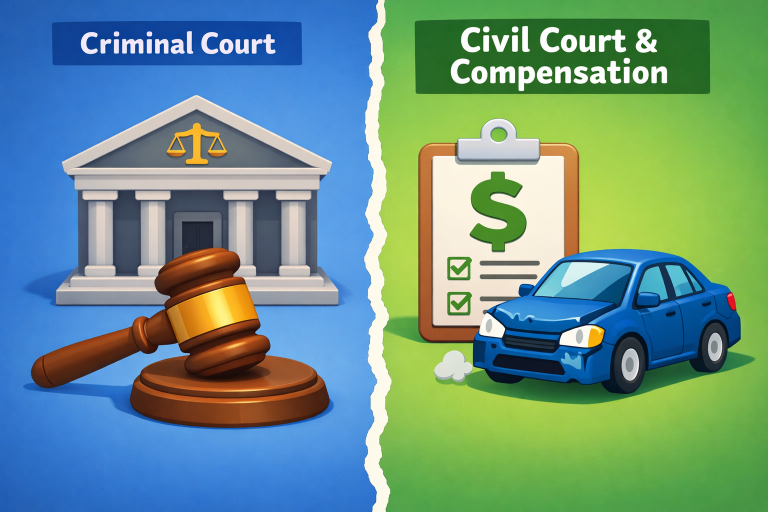
In Colorado, a single DUI incident can trigger both criminal and civil actions. The state brings criminal charges to punish unlawful driving behavior and deter future offenses. Civil cases, on the other hand, allow victims to pursue financial compensation for injuries or property damage resulting from the DUI accident. Each system operates independently. Success or failure in one case does not automatically determine the outcome of the other. You may face consequences in both arenas, which can sometimes confuse those unfamiliar with the process.
Criminal DUI Proceedings in Colorado
Criminal DUI cases in Colorado begin when law enforcement suspects that a driver is operating a vehicle while impaired by alcohol or drugs. The process usually includes a roadside stop, field sobriety tests, and chemical tests measuring blood alcohol content.
If charged, defendants must appear before a criminal court. The prosecution must prove guilt “beyond a reasonable doubt.” Depending on the circumstances, criminal penalties for DUI in Colorado may include:
- Jail or prison time
- Fines and court costs
- License suspension or revocation
- Mandatory alcohol education or treatment
- Community service
For serious injuries or repeat offenses, charges can escalate from misdemeanors to felonies, leading to harsher penalties. More on these proceedings is available from the Colorado State Patrol’s DUI resources.
Civil DUI Proceedings in Colorado
While criminal cases deal with breaking laws, civil DUI proceedings arise when victims of a DUI accident file lawsuits against the driver at fault. Civil lawsuits seek financial recovery for damages like medical expenses, lost wages, pain and suffering, and property repair or replacement.
Unlike criminal court, civil court only requires the victim (plaintiff) to demonstrate the defendant’s liability by a “preponderance of the evidence.” This means it is more likely than not that the defendant’s intoxicated driving caused the injury or loss. Civil penalties are financial, not punitive, and can include large damage awards, depending on the extent of harm caused.
If insurance does not cover all damages, the defendant may be ordered to pay out of pocket.
Key Differences Between Criminal and Civil DUI Cases
Initiating Party
The state of Colorado brings criminal DUI cases against the accused offender. In contrast, civil DUI actions are filed by private individuals (victims) seeking compensation.
Burdens of Proof
The standard of proof in criminal cases is much higher (“beyond a reasonable doubt”) than in civil cases (“preponderance of the evidence”). This means a person can be found not guilty in criminal court but still liable for damages in a civil lawsuit.
Penalties and Outcomes
Criminal cases can result in imprisonment, fines, probation, community service, and mandatory rehabilitation programs. Civil cases, however, impose monetary damages to compensate the injured party rather than punish the wrongdoer.
How DUI Cases Overlap and Impact Victims
When someone is accused of a DUI in Colorado, both criminal and civil proceedings can happen simultaneously or back-to-back. For victims, this means that even if a driver is acquitted of criminal charges, you may still pursue compensation through a civil lawsuit. The state’s outcome does not dictate your personal injury claim’s success.
Many families rely on the civil justice system to recover costs that insurance does not fully cover. This system provides victims with a vital path to financial security after an accident.
The Importance of Legal Representation
Both DUI defendants and victims benefit from strong legal counsel. An experienced criminal defense attorney can navigate the complexities of Colorado’s statutes and mitigate penalties. For victims, hiring an attorney skilled in civil personal injury litigation can greatly improve the chances of obtaining fair compensation. If you are involved in any aspect of a DUI case, professional legal representation is crucial for protecting your rights and interests.
Conclusion
The difference between criminal and civil DUI cases in Colorado lies in their purpose, procedure, and potential outcomes. Criminal courts exist to prosecute and deter unlawful behavior, while civil courts compensate those harmed by such actions. Individuals affected by DUI incidents should understand their rights in both arenas and seek skilled legal support to ensure the best possible outcome.

MOBI ROLLER is a tech enthusiast with a background in technology. He writes about the latest trends, tools, and innovations in the tech world, sharing insights based on both knowledge and experience.