

Table Of Contents
- Why Routine Carpet Care Matters
- Build A Simple Vacuuming Routine
- Handle Spills With Care
- Reduce Dirt At The Door
- Manage Pet Hair And Odors
- Protect High-Traffic Areas
- Avoid Common Cleaning Mistakes
- Know When Deep Cleaning Is Needed
- Create A Carpet Care Plan
- Conclusion
Carpeted rooms make a home feel comfortable, but they also collect the everyday evidence of life in Winston-Salem. Pollen, red clay, damp shoes after a summer storm, pet hair, snack crumbs, and tracked-in soil can settle into the fibers over time. Consistent home care, combined with professional carpet cleaning when needed, helps limit that buildup between more thorough cleaning appointments.
The goal is not to keep the carpet perfectly untouched. It is to build manageable habits that protect the fibers, make fresh spills less intimidating, and help rooms stay cleaner-looking through changing North Carolina seasons. A few minutes of attention each week is usually easier than trying to reverse months of neglected traffic patterns.
Why Routine Carpet Care Matters
Loose particles do not always stay on the surface. Walking across a room can press dry soil farther into the carpet pile, especially in hallways, living rooms, and paths between an entry door and the kitchen. Regular removal of visible debris and dry soil helps carpet maintain a more even appearance.
There is no single cleaning timetable that fits every household. For households requiring more intensive cleaning, professional residential carpet cleaning can supplement regular vacuuming and quick spill cleanup. Daily routines remain important because they minimize the amount of loose debris that extends deeper into the carpet pile.
Build A Simple Vacuuming Routine
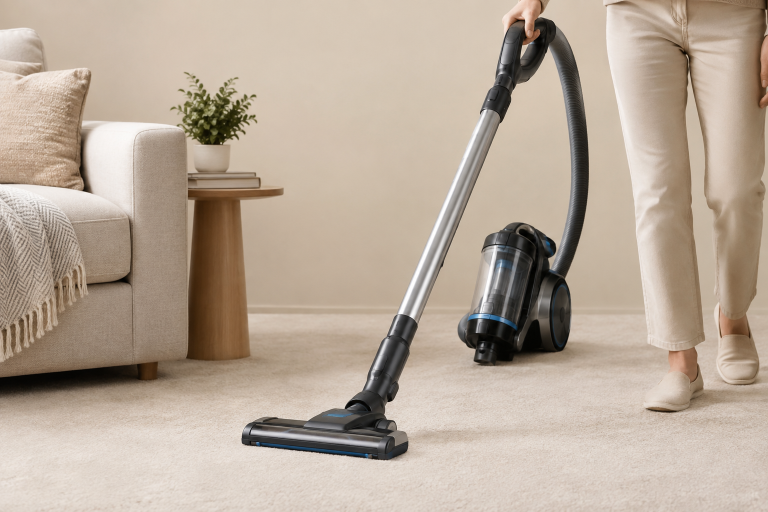
Vacuuming is the foundation of carpet maintenance. In busy rooms, vacuum several times a week when practical. Bedrooms and lightly used spaces may need attention about once a week, while homes with shedding pets, young children, or frequent visitors may benefit from more frequent passes.
Use Better Vacuuming Technique
- Empty the bag or canister before it becomes overly full.
- Move slowly enough for the vacuum to pick up dry soil, rather than rushing through a single quick pass.
- Use overlapping strokes, then make another pass from a different direction in busy areas.
- Use attachments along baseboards, on stairs, and around the edges of furniture.
- Clean or replace filters according to the vacuum manufacturer’s instructions.
Handle Spills With Care
Fast, calm action is useful after a spill. Start by lifting solid material with a spoon or dull edge. For liquids, blot with a clean white cloth or plain paper towels. Work from the outer edge toward the center so the spill is less likely to spread into a larger ring.
Avoid aggressive scrubbing, which can roughen fibers and push material deeper into the carpet. If a cleaning product is appropriate for the carpet type, test it in an inconspicuous spot first, use only a small amount, and follow the directions from the product and carpet maker. Blot again afterward and allow the area to dry fully.
Reduce Dirt At The Door
Prevention is especially useful during wet weather and pollen season. Put sturdy mats outside and inside frequently used entrances, then clean them often enough that they can continue to catch dirt. A shoe-removal area, a washable runner, and a towel for wet paws or shoes can help protect the route from the door to the rest of the house.
Moisture deserves extra attention. The EPA notes that controlling excess moisture and promptly drying wet materials are important parts of reducing conditions that can support mold growth. Controlling excess moisture is particularly important after a plumbing leak, a roof leak, or a large spill that may have reached the carpet padding.
Manage Pet Hair And Odors
Pets can add warmth to a home and extra work to its carpets. Vacuum pet resting areas more often than seldom-used rooms, brush pets regularly to reduce loose hair indoors, and wipe muddy paws before they cross carpeted spaces. For accidents, remove as much material as possible right away and use a product appropriate for the affected carpet.
Air fresheners may temporarily change how a room smells, but they do not remove the cause of a recurring odor. If an odor returns after repeated spot treatment, the source may be below the visible surface or in the padding, making further assessment sensible.
Protect High-Traffic Areas
Entryways, stairs, hallways, and family rooms often show wear first because they receive repeated foot traffic. Use runners suitable for the carpet, lift furniture rather than drag it, and consider moving lighter furnishings occasionally so the same routes do not bear all the pressure. Watch for darkened lanes, crushed pile, or soil that quickly becomes visible again after vacuuming.
Avoid Common Cleaning Mistakes
- Using more solution than the carpet can absorb, rinse, or be blotted from the fibers.
- Soaking a spot without a plan for drying it thoroughly.
- Mixing household cleaning products.
- Using colored towels that could transfer dye.
- Ignoring the pad after a large liquid spill.
- Walking repeatedly on a damp carpet before it has dried.
Know When Deep Cleaning Is Needed
Routine vacuuming removes loose material, but it cannot solve every carpet problem. Consider deeper attention when odors persist, stains reappear, traffic lanes remain dark, or carpet feels sticky after a previous treatment. Water damage, widespread discoloration, or suspected mold should be handled promptly rather than covered with rugs or fragrance.
Create A Carpet Care Plan
- Daily: Pick up visible debris and respond to fresh spills.
- Weekly: Vacuum all carpeted rooms and give extra attention to active pathways.
- Monthly: Clean entry mats, inspect vacuum filters, and check for recurring odors.
- Seasonally: Move light furniture, review traffic patterns, and look for moisture concerns.
- As needed: Address stubborn stains, heavy soil, lingering odors, or water-related problems.
Conclusion
Healthy carpet-care habits are built through steady, practical steps. Vacuuming carefully, blotting up spills quickly, keeping entry areas clean, managing pet messes, and avoiding excess moisture can help Winston-Salem households keep their carpets looking fresher year-round. When routine care no longer makes a noticeable difference, deeper cleaning or further evaluation may be the practical next step.

MOBI ROLLER is a tech enthusiast with a background in technology. He writes about the latest trends, tools, and innovations in the tech world, sharing insights based on both knowledge and experience.