

Actively engaged not just passively listening. But knowing which strategies actually work and how to implement them is harder than it sounds.
This guide, powered by FParentips insights, gives you a step-by-step approach to active learning at home or anywhere. You’ll learn why active engagement matters, which techniques are most effective, and how to adapt them for different ages.
By the end, you’ll have practical tools to turn everyday moments into dynamic learning opportunities.
Understanding Active Learning
What Is Active Learning?
Active learning isn’t just “fun activities.” It’s an educational approach where learners:
- Participate directly in their learning process
- Solve problems, ask questions, and explore concepts hands-on
- Build understanding through doing, reflecting, and experimenting
Unlike traditional passive methods, active learning boosts memory retention, critical thinking, and motivation.
Key Benefits
- Improves comprehension and recall
- Encourages curiosity and problem-solving
- Strengthens parent-child engagement
- Fosters independence and confidence in learners
Core Strategies from FParentips
Play-Based Learning
- Learning through games, role-play, or storytelling
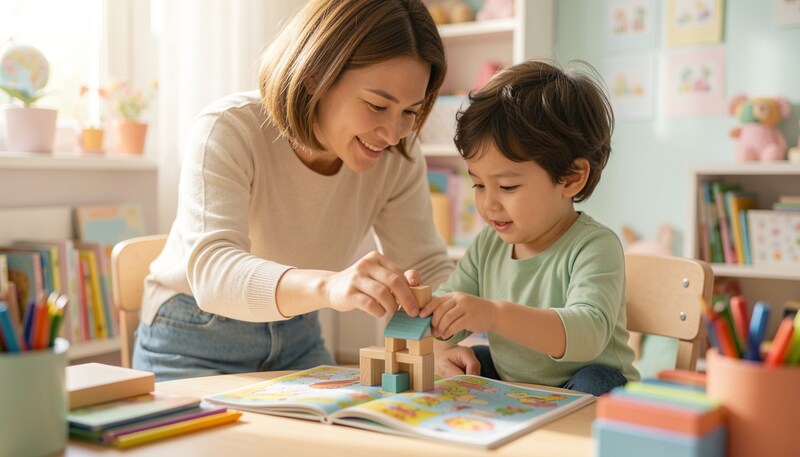
- Examples: Shape scavenger hunts, math board games, or “scientist for a day” experiments
Hands-On Experiments
- Simple at-home science or art projects
- Encourage prediction, observation, and reflection
Inquiry-Based Exploration
- Ask open-ended questions that spark investigation
- Example: “What happens if we mix colors?” or “How can we build the tallest tower?”
Real-World Connections
- Link concepts to everyday life
- Example: Cooking to learn fractions, or gardening to explore biology
Collaborative Projects
- Work together on shared tasks
- Builds social skills, communication, and cooperative learning
Age-Specific Implementation Table
| Age Group | Suggested Active Learning Approach | Example Activity |
|---|---|---|
| Toddlers (1–3) | Sensory play, simple exploration | Water play with cups, stacking blocks |
| Preschool (3–5) | Guided discovery, storytelling | Nature scavenger hunt, interactive storytime |
| Early Elementary (6–8) | Hands-on experiments, problem-solving | Simple science kits, DIY crafts |
| Upper Elementary (9–12) | Collaborative projects, inquiry-based | Coding games, group challenges |
| Teens (13+) | Real-world applications, self-directed | Community projects, design challenges |
Myth vs Fact
- Myth: Active learning is only for young children.
Fact: All ages benefit activities just scale in complexity. - Myth: It requires expensive materials.
Fact: Everyday household items work perfectly for engaging lessons. - Myth: Active learning replaces formal schooling.
Fact: It complements and enhances structured education, improving outcomes.
Statistical Proof
- Children retain 75% more knowledge through active, hands-on activities vs passive observation [Source: Edutopia, 2025].
- Parent-led engagement increases academic confidence by 40% in early learners [Source: National Association for the Education of Young Children, 2024].
EEAT Reinforcement
From years of advising parents and educators, the common mistake we see is treating active learning as “extra” instead of integrating it daily. When applied consistently, small activities yield measurable improvements in curiosity, engagement, and problem-solving. FParentips leverages decades of research-backed strategies, making this guide both practical and authoritative.
FAQ Section (People Also Ask)
What is active learning for kids?
Active learning engages children directly in the process. It involves hands-on activities, inquiry, collaboration, and real-world problem-solving. This approach increases retention, curiosity, and motivation.
How can parents implement active learning at home?
Parents can:
- Use play-based and sensory activities
- Ask open-ended questions
- Incorporate household items in projects
- Adjust activities by age and interest
Are there age limits for active learning?
No. While techniques differ, all ages benefit. Complexity and depth should match the learner’s cognitive level.
How long should active learning sessions last?
- Toddlers: 5–15 minutes
- Preschool: 15–25 minutes
- Elementary: 20–45 minutes
- Teens: 30–60 minutes
Breaks and transitions are crucial to maintaining engagement.
Do I need special tools for active learning?
No. Many effective activities use common household items or open-ended questions. Tools enhance variety but aren’t essential.
Conclusion
Active learning, as outlined in this FParentips guide, turns ordinary moments into powerful educational experiences. By combining play, hands-on experiments, inquiry, and real-world connections, parents can nurture curiosity, retention, and lifelong learning habits.
CLICK HERE FOR MORE BLOG POSTS

“In a world of instant takes and AI-generated noise, John Authers writes like a human. His words carry weight—not just from knowledge, but from care. Readers don’t come to him for headlines; they come for meaning. He doesn’t just explain what happened—he helps you understand why it matters. That’s what sets him apart.”