
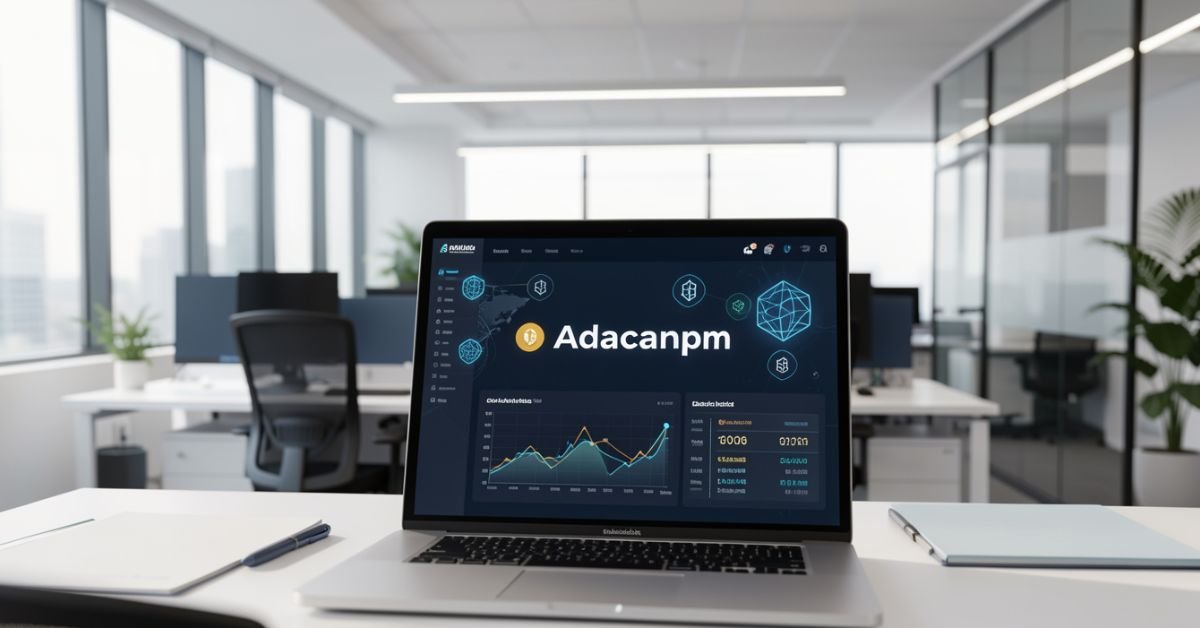
Adacanpm is a cloud-based project management framework and digital operating layer designed to connect every part of your workflow from planning and execution to reporting and optimization. Unlike traditional PM tools that focus narrowly on task lists and calendars, Adacanpm acts as a central nervous system for your organization, integrating data, people, and processes into a single, cohesive environment.
Think of it as the difference between a collection of tools and a fully unified system. Where other apps require you to jump between platforms for communication, file storage, analytics, and task tracking, Adacanpm centralizes everything through a modular, API-connected architecture.
The Core Principles: Efficiency, Flexibility, and User-Centered Design
Adacanpm is built on five foundational principles:
- Efficiency: Automate repetitive tasks and reduce manual overhead so teams can focus on high-value work.
- Flexibility: Customizable workflows and templates that adapt to your process, not the other way around.
- User-Centered Design: An intuitive interface designed for adoption across all technical skill levels, from project managers to field teams.
- Data Integrity: A single source of truth that eliminates conflicting spreadsheets and outdated reports.
- Scalability: Infrastructure that grows with your business, from a five-person startup to a 5,000-employee enterprise.
Who Is Adacanpm For? Target Audience & Use Cases
Adacanpm for Every Team: From Startups to Enterprises
One of Adacanpm’s defining strengths is its versatility. It is designed to serve a wide range of organizations:
Small Businesses & Startups: Lean teams benefit from the free plan and ready-made templates that let them hit the ground running without a dedicated IT team.
Remote & Hybrid Teams: Real-time collaboration tools, cloud accessibility, and in-app communication make Adacanpm particularly well-suited for distributed teams working across time zones.
Mid-Market & Enterprise Organizations: Advanced security, custom API integrations, role-based access control, and dedicated support make it a credible choice for large-scale deployments.
Project Managers & Operations Leaders: Those managing multiple concurrent projects will benefit from Gantt charts, resource allocation tools, and AI-driven predictive analytics.
Deep Dive: Key Features of Adacanpm
Adacanpm’s power lies in its integrated feature set. Rather than offering isolated tools, each feature is designed to work in concert with the others, creating a compound productivity effect that goes beyond what any single feature could deliver alone.
Unified Task & Project Management
Adacanpm goes well beyond basic to-do lists. You can build complex project structures with task dependencies, milestones, subtasks, and priority flags. The built-in Gantt chart view provides a visual timeline of your entire project, making it easy to identify scheduling conflicts and keep stakeholders aligned. Resource allocation tools let managers assign work based on team capacity, preventing burnout and bottlenecks.
Intelligent Workflow Automation
Manual, repetitive work is one of the biggest drains on team productivity. Adacanpm’s automation engine lets you define triggers and rules for example, automatically assigning a task to a reviewer when it is marked complete, or sending a Slack notification when a deadline is approaching. These automation sequences can be built without any coding knowledge, making them accessible to operations teams and project managers alike.
Seamless Data Integration & Centralized Dashboard
Adacanpm connects with the tools your team already uses, including CRM systems, ERP platforms, communication tools like Slack, and productivity suites like Google Workspace and Microsoft 365. All incoming data flows into a centralized dashboard, giving everyone a unified view of project status, team performance, and business metrics. This eliminates the data silos that plague organizations relying on disconnected tools.
Real-Time Collaboration & Communication
Collaboration features are built directly into the platform. Team members can communicate via in-app messaging, use @mentions to loop in colleagues, share files and documents within project workspaces, and collaborate on tasks simultaneously. There is no need to switch between a PM tool and a messaging app everything is in one place.
Advanced Reporting & AI-Driven Insights
Adacanpm’s AI engine continuously analyzes project data to surface actionable insights. It can predict potential bottlenecks before they occur, suggest workflow optimizations based on historical performance, and generate automated reports on key metrics like task completion rates, resource utilization, and project velocity. This transforms raw project data into strategic intelligence that helps teams improve over time.
Customizable Workflows & Templates
Every team works differently. Adacanpm provides a library of pre-built workflow templates for common use cases from software development sprints to marketing campaign management while also allowing teams to build entirely custom workflows from scratch. This combination of speed and flexibility significantly reduces onboarding time.
Under the Hood: Technical Architecture & Security
Scalable Cloud Infrastructure
Adacanpm is built on a modular microservices architecture deployed on cloud infrastructure. This design means that individual components can be updated, scaled, or repaired independently resulting in high availability (targeting 99.9% uptime) and faster feature releases. Whether you have 10 users or 10,000, the platform scales elastically to meet demand without performance degradation.
Enterprise-Grade Security & Data Encryption
Security is a first-class concern in Adacanpm’s design. All data is encrypted both in transit (using TLS 1.2+) and at rest (AES-256 encryption). The platform supports multi-factor authentication, single sign-on (SSO) for enterprise users, and granular role-based access control ensuring that users only see what they are supposed to see. Audit logs provide a complete history of all actions taken within the platform, which is critical for compliance-driven industries.
Open API & Seamless Integrations
Adacanpm’s open API allows development teams to build custom integrations with any internal system. This is particularly valuable for enterprises with bespoke tech stacks that cannot rely on pre-built connectors. The API is REST-based and well-documented, with support for webhooks, OAuth 2.0 authentication, and rate-limited endpoints for stability.
Adacanpm Pricing 2026: Finding the Right Plan for Your Budget
Adacanpm offers a tiered pricing structure designed to serve teams at every stage of growth. Here is a breakdown of the available plans:
| Feature | Free | Pro ($12/user/mo) | Enterprise (Custom) |
| Projects | Up to 3 | Unlimited | Unlimited |
| Users | Up to 5 | Unlimited | Unlimited |
| Storage | 5 GB | 50 GB | Unlimited |
| Workflow Automation | Basic | Advanced | Full + Custom |
| AI Insights & Reporting | No | Yes | Yes + Predictive |
| Integrations | 3 apps | Unlimited | Unlimited + Custom API |
| Security & Access Control | Standard | Role-based | SSO + Audit Logs + MFA |
| Support | Community | Email (48hr) | Dedicated CSM + SLA |
| Custom SLAs | No | No | Yes |
Is Adacanpm Worth It? Calculating the ROI
The value of Adacanpm extends beyond its sticker price. Consider a mid-sized team of 20 people currently paying for separate subscriptions to a project management tool ($10/user), a messaging app ($8/user), and a reporting tool ($5/user). That is $23 per user per month, or $460/month total. The Adacanpm Pro plan at $12/user consolidates all three into one platform saving $220/month while also eliminating the productivity tax of switching between tools.
Beyond direct cost savings, the efficiency gains are significant. Teams that automate even three to four recurring manual tasks per week can reclaim several hours per team member per month. At an average fully-loaded hourly rate of $50, that translates to hundreds or thousands of dollars in recovered productivity per month a compelling return on investment for businesses of any size.

Adacanpm vs The Competition: A Head-to-Head Comparison
How does Adacanpm compare to the most popular project management tools on the market? The table below highlights the key differences:
| Feature | Adacanpm | Asana | Trello | Monday.com |
| AI Insights | Yes (Predictive) | Limited | No | Basic |
| Workflow Automation | Advanced | Advanced | Basic (Power-Ups) | Advanced |
| Free Plan | Yes (5 users) | Yes (15 users) | Yes (Unlimited) | No |
| Enterprise Security (SSO/Audit) | Yes | Yes | No | Yes |
| Open API | Yes (Full) | Yes | Limited | Yes |
| Built-in Reporting | Advanced + AI | Good | Limited | Good |
| Resource Allocation | Yes | Yes | No | Yes |
| Starting Price (Pro) | $12/user/mo | $13.49/user/mo | $5/user/mo | $9/user/mo |
NOTE: Adacanpm is particularly competitive for teams that prioritize AI-driven insights and robust security at a mid-market price point. It offers more intelligence than Trello and more security than Monday.com’s base plans, while matching Asana on automation at a slightly lower starting price.
The Good and The Not-So-Good: An Unbiased Look at Adacanpm
Key Advantages
- Truly unified platform: consolidates PM, communication, reporting, and automation into one tool.
- AI-driven insights set it apart from most competitors, providing genuine predictive value.
- Strong security posture makes it viable for compliance-sensitive industries.
- Flexible enough for both startups and enterprises thanks to its modular architecture.
- Generous free plan allows small teams to experience the core platform before committing.
- Open API enables deep customization for technically sophisticated teams.
- Intuitive, user-centered design reduces the learning curve compared to more complex enterprise tools.
Limitations & Challenges to Consider
In the interest of a fully honest review, here are the areas where Adacanpm has room to grow:
- Learning curve for advanced features: While the basics are intuitive, mastering automation rules and AI configuration takes time and proper onboarding.
- Internet dependency: As a cloud-based platform, Adacanpm requires a stable internet connection. There is currently no robust offline mode for users working in low-connectivity environments.
- Potential resistance to change: Migrating from entrenched legacy tools to any new platform involves change management. Teams should budget time for training and transition.
- Mobile experience: While cross-platform access is supported, the mobile app experience may feel limited compared to the full desktop interface for complex project views.
- Enterprise pricing opacity: The Enterprise plan requires a custom quote, which makes it harder to budget for without a sales conversation.
How to Set Up Adacanpm in 5 Easy Steps
Getting started with Adacanpm is straightforward. Here is a step-by-step guide to going from sign-up to your first active project:
Step 1: Sign Up and Create Your Account
Visit the Adacanpm website and sign up using your work email. You can start on the Free plan immediately no credit card required. Set up your organization profile, including your company name, time zone, and industry. This information helps the AI engine provide more relevant workflow suggestions from the start.
Pro Tip: Use your company email domain during signup to enable easy team member invitations later.
Step 2: Set Up Your First Project and Invite Your Team
Click ‘Create New Project’ and select a project type. You can name your project, set a start and end date, assign a project owner, and define the project’s visibility (team-only or organization-wide). Once created, invite team members by email or generate a shareable invite link.
Pro Tip: Start with a small pilot project rather than migrating your largest initiative. This gives your team time to build confidence with the platform.
Step 3: Customize Your Workflows with Templates
Browse Adacanpm’s template library and select one that matches your project type options include Agile Sprint, Marketing Campaign, Product Launch, and Client Onboarding, among others. Apply the template to automatically populate your project with standard tasks, milestones, and workflow stages. Customize these to fit your specific needs.
Pro Tip: Templates are starting points, not constraints. Modify them freely any changes you make can be saved as a new custom template for future projects.
Step 4: Integrate Your Essential Tools
Navigate to the Integrations section and connect Adacanpm to the tools your team already uses. Priority integrations to set up first include Slack or Microsoft Teams (for notification routing), Google Drive or SharePoint (for file attachments), and your CRM if you manage client-facing projects. Each integration takes two to five minutes to configure.
Pro Tip: Set up Slack notifications for task assignments and deadline reminders first. This surfaces Adacanpm activity in a channel your team already monitors daily, accelerating adoption.
Step 5: Explore the Dashboard and Run Your First Report
Once your project is live and your team is active, open the main dashboard to see your project health at a glance. Navigate to the Reporting section to run your first summary report. Review task completion rates, identify any overdue items, and check team workload distribution. Schedule this report to run automatically each Monday morning to build a consistent review habit.
Pro Tip: Share the dashboard link with stakeholders who do not need to edit tasks but want visibility into progress. Adacanpm allows view-only access so your clients or executives can stay informed without cluttering the workspace.

Top 12 Frequently Asked Questions About Adacanpm
1. Is Adacanpm beginner-friendly?
Yes. Adacanpm is designed with user-centered design principles, meaning the core features task creation, project setup, and collaboration are intuitive for non-technical users. The template library also dramatically reduces the setup time for new teams. Advanced features like automation and AI configuration have a steeper learning curve, but Adacanpm provides onboarding guides and in-app tutorials to help.
2. Can small businesses benefit from Adacanpm?
Absolutely. The Free plan supports up to five users and three projects, which is sufficient for most small teams getting started. As the business grows, upgrading to Pro unlocks unlimited projects, AI reporting, and advanced integrations. Many small businesses find that Adacanpm pays for itself by replacing two or three separate tool subscriptions.
3. Does Adacanpm protect sensitive data?
Yes. Adacanpm uses AES-256 encryption at rest and TLS 1.2+ encryption in transit. Enterprise plans include multi-factor authentication, SSO, granular role-based access control, and complete audit logs. For organizations in regulated industries, these controls provide a strong compliance foundation.
4. Can Adacanpm replace multiple software tools?
For many teams, yes. Adacanpm is designed to consolidate project management, workflow automation, team communication, file sharing, and reporting into a single platform. Whether it fully replaces every tool depends on your specific needs highly specialized tools (like dedicated design software or advanced CRMs) will still be needed, but Adacanpm can eliminate the need for separate task managers, reporting dashboards, and basic communication apps.
5. Does Adacanpm provide AI analytics?
Yes. AI-driven insights are available on the Pro and Enterprise plans. The AI engine analyzes project data to identify at-risk tasks, predict delivery timelines, flag resource overallocation, and suggest optimizations based on historical performance patterns. Over time, the AI becomes more accurate as it learns your team’s specific workflows.
6. Can Adacanpm integrate with Slack and Google Workspace?
Yes. Adacanpm integrates natively with Slack, Google Workspace (Drive, Calendar, Gmail), Microsoft 365, and dozens of other popular tools. Integrations are configured through the platform’s Integrations hub and typically take only a few minutes to set up. For tools without a native connector, the open API allows custom integrations to be built.
7. What are the main differences between Adacanpm and Asana?
Both tools offer strong project management capabilities, but Adacanpm differentiates itself with more advanced built-in AI insights, stronger out-of-the-box security controls (especially on lower-tier plans), and a slightly lower starting price for Pro. Asana has a larger ecosystem of third-party integrations and a larger free plan (15 users vs. Adacanpm’s 5). The right choice depends on whether AI intelligence or team size is your primary concern.
8. Does Adacanpm have a free trial or free plan?
Adacanpm offers a permanent Free plan, not just a time-limited free trial. The Free plan includes core project management features for up to five users and three projects, with no expiration date. For teams wanting to explore Pro features, a 14-day trial of the Pro plan is also available without requiring a credit card.
9. What is included in the Enterprise plan?
The Enterprise plan includes everything in the Pro plan plus unlimited storage, custom API access, SSO and advanced authentication, dedicated customer success management, priority support with defined SLAs, custom security policies, and the ability to negotiate contract terms. Pricing is customized based on team size and required configurations.
10. Is Adacanpm available on mobile?
Yes. Adacanpm is accessible on iOS and Android via a dedicated mobile app, as well as through any modern web browser. The mobile app supports task management, notifications, and basic project views. For complex project editing, dashboard customization, or automation configuration, the desktop experience is recommended.
11. Does Adacanpm work offline?
Currently, Adacanpm requires an internet connection to function. It does not support a full offline mode. Users in areas with unreliable connectivity may find this limiting. The platform does cache some data for brief periods of disconnection, but any changes made offline will not sync until connectivity is restored.
12. How does Adacanpm handle resource allocation?
Adacanpm includes a dedicated resource allocation view that shows each team member’s current workload across all active projects. Managers can see who is over-allocated, who has capacity, and how assignments are distributed. This view updates in real time as tasks are assigned or completed, making it significantly easier to balance team workloads and avoid burnout during peak project periods.
Conclusion
Adacanpm is a compelling, well-rounded platform that earns its position as a serious contender in the project management software market. Its defining strengths AI-driven insights, robust security, a genuinely unified feature set, and a scalable architecture make it particularly well-suited for teams that have outgrown basic PM tools but are not ready to invest in complex, expensive enterprise solutions.
It is an especially strong choice for remote and hybrid teams, organizations looking to consolidate their tool stack, and teams where data-driven decision-making is a priority. Small businesses will appreciate the generous free plan, while enterprises will find the security and customization capabilities credible enough for serious adoption.
CLICK HERE FOR MORE BLOG POSTS

“In a world of instant takes and AI-generated noise, John Authers writes like a human. His words carry weight—not just from knowledge, but from care. Readers don’t come to him for headlines; they come for meaning. He doesn’t just explain what happened—he helps you understand why it matters. That’s what sets him apart.”