
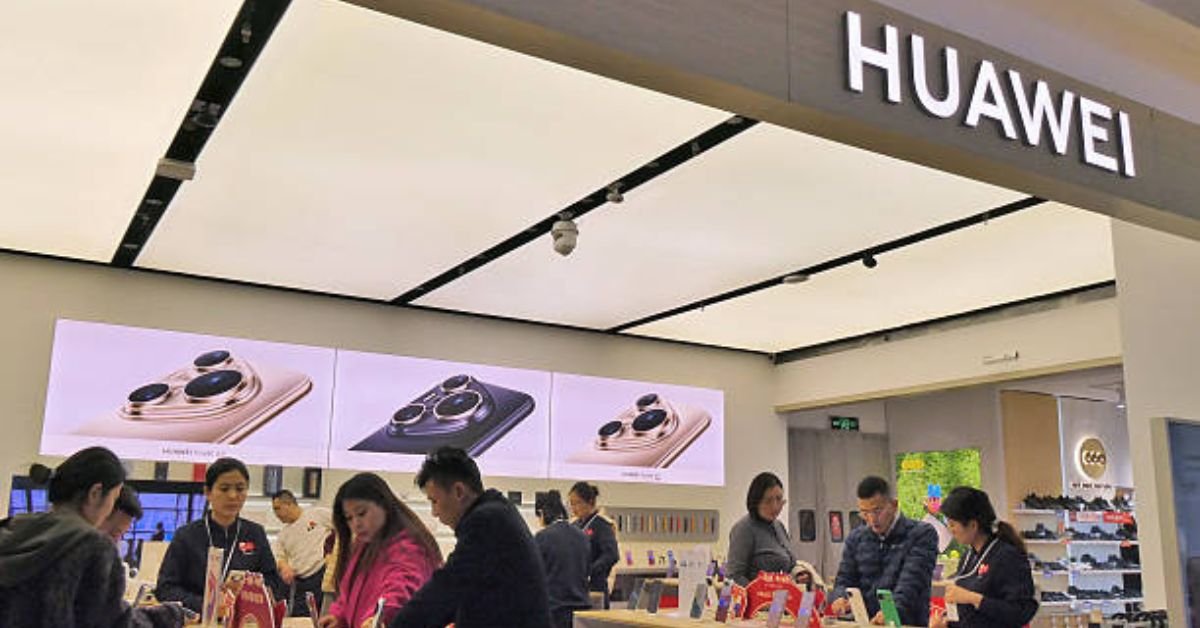
Huawei Technologies is 100% privately held. The company is owned collectively by its employees through an internal Employee Stock Ownership Plan (ESOP), with founder Ren Zhengfei retaining a small personal stake of roughly 1%. This structure means there is no Huawei stock ticker, no Huawei stock symbol, and no Huawei IPO on the horizon at least not publicly announced.
This is a deliberate choice. Ren Zhengfei and Huawei’s leadership have repeatedly stated that remaining private allows the company to make long-term strategic investments particularly in research and development, where Huawei consistently spends over 20% of annual revenue without being accountable to public shareholders seeking short-term returns.
Geopolitical factors compound this. Huawei has been the subject of U.S. trade sanctions since 2019, and faces export restrictions on advanced chips and software. Listing on a U.S. exchange under such scrutiny would be extremely difficult, and listing on the Hong Kong Exchange (HKEX) or other Asian markets has never been formally pursued.
The practical takeaway: if you search for “huawei stock price,” “huawei stock symbol,” or “is huawei listed,” the answer to all three is the same there is no publicly listed Huawei stock.
How to Invest in Huawei Stock: The Pre-IPO Pathway
Even though Huawei is private, its shares do change hands just not on a public exchange. Employees who receive Huawei shares through the ESOP sometimes choose to sell them on private secondary markets, and specialized platforms exist to connect those sellers with accredited investors. This is known as pre-IPO investing, and it is the primary pathway for anyone who wants direct exposure to Huawei.
Pre-IPO shares are equity stakes in a private company that are sold before (or instead of) a public listing. In Huawei’s case, this typically means an existing employee or early insider sells their shares on a secondary marketplace. The buyer gains direct ownership of Huawei equity not a derivative, not a fund tracking similar companies, but actual shares in the company itself.
These transactions are facilitated by platforms such as EquityZen, Forge Global, and others. These platforms act as intermediaries, verifying that buyers meet the legal requirements to invest, presenting deal documents, and managing the transfer of shares through a fund structure.
The process for buying pre-IPO shares in Huawei through a platform like EquityZen follows a clear sequence. Here is what you can expect.
1. Verify Your Accredited Investor Status
In the United States, only accredited investors are permitted to participate in private placements. To qualify, you must meet at least one of the following conditions: have an annual income exceeding $200,000 (or $300,000 jointly with a spouse) for the past two years with a reasonable expectation of the same income in the current year, or have a net worth exceeding $1 million, excluding your primary residence. Certain licensed financial professionals also qualify. The platform will ask you to provide documentation to verify your status before you can access deal information.
2. Browse Available Deals and Access Financial Information
Once verified, you gain access to deal offering documents for available Huawei share transactions. This includes estimated valuations, information about the company’s cap table, revenue context, and a breakdown of specific risk factors. This information is gated to protect the privacy of both the seller and the company, but it gives you enough to make an informed investment decision.
3. Invest Through a Dedicated Fund Structure
Most platforms do not transfer shares directly to buyers. Instead, they use a special-purpose vehicle (SPV) or fund that holds the shares on your behalf. You invest in the fund, which in turn holds the underlying Huawei shares. This structure simplifies the transfer process and satisfies certain requirements in Huawei’s own shareholder agreements. Investment minimums typically start around $10,000 to $20,000, though this varies by platform and deal.
4. Plan Your Exit: IPO, Acquisition, or Secondary Sale
Your investment is illiquid until a liquidity event occurs. The most common exit pathways are a public IPO (in which shares convert to publicly tradeable stock), an acquisition by another company, or a secondary sale of your position to another private buyer on the same platform. Because Huawei has shown no signs of pursuing a public listing, buyers should plan for a long holding period and have no expectation of a near-term exit. Some platforms offer an “express deal” mechanism that expedites secondary sales, but availability is not guaranteed.

What Is Huawei Technologies Worth? Valuation and Financial Context
Valuing a private company like Huawei is inherently imprecise. Unlike public companies, there is no continuous market price. Instead, private valuations are estimated based on secondary transaction prices (what investors actually pay for shares on platforms like EquityZen), revenue multiples relative to comparable public companies, and any disclosed funding rounds or tender offers.
Huawei reported annual revenues of approximately $99 billion in 2023, representing a strong rebound after years of pressure from U.S. trade restrictions. The company’s consumer devices division has partially recovered following the launch of its Mate 60 Pro smartphone, which signaled advances in domestic semiconductor capability. Its cloud computing, enterprise software, and 5G infrastructure segments continue to grow, particularly in markets across Asia, Africa, and the Middle East.
Analysts who track private market transactions have placed Huawei’s implied valuation in the range of several hundred billion dollars, though this figure fluctuates based on geopolitical developments and the secondary market’s willingness to price in risk. When you sign up on a platform like EquityZen, you will gain access to the most current valuation estimates available from active deal flow.
Key Risks of Investing in Private Huawei Stock
Pre-IPO investing in any company carries meaningful risk. Huawei’s unique situation adds additional layers that every prospective investor must understand clearly before committing capital.
Lack of Public Market Liquidity
This is the most significant risk for most investors. Once you purchase private Huawei shares, you cannot sell them on a public exchange. You are entirely dependent on a liquidity event — an IPO, an acquisition, or a willing secondary buyer — to recover your investment. Given that Huawei has explicitly resisted going public for decades, this exit horizon could be indefinite. You should only invest capital you can afford to leave locked up for five to ten years or more.
Valuation Uncertainty
Without a public market to anchor pricing, private company valuations are subjective and can shift dramatically. Secondary market prices may not reflect the company’s fundamental business performance, and there is no guarantee that the price you pay today reflects what a future buyer will be willing to pay. In a downturn or a period of heightened geopolitical tension, the implied valuation of Huawei shares could drop significantly with no mechanism for you to exit quickly.
Geopolitical and Regulatory Risks
Huawei operates in one of the most complex geopolitical environments of any technology company in history. U.S. export controls restrict Huawei’s access to advanced chips and American software. Several allied nations have banned or restricted Huawei equipment from their telecommunications infrastructure. A change in U.S. or international policy — in either direction — could significantly affect Huawei’s revenue and valuation. Additionally, U.S. investors should be aware of evolving regulations around American investment in Chinese technology companies, which could affect the legality or structure of such investments in the future.
Dilution and Company-Specific Risks
If Huawei raises additional capital or issues new shares — whether through expanded ESOP grants or outside investment — your stake could be diluted. You would own the same number of shares, but those shares would represent a smaller percentage of the company’s total equity. Moreover, as a minority private shareholder, you have essentially no voting rights and limited visibility into the company’s financial performance, strategic decisions, or internal disputes.
Huawei Technologies at a Glance
For investors unfamiliar with Huawei’s business, here is a brief overview of the company’s core facts and market position.
- Founded: 1987 by Ren Zhengfei in Shenzhen, Guangdong Province, China
- Headquarters: Shenzhen, China
- Industries: Telecommunications equipment, consumer electronics, enterprise software, cloud computing, and artificial intelligence
- Global Reach: Operations in over 100 countries; serves 45 of the world’s top 50 telecom operators
- Revenue: Approximately $99 billion (2023)
- R&D Spending: Consistently exceeds 20% of annual revenue
- Employees: Over 207,000 globally, approximately 55% of whom are engaged in R&D
- Leadership: Ken Hu serves as Deputy Chairman and Rotating CEO; Meng Wanzhou (daughter of founder Ren Zhengfei) serves as Co-CEO
- U.S. Presence: Enterprise and carrier divisions, testing laboratory in Plano, Texas, and offices in Santa Clara, California
Huawei’s scale and global footprint make it one of the most strategically important technology companies in the world. Its 5G infrastructure is deployed across much of Asia, Africa, Europe, and Latin America. Its consumer division — which includes smartphones, tablets, wearables, and smart home devices — competes directly with Apple and Samsung in many markets.

Not every investor who wants exposure to Huawei’s business will qualify for or be comfortable with the pre-IPO route. There are alternative approaches worth considering.
- Pre-IPO Platforms (Direct Huawei Shares): The only way to gain direct exposure to Huawei equity. Requires accredited investor status, carries high illiquidity risk, and involves significant investment minimums. Best suited to experienced private market investors with long time horizons.
- Public Companies in Huawei’s Supply Chain (Indirect Exposure): Some publicly traded companies supply components or technology to Huawei, or compete in the same markets. Investing in these companies gives you indirect exposure to the same industry trends, without the illiquidity of private market investing. Examples include telecom infrastructure companies and semiconductor suppliers.
- Chinese Technology ETFs (Thematic Exposure): A number of exchange-traded funds provide broad exposure to the Chinese technology sector. While none hold Huawei shares directly (since it is private), they invest in publicly listed Chinese tech companies that operate in the same ecosystem. This is the most accessible option for retail investors.
Each of these routes has a different risk profile, liquidity profile, and level of direct exposure. Your choice should depend on your investment goals, your risk tolerance, and your eligibility to participate in private markets.
Frequently Asked Questions About Huawei Stock
Is Huawei a publicly traded company?
No. Huawei Technologies is entirely privately held and employee-owned. It has no stock ticker and is not listed on any stock exchange, including the NYSE, Nasdaq, HKEX, or any Chinese domestic exchange.
Does Huawei have a stock symbol?
No. Because Huawei is private, it has no stock symbol. Any ticker symbol you see associated with “Huawei” on financial websites refers to a different company or to OTC instruments that are not direct Huawei equity.
Why is Huawei not listed on the stock market?
Huawei’s founder and leadership have consistently chosen to remain private to protect long-term strategic decision-making from public market pressures. Additionally, Huawei’s unique employee ownership structure and the geopolitical environment surrounding the company — including U.S. sanctions — make a public listing extremely complex.
Who owns Huawei Technologies?
Huawei is owned almost entirely by its employees through an internal ESOP. Founder Ren Zhengfei holds approximately 1% personally. No outside investors, government entities, or public shareholders own Huawei stock.
Can U.S. citizens invest in Huawei?
Currently, U.S. accredited investors can invest in Huawei shares through private secondary market platforms. However, investors should monitor regulatory developments closely. U.S. restrictions on investment in certain Chinese technology companies have expanded in recent years, and Huawei remains a focus of ongoing regulatory scrutiny.
What are the risks of buying pre-IPO stock?
The primary risks are illiquidity (you may not be able to sell for years), valuation uncertainty (private valuations are not anchored by a public market), the potential for complete loss of capital (the company could fail or your shares could be cancelled or diluted), and geopolitical or regulatory risk specific to Huawei’s situation. These investments are not suitable for most retail investors.
If you already hold Huawei shares through a platform like EquityZen, you can list them for sale through the same platform’s secondary sale mechanism. Some platforms offer express deal options to speed up the matching process. Alternatively, your shares will convert to public stock or cash if and when a liquidity event (IPO or acquisition) occurs.
Is EquityZen legitimate?
EquityZen is a registered broker-dealer with the SEC and a member of FINRA and SIPC. It has facilitated over 51,000 private placements across more than 450 companies since its founding in 2013, with a community of over 420,000 investors. It is one of the most established platforms in the private markets space, though, as with all private investments, it is not without risk.
Final Thoughts: Is Investing in Huawei Right for You?
Huawei Technologies is one of the most consequential technology companies of the past three decades. Its influence on global telecommunications, artificial intelligence, and consumer electronics is undeniable. But investing in Huawei is not a straightforward proposition. There is no Huawei stock price to track and no exchange where you can buy shares in five minutes. The only genuine pathway to direct Huawei equity is through the private secondary market, and it is one that comes with meaningful illiquidity, regulatory complexity, and geopolitical risk.
If you are an accredited investor with a long time horizon, a high risk tolerance, and a strong conviction in Huawei’s long-term value, exploring pre-IPO platforms is a legitimate option. If you are a retail investor or someone who needs liquidity within a few years, indirect exposure through a Chinese technology ETF or public supply chain companies may be a more appropriate fit.
Whatever route you choose, ground your decision in the facts: Huawei is private, illiquid, and operating under unique geopolitical pressures. Invest accordingly.
Disclaimer: This article is for informational purposes only and does not constitute financial, legal, or investment advice. Investing in private securities involves significant risk, including the potential loss of the entire investment. Always consult a qualified financial advisor before making investment decisions.
CLICK HERE FOR MORE BLOG POSTS

“In a world of instant takes and AI-generated noise, John Authers writes like a human. His words carry weight—not just from knowledge, but from care. Readers don’t come to him for headlines; they come for meaning. He doesn’t just explain what happened—he helps you understand why it matters. That’s what sets him apart.”