
Key Takeaways
- Aerospace fasteners are crucial for ensuring the structural integrity and safety of aircraft.
- Advancements in materials and manufacturing techniques have led to lighter, stronger, and more reliable fasteners.
- The aerospace fastener market is experiencing steady growth, driven by increasing aircraft production and technological innovations.
Table of Contents
- Importance of Aerospace Fasteners
- Advancements in Fastener Materials
- Innovations in Manufacturing Techniques
- Market Growth and Demand
- Future Trends in Aerospace Fasteners
Importance of Aerospace Fasteners
Aerospace fasteners play an indispensable role in the aviation industry, securing aircraft structural elements while ensuring reliability and safety. Whether it’s a commercial jet or a military fighter, the fasteners used must meet stringent standards to withstand extreme conditions and stresses during flight. Engineers depend on these components to maintain the aircraft’s physical integrity over time, thereby reducing both risk and maintenance costs.
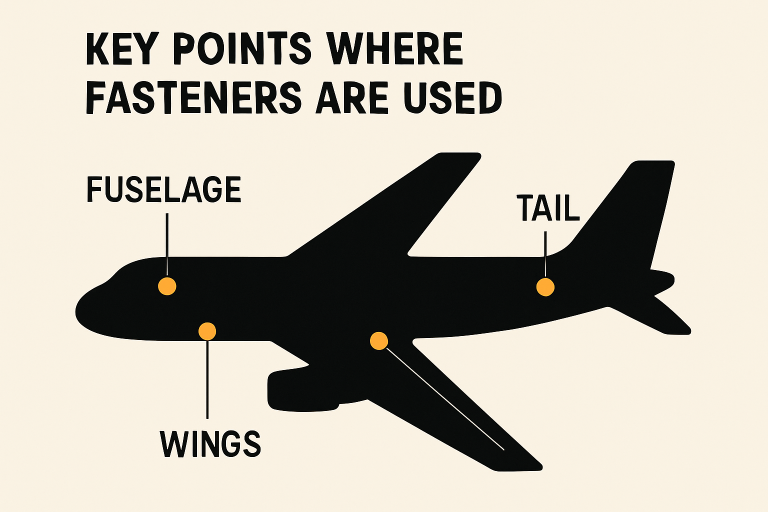
The sophistication behind aerospace engineering stems, in part, from the quality of its fasteners. These precision parts hold fuselages, wings, and control surfaces together, making them essential to every aspect of aircraft functionality. As the aviation sector continues to expand and evolve, the importance of sourcing from top fastener distributors has never been greater to guarantee uncompromising safety and performance.
Advancements in aircraft design have raised the bar for what modern fasteners must achieve. It is not simply about holding two materials together. The fastener must withstand intense pressure, vibration, and fatigue cycles. In this context, robust testing and certification protocols remain central to fastener development, assuring their fitness for service in some of the harshest operational environments.
The reliability of high-quality aerospace fasteners underpins the global aviation industry’s reputation for safety. Failures are exceedingly rare, largely due to decades of innovation and quality control that have led to components that exceed aerospace standards. The rigorous use of advanced quality systems throughout the manufacturing process ensures that only the most dependable fasteners reach production environments.
With safety and reliability as guiding principles, aerospace fastener development is a field where constant innovation is driven by necessity. Complex regulatory requirements and engineering challenges frequently inspire new solutions designed to optimize performance under severe stress, further strengthening aircraft safety records worldwide. For broader insights into how advanced manufacturing intersects with aerospace quality standards, visit this in-depth manufacturing resource.
Advancements in Fastener Materials
Material science has become a foundational element in modern aerospace fastener design. Over the past few decades, aerospace manufacturers have shifted increasingly toward materials that offer high strength-to-weight ratios, durability, and corrosion resistance. Titanium alloys have emerged as a clear frontrunner, delivering superior performance in these areas while helping manufacturers meet industry demands for lighter aircraft.
The advantages of using titanium fasteners are twofold. First, titanium enables remarkable reductions in weight, up to 40 percent compared to steel, which directly translates into fuel savings and lower operational costs for airlines. Second, titanium’s corrosion resistance extends the lifespan of components, particularly those exposed to harsh environments, thereby reducing the frequency and cost of maintenance.
Alongside titanium, advanced composites and high-performance aluminum alloys are making their mark. Each material is selected based on specific application requirements, balancing factors such as thermal expansion, electrical conductivity, and compatibility with surrounding materials. Continued research into new alloys and composite blends ensures that future fasteners will perform even better under tough mechanical and environmental conditions.
Innovations in Manufacturing Techniques
Modern manufacturing techniques represent another leap forward for aerospace fasteners. One of the most significant breakthroughs in recent years is additive manufacturing, which uses 3D printing technology to produce parts with complex internal geometries that were previously impossible to achieve. This method reduces material waste while enabling the design of lighter, stronger fasteners.
Precision machining and automated assembly lines have also increased consistency and reliability, yielding vast improvements in cycle times and cost efficiency. Computer numerical control (CNC) processes enable intricate designs and tight tolerances, ensuring fasteners meet the highest performance requirements. Non-destructive testing methods, such as ultrasonic and X-ray inspection, allow manufacturers to confirm the integrity of every batch before components ever reach the assembly floor.
Many manufacturers are now integrating smart sensors into production lines to monitor quality at every step and feed data back into continuous improvement systems. These innovations minimize human error, reduce downtime, and optimize fastener traceability throughout the supply chain. For further reading, see this digital transformation resource for the aerospace manufacturing industry.
Market Growth and Demand
The aerospace fastener sector is experiencing significant demand as global aviation continues to expand. Factors such as rising passenger numbers, the rise of low-cost carriers, and renewed investment in freight transport are driving aircraft manufacturers to ramp up production. As a result, the fastener market is projected to reach $8 billion by 2026, with a steady annual growth rate estimated at 1 percent.
This growth also reflects the sector’s ongoing focus on technological upgrades. Aircraft models are being updated with lighter materials, more efficient engines, and systems that require sophisticated fasteners with enhanced mechanical properties. Additionally, emerging markets in Asia-Pacific, the Middle East, and Latin America are fueling new aircraft orders, driving demand for advanced fastener technologies and reliable supply chain partners.
As airlines strive to improve performance while reducing costs, the pressure to adopt the latest fastener innovations and materials is likely to intensify. Collaborations among aerospace manufacturers, research institutions, and specialized suppliers are essential to remain competitive amid increasingly stringent regulations and customer expectations.
Future Trends in Aerospace Fasteners
The future of aerospace fasteners will be shaped by advancements in sustainability, real-time monitoring, and data-driven design. The industry is seeing a shift towards eco-friendly, recyclable fasteners crafted from materials that do not compromise safety or performance. These initiatives align with broader efforts to reduce environmental impact throughout an aircraft’s lifecycle.
Smart manufacturing is another game changer. Artificial intelligence and machine learning are being embedded into quality assurance systems, ensuring that even the most minute defects are identified long before fasteners leave the factory. Real-time data collection during both manufacturing and in-flight use could unlock new insights into fastener performance, driving further improvements in materials and processes.
Looking ahead, aerospace fasteners will remain a linchpin of the aviation industry’s safety and innovation. Companies that invest in advanced materials, digital manufacturing tools, and sustainable practices will be best positioned to meet the rising demands of tomorrow’s aerospace sector.

MOBI ROLLER is a tech enthusiast with a background in technology. He writes about the latest trends, tools, and innovations in the tech world, sharing insights based on both knowledge and experience.