
Table of Contents
- Factors Influencing Repair Costs
- Treatment Options and Their Costs
- Insurance Coverage and Financial Assistance
- Preventive Measures to Avoid Future Costs
- Final Thoughts
For many people, the discovery of a broken tooth is both a cause for concern and an immediate source of questions about treatment and expense. The costs of repairing a broken tooth can vary depending on a range of factors. From minor chips to severe fractures that require more extensive procedures, understanding the full picture is essential. For those comparing their options, issues such as dental bridge repair cost and the prices of other common treatments are important considerations.
The total price often depends not only on the type and extent of damage but also on the location of the tooth and the specific dental treatments needed. Making wise choices for your dental health requires a clear understanding of the options available and the cost of each.
Other important variables that affect cost include whether you already have dental insurance, the dentist’s experience level, and prevailing rates in your locale. In many cases, patients find it helpful to compare restorative treatments before deciding which method will restore their smile to normal.
Factors Influencing Repair Costs
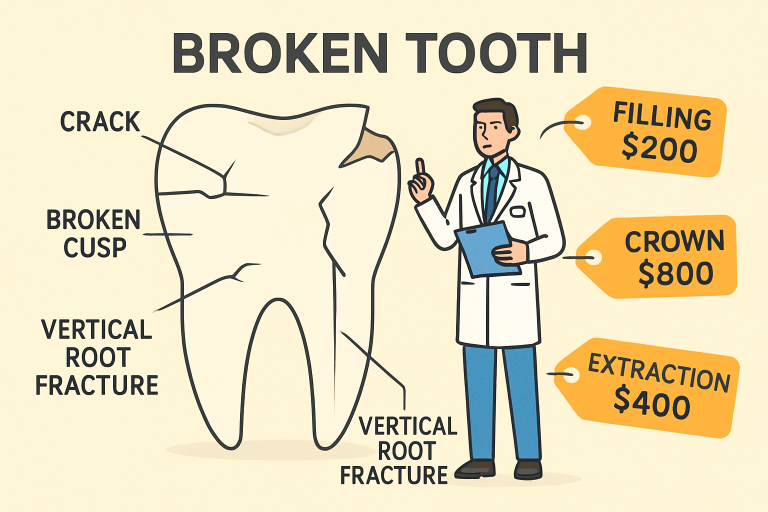
The expenses involved in fixing a broken tooth are affected by several primary elements. First, the severity of the damage matters. A small chip can be corrected with a simple bonding procedure, while a tooth broken below the gumline may require extraction and restoration. Second, the tooth’s position is key. Repairing front teeth, especially those visible in your smile, often involves a focus on aesthetics and natural-looking restorations, which can increase the cost. Consulting a trusted provider like North Orange Family Dentistry can help determine the best approach for your situation.
The type of treatment prescribed by your dentist, such as bonding, veneers, crowns, root canals, or implants, each has its own scale of pricing. Lastly, local market rates play a role. Dental care in urban or coastal regions frequently costs more than in more rural or suburban settings. Consulting local providers helps clarify what you can expect to spend in your area.
Treatment Options and Their Costs
Repairing a broken tooth usually starts with an assessment of the damage, followed by a discussion of suitable options. Here are the most common treatments:
Dental Bonding
For small cracks and chips, dental bonding is a conservative solution. Your dentist applies a tooth-colored resin to the damaged area and shapes it to match your natural contours. Bonding costs between $300 and $600 per tooth, making it a cost-effective choice for minor cosmetic repairs.
Dental Veneers
For teeth with moderate damage or more noticeable flaws, dental veneers provide a resilient, natural-looking cover. Veneers are thin shells that adhere to the front of the tooth to improve its shape and color. These typically run from $500 to $2,500 per tooth.
Dental Crowns
Crowns are recommended for severe fractures or when a large portion of the tooth is missing. A crown caps the entire affected tooth, restoring both appearance and function. Prices range from $800 to $2,500 for each crown, depending on the material used and the complexity of the work.
Root Canal Therapy
If the tooth is broken to the point where the pulp becomes exposed and infected, root canal therapy may be necessary. This process removes the damaged pulp and seals the tooth to prevent infection. Root canal therapy typically costs between $700 and $2,100 per tooth, not including the final restoration, such as a crown.
Dental Implants
If the tooth cannot be saved and must be extracted, a dental implant is often the preferred replacement. Implants involve surgery to anchor an artificial root and attach a permanent crown. The cost of implants generally starts at $3,000 per tooth and can go up to $5,000 per tooth.
Insurance Coverage and Financial Assistance
Dental insurance can help alleviate some of the financial burden when repairing a broken tooth. Most dental plans will cover part of the cost for medically necessary procedures, such as crowns or root canals, though cosmetic treatments like veneers may not be included. It’s important to verify with your insurer what’s covered and what your anticipated out-of-pocket expenses will be. Some dental offices offer payment plans and sliding-scale fees for patients without insurance, making care more accessible.
Preventive Measures to Avoid Future Costs
The best way to lower dental repair costs is to avoid injury in the first place. Consider protective steps such as wearing a mouthguard when playing sports, avoiding habits like chewing on ice or pens, and steering clear of extremely hard foods. Consistent, routine dental check-ups allow your dentist to spot vulnerabilities early, often preventing more serious (and expensive) damage down the road.
Final Thoughts
Repairing a broken tooth is not only about restoring aesthetics and comfort but also about protecting your long-term oral health. The costs can vary widely depending on the severity of the break, the treatment method, and insurance coverage. By learning about available options and seeking guidance from reputable dental professionals, you can find an effective solution tailored to your needs and budget.

MOBI ROLLER is a tech enthusiast with a background in technology. He writes about the latest trends, tools, and innovations in the tech world, sharing insights based on both knowledge and experience.