

Key Takeaways
- SEO analytics provide in-depth insights into website performance and user behavior.
- Predictive analytics highlight trends and prepare companies for future shifts in demand.
- AI tools enhance SEO accuracy by automating complex data analysis and optimization.
Table of Contents
- Understanding SEO Analytics
- Leveraging Predictive Analytics
- Integrating AI Tools
- Enhancing User Experience
- Monitoring and Adjusting Strategies
- Conclusion
In today’s digital landscape, businesses continually seek ways to understand their audience better and refine their marketing strategies. With the vast amount of data available from websites, social media, and other online channels, making sense of user behavior has become both a challenge and a necessity. Analyzing website performance metrics, visitor engagement, and conversion patterns provides invaluable insights that enable marketers to allocate resources more effectively, prioritize campaigns that deliver results, and adjust tactics in real-time. These insights also help identify potential gaps in the customer journey and highlight areas where user experience can be improved. By interpreting these data points, companies can make more informed decisions, improving the efficiency and impact of their marketing efforts.
One key approach to gaining these insights is through SEO solutions, which help track how users interact with search engines and identify opportunities to improve visibility. Understanding which content drives traffic, how visitors navigate a site, and which keywords resonate most can guide strategy development across all marketing channels. This data can reveal emerging trends and shifting consumer preferences, allowing marketers to stay ahead of the curve. When analytics are applied thoughtfully, businesses can move beyond guesswork, using evidence-based information to shape campaigns that are more targeted, relevant, and ultimately more successful.
Understanding SEO Analytics
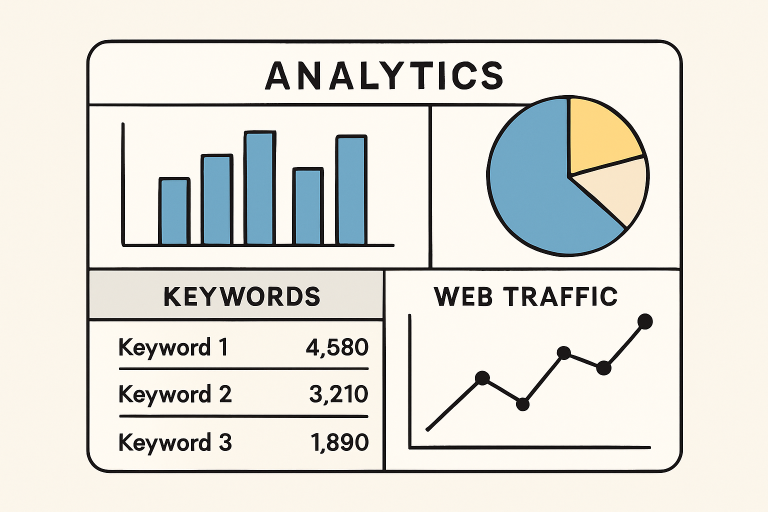
SEO analytics involves gathering, reviewing, and interpreting data about a site’s visibility and engagement on search engines. Core metrics include organic traffic, keyword rankings, click-through rates, bounce rates, and goal completions. Tools like Google Analytics and Google Search Console provide a wealth of performance data, allowing businesses to dissect which keywords and landing pages generate interest—and which are underperforming. By routinely analyzing this information, brands can pinpoint high-performing content, isolate technical issues, and validate their optimization efforts.
Data-driven insights don’t just reveal what is working; they also highlight untapped growth opportunities. For example, tracking the journey of users from the entry page to conversion can uncover friction points, making it easier to structure pages and content for better retention and engagement. Companies with a data-driven SEO strategy consistently outperform those who rely solely on intuition.
Leveraging Predictive Analytics
Predictive analytics leverages historical search performance data and applies machine learning to forecast future trends, user needs, and potential traffic spikes. For marketers, this means adjusting content calendars based on projected keyword demand or preparing for expected seasonal volatility. These techniques are beneficial for e-commerce brands anticipating holiday surges or businesses in rapidly shifting industries.
By modeling “what-if” scenarios using tools like Google Trends, teams can anticipate market shifts and align their content and advertising with expected user demand. The result—a marketing strategy that is both resilient under uncertainty and bold enough to seize emerging opportunities before competitors react.
Integrating AI Tools
Advances in artificial intelligence have significantly enhanced the precision, speed, and scale at which organizations can process their SEO data. AI-powered platforms can scan millions of data points, spot complex trends, and forecast outcomes with unprecedented accuracy. Key applications include automated keyword research, technical SEO audits, and high-level competitor analysis. These tools not only reduce the time burden on marketers but also enable more granular insights by analyzing patterns that would be impossible to spot manually.
Beyond mere automation, AI enables iterative testing and real-time optimization on content and ad placements, ensuring marketing efforts stay agile in dynamic markets. The integration of AI-driven analytics with CRM and content management systems further enhances personalization and marketing relevance, ultimately improving customer acquisition and retention rates.
Enhancing User Experience
SEO analytics are crucial in providing valuable insights into how users interact with your website. Metrics such as average session duration, scroll depth, and page load speed provide insight into user preferences and potential pain points. Optimizing for a seamless experience—be it through mobile responsiveness, intuitive navigation, or compelling content—keeps visitors engaged and encourages repeat visits.
Businesses that leverage data to improve UX often see benefits reflected in better SEO rankings and higher conversion rates. The connection between analytics and user experience is central to digital growth, as evidenced by industry research from Search Engine Land. The continuous refinement of content, layout, and technical infrastructure based on honest user feedback is now a non-negotiable part of sustaining digital success.
Monitoring and Adjusting Strategies
Ongoing monitoring is essential to ensuring your SEO strategies remain relevant and practical. By setting clear KPIs and tracking progress against these benchmarks, teams can quickly identify what’s working and what requires pivoting. Tools like dashboards and automated reporting streamline this process, enabling frequent reviews of campaign health and clear communication across marketing functions.
The iterative nature of SEO means strategies should never be static. Agile teams constantly review analytics to uncover new keyword opportunities, test on-page optimizations, and adapt content to meet fluctuating search intent. This disciplined approach ensures that marketing initiatives are consistently grounded in data and aligned with evolving user behaviors and business objectives.
Conclusion
SEO analytics serve as the backbone of smart, sustainable marketing decision-making in the digital age. With the right tools and strategies, businesses not only gain deep insights into their website’s performance but also anticipate and respond to fast-evolving market and user trends. By integrating predictive analytics, leveraging AI platforms, and prioritizing user experience, companies can stay ahead of the curve, equipped to nurture long-term growth and outperform their competitors.

MOBI ROLLER is a tech enthusiast with a background in technology. He writes about the latest trends, tools, and innovations in the tech world, sharing insights based on both knowledge and experience.