

Table of Contents
- What is Negligence?
- The Four Elements of Negligence
- Gathering Evidence in Pennsylvania Personal Injury Cases
- Common Defenses to Negligence in Pennsylvania
- Proving Negligence: A Step-by-Step Approach
- Why Legal Counsel Matters
- Final Thoughts
Suffering an injury because of someone else’s carelessness can leave you facing not only physical pain but also financial and emotional hardships. In Pennsylvania, victims who wish to seek compensation for their injuries must prove the other party’s negligence in order to prevail in a personal injury claim. Understanding the legal framework and requirements for proving negligence is crucial for anyone navigating this complex process. For those facing such challenges, consulting experienced legal professionals, such as those at quinnlawyers.com, can make a significant difference in the outcome of your case.
Proving negligence is central to personal injury lawsuits in Pennsylvania, whether resulting from car accidents, slip-and-fall incidents, or medical malpractice. This legal principle is what enables an injured person to recover damages for lost wages, medical bills, and pain and suffering. Knowing what steps are involved ensures that victims do not miss critical opportunities to secure their rightful compensation, especially during stressful times.
What is Negligence?
Negligence, in the context of Pennsylvania personal injury law, is a failure to act as a reasonable person would under similar circumstances, resulting in harm to another. Unlike intentional acts, negligence often involves carelessness or inadvertence, which nonetheless causes injury or damage. Proving that someone was negligent is the first step in holding them legally accountable.
The concept of negligence is foundational not just in Pennsylvania, but across the U.S. legal system. It is based on expectations that individuals will act with a certain level of care and attention when their actions might impact others. Whenever an individual or entity fails to meet that standard and causes harm, the law provides a path for the injured person to seek compensation. It’s important to remember that being injured alone is not enough; there must be a breach of the duty owed that directly causes the damages.
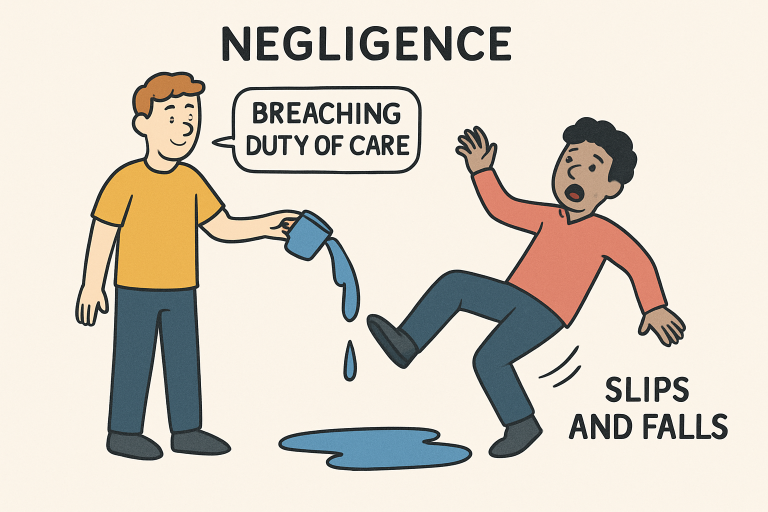
The Four Elements of Negligence
1. Duty of Care
The injured party must show that the defendant owed them a duty of care. In many day-to-day situations, this duty is presumed. For example, all drivers have a responsibility to operate their vehicles safely and obey traffic laws.
This duty can also arise in a variety of contexts, from business owners maintaining safe premises to doctors providing competent medical care to product manufacturers ensuring their goods are safe for consumers. Determining whether the defendant owed a duty of care may involve analyzing the parties’ relationship and the circumstances surrounding the incident.
2. Breach of Duty
Once duty is established, it must be proven that the defendant breached that duty. A breach occurs when someone fails to act as a reasonably prudent person would under similar circumstances. Examples include texting while driving or neglecting to clean up a spill in a grocery store.
Sometimes, expert witnesses are required to establish the standard of care expected in more specialized situations, such as in cases involving medical professionals or technical fields. Proving a breach often requires examining whether the defendant’s actions or inactions deviated from what would reasonably be expected under the circumstances.
3. Causation
The plaintiff must demonstrate that the defendant’s breach of duty directly caused their injuries. There must be a clear link between the negligent action and the harm suffered, which can sometimes be complicated in cases involving multiple contributing factors.
In legal terms, both actual cause (“but for” causation) and proximate cause (whether the harm was a foreseeable result of the conduct) need to be proven. Defendants may argue that other factors were responsible for the injury, making it important to gather strong evidence linking the breach to the damages sustained.
4. Damages
The plaintiff must have suffered actual damages, such as medical bills, lost wages, or pain and suffering. Without measurable damages, a negligence claim cannot succeed, even if the other elements are present.
Damages can include economic losses (e.g., property damage, medical costs, income lost due to time off work) as well as non-economic losses (e.g., pain, suffering, disfigurement, or reduced quality of life). Properly documenting these injuries and associated expenses helps substantiate the full scope of your damages in settlement negotiations or court proceedings.
Gathering Evidence in Pennsylvania Personal Injury Cases
Successfully proving negligence requires gathering compelling evidence. This might include accident reports, medical records, eyewitness statements, photographs of the scene, and expert testimony. Timely collection and preservation of evidence are essential, as memories fade and physical evidence can be lost or destroyed.
It is also strategic to keep a personal injury journal, documenting your symptoms, pain levels, and the daily impact of your injuries. Detailed accounts of changes to your routine, missed opportunities, and emotional distress may strengthen your claim for non-economic damages. In some situations, surveillance footage, digital records, or even vehicle data logs can provide critical support for your case. Attorneys often work with investigators or experts to uncover and present evidence in convincing ways.
Common Defenses to Negligence in Pennsylvania
Defendants in personal injury cases often raise legal defenses such as comparative negligence, which can reduce or bar recovery if the plaintiff is found partially at fault. Pennsylvania follows a modified comparative negligence rule, meaning an injured party can recover damages only if they are less than 51 percent responsible for the accident. Other common defenses include assumption of risk and the argument that the injury was not foreseeable.
In addition, some cases involve statutory immunity, such as when claims are brought against government entities. Defendants may also dispute the extent of the injury, argue that an unrelated pre-existing condition is to blame, or assert that the plaintiff failed to mitigate damages after the incident. Understanding possible defenses helps plaintiffs and their attorneys anticipate arguments and prepare effective counter-evidence and legal strategies.
Proving Negligence: A Step-by-Step Approach
- Seek Immediate Medical Attention: Prompt medical evaluation documents the extent of your injuries and connects them to the incident.
- Report the Incident: Notify the relevant authorities or property owner as soon as possible. Obtain copies of any official reports, as these can be vital.
- Gather and Preserve Evidence: Collect contact information for any witnesses, take photographs, and secure any available video footage.
- Document All Damages: Keep a record of all medical bills, lost wages, and other expenses related to the injury.
- Consult an Attorney: Legal professionals can strengthen your case by handling communications, negotiating with insurance companies, and filing necessary paperwork within deadlines.
It can also be wise to avoid speaking to insurance companies or defense attorneys without legal representation. Seemingly harmless statements or signing certain documents can be used to limit your recovery. Consulting legal counsel early helps ensure that your actions strengthen your case at every stage and prevent costly missteps.
Why Legal Counsel Matters
Personal injury law can be complicated, and insurance companies often seek to minimize payouts. Legal counsel plays a critical role in building a strong case, handling negotiations, and securing the compensation you deserve. Many law firms in Pennsylvania offer free consultations, allowing injury victims to understand their rights and options as early as possible.
Final Thoughts
Attorneys knowledgeable in Pennsylvania law can navigate local court procedures, handle complex paperwork, and provide strategic guidance specific to your circumstances. They also understand the nuances of settlement negotiations, litigation, and trial, increasing your odds of a favorable result. By enlisting skilled legal help, you ensure that deadlines are met, evidence is well-presented, and your claim is aggressively pursued from start to finish.

MOBI ROLLER is a tech enthusiast with a background in technology. He writes about the latest trends, tools, and innovations in the tech world, sharing insights based on both knowledge and experience.