
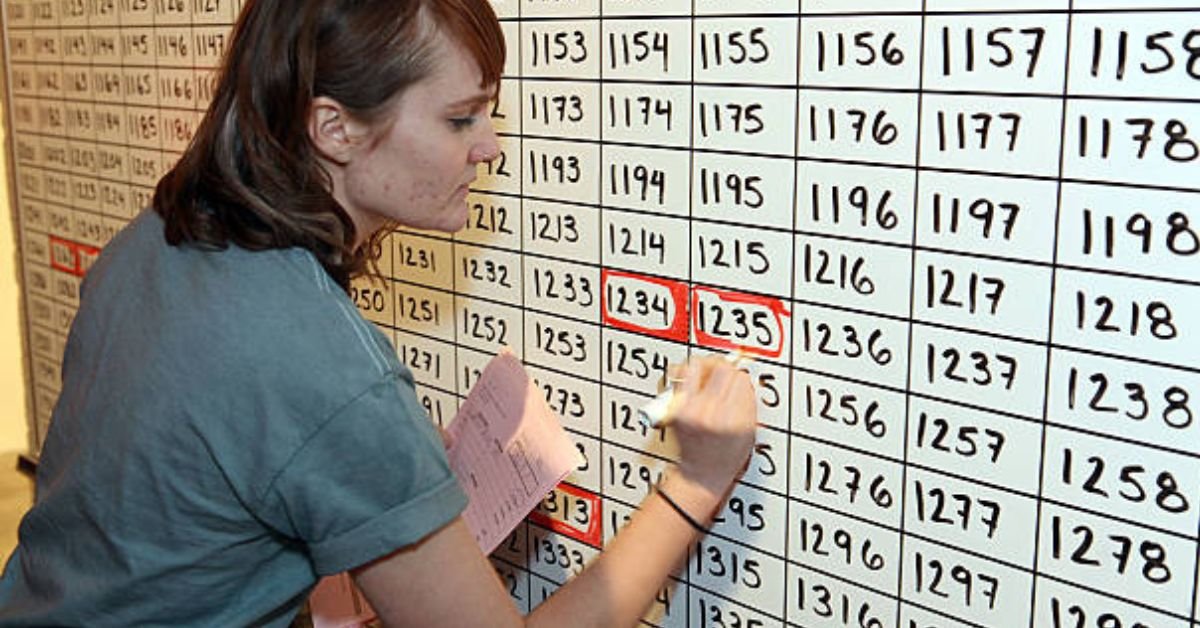
Hundreds chart is a 10×10 grid displaying numbers from 1 to 100 in sequential order. But its simplicity is deceptive. This layout is a direct visual representation of our base-ten number system.
Every move to the right adds one. Every move down adds ten. This spatial relationship is a “Eureka!” moment for young learners. It helps them internalize concepts that are otherwise purely abstract:
- Place Value: They see that 23 is two rows down (two tens) and three across (three ones).
- Skip Counting: Coloring in multiples of 5 or 10 creates a visual pattern that makes skip-counting intuitive.
- Addition & Subtraction: A student can solve 25 + 10 not by a mysterious algorithm, but by simply moving down one row on the chart. It makes math concrete.
One teacher put it perfectly: “I watched a struggling second-grader finally ‘get’ addition when I showed him he could just ‘hop’ down the chart. The look on his face was pure triumph. He wasn’t just memorizing; he was understanding.”
The Evolution: Why a Hundreds Chart to 120 is the New Standard
If you’re still stopping at 100, you’re cutting the lesson short. The shift to a hundreds chart to 120 (often called a 120 chart) is one of the most significant updates in early math education, and for good reason.
The Common Core State Standards and other modern curricula emphasize numbers up to 120. Here’s why that extra row is so critical:
- It Breaks the “One-Hundred Ceiling”: Working only up to 100 can create an artificial stopping point in a child’s brain. Extending to 120 helps them see that the patterns they’ve learned don’t just stop; they continue seamlessly.
- It Reinforces Place Value: The numbers 101-120 are where the true patterns of our number system solidify. Kids see that after 109 comes 110, not “100-10.” This is vital for understanding how numbers work into the hundreds and beyond.
- It Prepares for Higher-Level Math: A solid grasp of numbers to 120 provides a much stronger foundation for learning about three-digit numbers, rounding, and more complex operations.
In 2025, seeking out a 120 chart printable pdf free resource is no longer just an option—it’s a best practice for setting kids up for long-term success.
Beyond Coloring: 5 Powerful Activities for Your Hundreds Chart Printable
A blank hundreds chart printable is a canvas for learning. Here are some innovative ways to use it that go far beyond simple coloring.
The Mystery Number Game (Building Deductive Reasoning)
“This number is in the row that starts with 51. It is one less than a multiple of 10. The sum of its digits is 9.” Can you find it? (Answer: 54). This game encourages kids to use the chart’s structure as a tool for problem-solving.
The “Hunt for Patterns” (Introducing Multiplication)
Give your child a set of transparent counters and ask them to cover all the multiples of 4. What pattern do they see? (They form neat diagonal lines). This visual introduction to multiplication is far more memorable than rote memorization of times tables.
Addition and Subtraction “Hopscotch” (Making Operations Visual)
To solve 48 + 25, a child can start at 48, move down two rows (+20), and then move right five spaces (+5), landing on 73. This turns an abstract equation into a physical, visual journey across the chart, building a deep conceptual understanding.
The “Race to 100” or “Race from 120” (Strategic Gameplay)
Using a dice, two players take turns adding (or subtracting) and moving their token. This builds fluency with operations in a fun, low-stakes game format. It’s practice that doesn’t feel like practice.
Find the Missing Numbers (Assessment & Critical Thinking)
Provide a hundreds chart printable with random numbers blanked out. Can the child use the numbers around the empty squares to deduce what’s missing? This assesses their understanding of number sequence and relationships in a non-threatening way.
The Digital Dozen: Top Interactive Hundreds Chart Apps & Websites for 2025
While a physical hundreds chart printable is invaluable, digital tools bring a new level of interactivity. Here are some of the best types of digital resources available in 2025:
- Splat Charts: Websites where you “splat” numbers based on clues, with the splat hiding the number and reinforcing memory.
- Puzzle Charts: Digital charts where pieces are missing, and students must drag the correct number into place.
- Animated Charts: Tools that visually “hop” to demonstrate addition and subtraction, making the process crystal clear.
The key is balance. Use a printable version for hands-on, away-from-the-screen work and digital versions for engaging, interactive reinforcement.
Finding the Right Resource: The Hunt for a Quality 120 Chart Printable PDF Free
A quick Google search will yield thousands of results, but not all are created equal. When you’re looking for a 120 chart printable pdf free download, here’s what to look for in 2025:
- Clarity and Readability: The font should be clean, large, and easy to read. No distracting clipart crammed into the squares.
- Paper-Friendly Design: Is it designed to print clearly without guzzling printer ink? Many charts use light gray lines instead of heavy black ones.
- Versatility: The best charts are simple and blank, ready for your chosen activity—whether it’s coloring, covering with counters, or cutting into puzzles.
- Source Credibility: Download from reputable educational sites, teacher blogs with proven track records, or official curriculum portals to ensure accuracy and quality.
A word of caution: Be wary of sites that offer a “free” PDF only after signing up for a costly subscription you didn’t want. The best resources are often truly free or part of a larger, transparent resource library.
Frequently Asked Questions
Q1: What is the main purpose of a hundreds chart?
A: The main purpose is to build strong number sense. It helps children visualize number sequences, understand place value, recognize patterns (like odd/even), and develop strategies for addition, subtraction, and even early multiplication. It turns abstract numerical concepts into something concrete and explorable.
Q2: What’s the difference between a 100 chart and a 120 chart?
A: A traditional 100 chart goes from 1 to 100. A 120 chart extends to 120, which is now the standard in most modern math curricula. This extension is crucial because it helps students understand that number patterns continue beyond 100, solidifying their grasp of the base-ten system and preparing them for working with larger numbers.
Q3: Where can I find a reliable 120 chart printable pdf free download?
A: Many highly-regarded educational websites and teacher-created marketplaces offer high-quality, free printables. Look for sites dedicated to early math resources. A simple search for “120 chart printable pdf free” will lead you to excellent options, but always preview the file to ensure it’s clear and well-designed before using it.
Q4: At what age or grade should children start using a hundreds chart?
A: Children typically begin using a hundreds chart in kindergarten or first grade, starting with simple activities like counting to 100 and identifying numbers. Its use deepens through second and third grades for more complex operations like skip counting by larger numbers and exploring patterns. It’s a tool that grows with the learner.
Conclusion
Hundreds chart has earned its place as a timeless educational tool, not by staying the same, but by evolving. From its expansion to 120 to its dynamic use in games and digital apps, it remains one of the most effective ways to build a deep, intuitive understanding of numbers.
CLCIK HERE FOR MORE BLOG POSTS

“In a world of instant takes and AI-generated noise, John Authers writes like a human. His words carry weight—not just from knowledge, but from care. Readers don’t come to him for headlines; they come for meaning. He doesn’t just explain what happened—he helps you understand why it matters. That’s what sets him apart.”