
Key Takeaways
- Clear and intuitive balance displays foster user trust and sustained engagement.
- Customizable layouts, quick access to insights, and real-time updates are crucial.
- Security features should be fully integrated but never intrusive to usability.
Table of Contents
- Importance of Clear Balance Displays
- Personalization and User Preferences
- Real-Time Updates and Notifications
- Security Measures in Balance Displays
- Integration with Financial Services
- Future Trends in Balance Display Design
Mobile wallets are at the heart of modern financial transactions, transforming how users interact with their personal finances. As these platforms become standard for payments, peer-to-peer transfers, and even digital identity, the importance of a thoughtfully designed balance display cannot be overstated. Design details drive usability, trust, and overall satisfaction, as users expect their available funds to be clear and easily accessible. For inspiration on the latest layouts and functionality, designers often review wallet app UI trends, which reveal how industry leaders approach balance displays for clarity and impact.
A well-crafted balance section in a mobile wallet should instantly communicate essential financial information without overwhelming or confusing the user. As competition grows among wallet providers, subtle differences in design choices often determine which apps users prefer for daily transactions. Balance visibility, customizable views, and the integration of security features are in-demand expectations that shape lasting user relationships.
Recent studies confirm that the top priority for wallet app users is being able to quickly and accurately check their available funds. This feature not only enhances convenience but also supports personal budgeting and financial control. A recent Forbes Finance Council report stressed how ease of use and speed are critical to mobile wallet adoption, echoing feedback seen in major app reviews and forums.
Personalization further elevates the experience. Whether switching between a concise summary for a quick check or toggling to an expanded, detailed view for accounting purposes, users increasingly expect wallet apps to reflect their unique preferences. This ability to tune displays not only streamlines everyday use but also encourages engagement with other built-in financial tools.
Importance of Clear Balance Displays
Mobile wallet users expect immediate clarity when viewing their available balance. Any ambiguity or visual clutter can erode trust and make users reluctant to use certain functions or services within the app. Simplicity is especially valued by those who use mobile wallets for daily purchases, bill payments, and budget tracking. Major industry resources confirm that easily readable balance displays often top consumer wish lists, with speed and reliability as supporting pillars for satisfaction.
Personalization and User Preferences
Giving users options to adapt the balance display to their preferences enhances their comfort and control. Some users prefer a concise look, displaying just the total balance, while others want access to recent transactions, categorized spending, or detailed graphs. Allowing adjustments such as color themes, font size, and information density makes the wallet app more user-centric. Personalization settings also help people who monitor multiple accounts, currencies, or cards to get an overview that’s best matched to their needs.
Real-Time Updates and Notifications
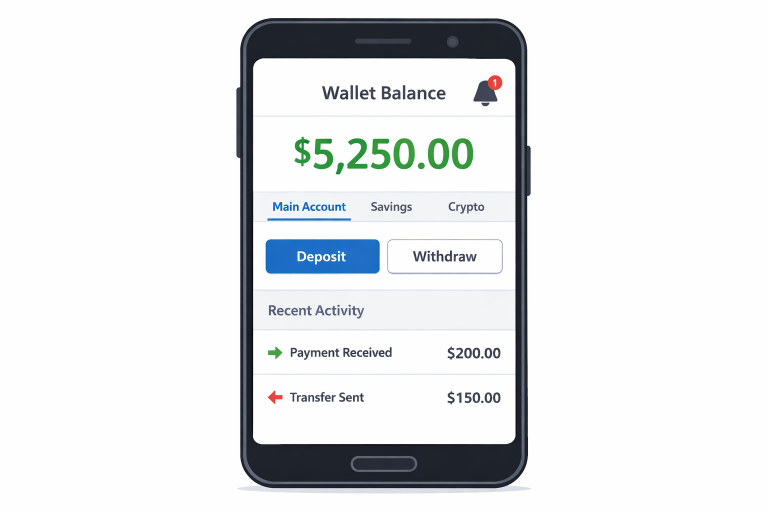
Real-time updating is critical for a positive user experience. Whether it’s spending on a linked card, receiving a transfer, or making an in-store purchase, users want to see transactions reflected in their balance immediately. Notifications about these updates keep users informed and help them take quick actions when unusual or unauthorized activity occurs. According to a PYMNTS report, regular, reliable notifications and real-time data draw users back to mobile wallet applications more often, resulting in higher app retention and satisfaction rates.
Security Measures in Balance Displays
Security can never be compromised for speed or convenience. Integrating features like biometric login, two-factor authentication, and encrypted data transfer in the balance display stage assures users that their sensitive information is protected. However, these measures need to be minimally intrusive, so they don’t detract from a seamless experience. Assessments by Consumer Reports show that mobile wallet apps that prioritize transparent security earn significantly greater trust, especially among privacy-conscious demographics.
Integration with Financial Services
Balance displays become truly powerful when connected with wider financial tools, such as savings planners, credit score trackers, and investment dashboards. Integrated solutions transform a simple wallet into a comprehensive money management platform. This approach supports financial literacy and empowers users to make informed decisions about budgeting, spending, and planning for future expenses, all from one place. When a mobile wallet presents financial summaries alongside available balances, it becomes an indispensable part of a user’s daily routine.
Future Trends in Balance Display Design
Looking ahead, two major shifts are gaining momentum. Artificial intelligence is enabling predictive insights tailored to individual habits, which can offer spending suggestions, alerts about low balances, or reminders to save based on historical patterns. Additionally, novel display technologies, such as augmented reality (AR), are beginning to emerge, offering new ways to visualize and interact with financial data. These innovations promise to make wallet apps smarter and more engaging, providing value beyond simple account balance visibility. For more insights into how financial technology continues to evolve, the Wall Street Journal has ongoing coverage of breakthrough developments in the sector.
Optimizing mobile wallet balance displays is vital for modern app design. By carefully balancing clarity, customization, real-time functionality, security, and integration, developers can deliver interfaces that inspire confidence and loyalty, keeping users at the center of the digital finance revolution.

MOBI ROLLER is a tech enthusiast with a background in technology. He writes about the latest trends, tools, and innovations in the tech world, sharing insights based on both knowledge and experience.