
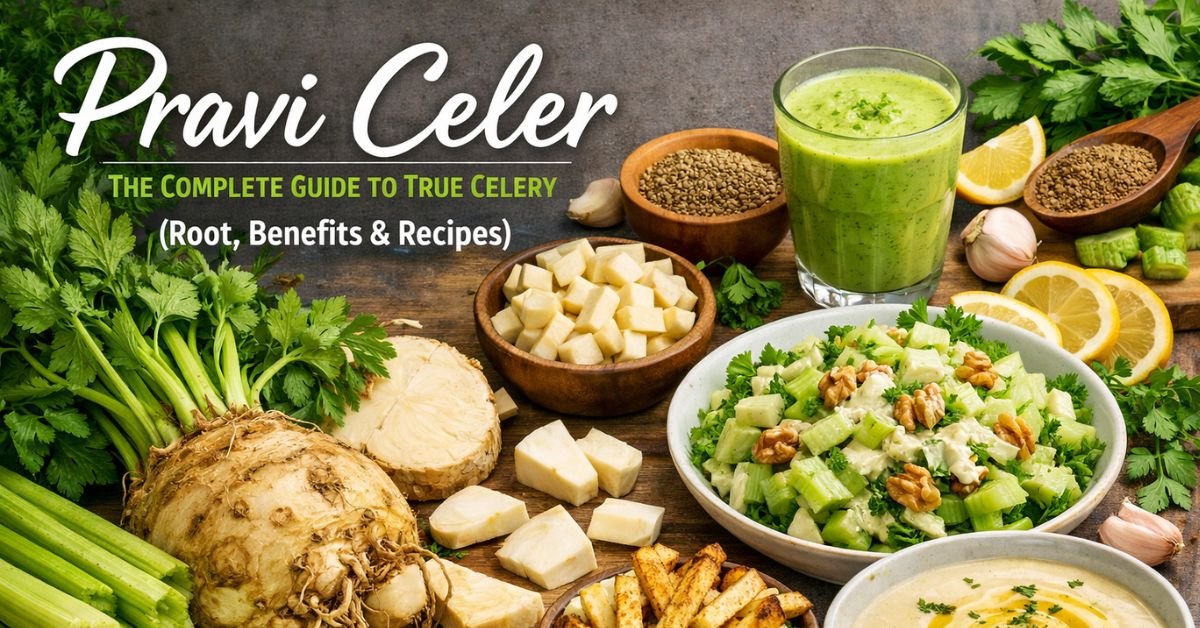
If you have ever wandered through a European farmers market and spotted a knobby, pale, somewhat prehistoric-looking root vegetable, there is a good chance you encountered pravi celer. Known in English as celeriac or celery root, this humble vegetable has earned a devoted following across Central and Eastern Europe for centuries — and for very good reason. This comprehensive guide covers everything you need to know: what it is, how it differs from regular celery, its rich cultural history, powerful health benefits, how to cook with it, and two delicious recipes to get you started.
What is Pravi Celer? The “True Celery” Defined
Pravi celer is a Bosnian/Serbian term that literally translates to “true celery” or “real celery” — and the name is apt. Unlike the familiar stalk celery sold in supermarkets across the world, pravi celer refers specifically to celeriac (Apium graveolens var. rapaceum), a variety cultivated primarily for its large, edible root bulb. It belongs to the Apiaceae family, which also includes parsley, fennel, carrot, and dill, sharing with them a characteristic aromatic intensity.
While stalk celery is grown for its crisp, water-rich stems, pravi celer produces a dense, round, knobby root that can weigh anywhere from 500 grams to over a kilogram. The flesh inside is creamy white, firm, and intensely fragrant. In many traditional European kitchens, this is the celery that cooks reach for first — the one that adds depth, earthiness, and a complex aroma to soups, stews, and roasted dishes.
Pravi Celer vs. Regular Celery: Key Differences
Many people assume pravi celer and common stalk celery are interchangeable. They are related, but they are not the same. Here is a clear comparison:
| Feature | Pravi Celer (Celeriac) | Regular (Stalk) Celery |
| Edible Part | Large root bulb; also stalks and leaves | Stalks and leaves; small roots |
| Flavor | Earthy, nutty, subtly sweet, intense | Fresh, watery, mild, green |
| Texture | Dense, firm, starchy when raw; creamy when cooked | Crisp and fibrous |
| Best Use | Soups, roasting, mashing, raw in salads | Raw snacking, salads, stocks |
| Carbohydrates | Lower than potato; keto-friendly | Very low |
| Culinary Role | Main ingredient or hearty base | Aromatic accent |
Botanical Profile: A Member of the Parsley Family
Pravi celer belongs to Apiaceae, one of the most aromatic plant families in the world. Its scientific name, Apium graveolens var. rapaceum, reflects its graveolens (strongly scented) character. The essential oils concentrated in the root — primarily phthalides and terpenes — are responsible for the distinctive deep celery fragrance that perfumes the kitchen the moment you cut into one. These same compounds have been studied for potential anti-inflammatory and stress-reducing properties.
The Rich History and Cultural Significance of Pravi Celer
Celeriac has been cultivated in the Mediterranean region since ancient times. Historical records suggest it was grown in Egypt and used medicinally in ancient Greece and Rome. By the 17th century, it had spread throughout Europe as both a culinary staple and a folk medicine ingredient, particularly in Germany, France, Poland, and the Balkans.
In Central and Eastern European cuisine, pravi celer became inseparable from hearty winter cooking. In the Balkans, it is a standard component of čorba (a rich, filling soup), often simmered alongside parsnip, carrot, and parsley root to build an aromatic broth. In France, it became the star of céleri rémoulade, a classic bistro salad. In Germany and Poland, it is roasted as a main vegetable or mashed as a potato alternative.
Beyond the kitchen, pravi celer held a respected place in folk medicine. Traditional healers across rural Europe used it to support kidney function, aid digestion, and reduce inflammation — uses that modern nutritional science is beginning to validate.
A Visual Guide to Pravi Celer: Root, Stalks, and Leaves
One of the reasons new cooks are sometimes put off by pravi celer is its appearance. Understanding what each part looks like — and what to do with it — makes the vegetable far less intimidating.
- Root (Bulb): The main edible part. Round to oval in shape, typically 10–15 cm in diameter. The exterior is rough, brown, and covered in rootlets. The interior is firm, creamy-white, and very dense.
- Stalks: Thinner and darker green than stalk celery, with a more intense, slightly bitter flavor. Excellent for adding to stocks, soups, or drying as an herb seasoning.
- Leaves: Dark green and feathery, similar in appearance to flat-leaf parsley. They carry a concentrated celery flavor and can be used as a garnish, blended into sauces, or dried and crumbled as a seasoning.
Why Eat It? The Powerful Health Benefits of Pravi Celer
Pravi celer is not just a flavorful ingredient — it is a genuinely nutritious vegetable that earns its place in a health-conscious diet. A 100-gram serving of raw celeriac contains roughly 42 calories, making it a low-energy, high-nutrient food.
Packed with Essential Vitamins and Minerals
Pravi celer delivers an impressive nutritional profile for so few calories:
- Vitamin K: Critical for blood clotting and bone mineralization. A single serving can provide a significant portion of the daily requirement.
- Vitamin C: A potent antioxidant that supports immune function, collagen synthesis, and iron absorption.
- Vitamin B6: Important for brain health, protein metabolism, and the production of neurotransmitters like serotonin and dopamine.
- Potassium: Supports healthy blood pressure and proper muscle and nerve function.
- Phosphorus: Essential for bone and tooth health, as well as energy metabolism.
- Dietary Fiber: Promotes healthy digestion, feeds beneficial gut bacteria, and helps regulate blood sugar levels.
Supports Digestive and Heart Health
The dietary fiber in pravi celer acts as a prebiotic, nourishing the beneficial bacteria in the gut microbiome. A healthy gut microbiome is linked to improved immunity, better mood regulation, and reduced inflammation. The potassium content also plays a key role in cardiovascular health by counteracting the effects of sodium and helping to relax blood vessel walls, which can support healthy blood pressure levels over time.
A Low-Carb, Keto-Friendly Superfood
With approximately 9 grams of carbohydrates per 100-gram serving (compared to roughly 17 grams for potato), pravi celer is a popular low-carbohydrate substitute for potato in mashes, gratins, and soups. Those following ketogenic, paleo, or low-glycemic diets have discovered it as a genuinely satisfying, starchy-textured alternative that does not spike blood sugar the way conventional starches do.
Antioxidant and Anti-Inflammatory Properties
Pravi celer contains a range of phenolic compounds and antioxidants that help neutralize free radicals in the body. Chronic oxidative stress and inflammation are associated with a wide range of conditions, including cardiovascular disease, type 2 diabetes, and certain cancers. The phthalides naturally present in celeriac have also been studied for their potential to relax arterial muscle tissue, contributing to anti-inflammatory and blood-pressure-lowering effects.
How to Cook with Pravi Celer: A Culinary Guide
Pravi celer is one of the most versatile root vegetables in the kitchen. It can be eaten raw or cooked, used as a base, a side, or a main event. Unlike many root vegetables, every part — root, stalks, and leaves — is edible and useful.
Mastering the Root: Roasted, Mashed, and Puréed
The root is where pravi celer truly shines. When roasted at high heat, the natural sugars caramelize beautifully, producing a golden, slightly crispy exterior with a tender, nutty interior. Cut into wedges or cubes, tossed with olive oil, garlic, and fresh thyme, and roasted at 200°C for 30–35 minutes, it becomes one of the most satisfying vegetable side dishes imaginable.
For a silky purée, simmer peeled and diced pravi celer in salted water until completely tender (about 20 minutes), then blend with butter or cream and a pinch of nutmeg. The result is elegant enough to serve at a dinner party and simple enough for a weeknight meal. It pairs beautifully with roast chicken, pork, or pan-seared fish.
In soups and stews, pravi celer is almost irreplaceable as a base vegetable. Diced into the pot alongside onion, carrot, and parsnip, it dissolves partially into the broth as it cooks, adding body, depth, and a complex aromatic note that no spice blend can replicate.
Don’t Discard Them! Using the Stalks and Leaves
Many first-time buyers do not realize the stalks and leaves of pravi celer are equally useful. The stalks, though tougher than those of stalk celery, are excellent when added to stocks, vegetable broths, and long-simmered soups. The leaves can be washed, dried, and used fresh as a garnish — they work beautifully scattered over a bowl of soup or used in place of parsley in a herb sauce. Dried and crumbled, they make a potent seasoning that can be stored and used throughout winter.
Raw Preparations: Salads and Classic Rémoulade
Raw pravi celer, finely grated or cut into matchsticks, has a pleasantly crunchy texture and a bold, peppery-celery flavor that stands up well to creamy, acidic dressings. The most famous raw preparation is céleri rémoulade, a French classic in which grated celeriac is dressed in a mustardy mayonnaise sauce and served as a cold appetizer or side dish. It is refreshing, filling, and surprisingly easy to make.
Pravi Celer Preparation 101: How to Clean and Peel
The most intimidating part of cooking with pravi celer is the initial preparation. The knobbly exterior can seem difficult to work with, but with the right technique it takes only a few minutes.
- Rinse the root under cold running water, scrubbing away any soil with a vegetable brush.
- Place the root on a stable cutting board and cut a flat slice off the top and bottom so it sits securely.
- Using a sharp chef’s knife (not a peeler, which struggles with the uneven surface), slice the tough outer skin off in downward strokes, following the curve of the root.
- Work around the root, removing all the rough brown exterior until you reach the clean, creamy-white flesh beneath.
- Cut the root in half, then into quarters, and remove any tough fibrous spots in the center.
- Immediately submerge the cut pieces in a bowl of cold water with a squeeze of lemon juice or a splash of white wine vinegar. Pravi celer oxidizes and browns quickly once cut — the acidulated water keeps it white and fresh-looking.
Work quickly and keep pieces in lemon water until you are ready to cook or dress them.
How to Buy and Store Pravi Celer for Maximum Freshness
What to Look For When Buying
Selecting a good pravi celer is straightforward once you know what to look for. Choose roots that feel heavy for their size — density indicates freshness and high water content. The exterior should be firm with no soft, spongy spots or visible mold. If the stalks and leaves are still attached, they should look vibrant and green rather than wilted or yellowed. A fresh pravi celer will have a clean, strong celery aroma; avoid any that smell musty or fermented. Smaller to medium-sized roots (roughly 10–12 cm in diameter) tend to be less fibrous and more flavorful than very large ones. In season, you can find pravi celer at farmers markets from late summer through winter. Specialty grocery stores and Eastern European food shops stock it year-round.
Best Storage Methods
- Whole, unwashed root: Store in a cool, dark place (cellar or bottom of the refrigerator) for up to 2–3 weeks.
- Refrigerator: Keep unpeeled in the vegetable drawer. Wrap loosely in a slightly damp paper towel inside a plastic bag.
- Peeled and cut: Keep submerged in acidulated water in an airtight container in the refrigerator for up to 3 days.
- Freezing: Blanch diced or sliced pieces in boiling water for 3 minutes, cool in ice water, pat dry, and freeze in a single layer before transferring to a freezer bag. Frozen pravi celer keeps for up to 12 months and is best used in cooked dishes.
- Drying: Stalks and leaves can be air-dried or oven-dried at low temperature and stored in an airtight jar for up to a year as a seasoning.
Simple & Delicious Pravi Celer Recipes
Recipe 1: Classic French Céleri Rémoulade
This classic French bistro salad showcases the fresh, assertive flavor of raw pravi celer beautifully.
Ingredients (serves 4):
- 500 g pravi celer (celeriac), peeled
- Juice of 1 lemon
- 3 tablespoons good-quality mayonnaise
- 1 tablespoon Dijon mustard
- 1 tablespoon crème fraîche or plain Greek yogurt
- Salt and white pepper to taste
- Fresh flat-leaf parsley to garnish
Method:
- Grate the peeled celeriac on the coarse side of a box grater, or cut into very fine matchsticks using a sharp knife or mandoline.
- Immediately toss with the lemon juice to prevent browning.
- In a separate bowl, whisk together the mayonnaise, Dijon mustard, and crème fraîche until smooth.
- Combine the grated celeriac with the dressing and toss well. Season with salt and white pepper.
- Refrigerate for at least 30 minutes before serving to allow the flavors to meld.
- Serve garnished with fresh parsley alongside cold cuts, smoked fish, or crusty bread.
Recipe 2: Creamy Roasted Pravi Celer Mash
A beautifully silky, naturally lighter alternative to mashed potato with a rich, complex flavor.
Ingredients (serves 4):
- 1 large pravi celer (approx. 800 g), peeled and diced into 3 cm cubes
- 2 tablespoons olive oil or unsalted butter
- 2 garlic cloves, peeled
- 100 ml warm whole milk or cream
- Salt, pepper, and freshly grated nutmeg to taste
- Fresh chives or parsley to garnish
Method:
- Preheat the oven to 200°C (180°C fan).
- Toss the diced celeriac and garlic cloves with olive oil, salt, and pepper on a roasting tray. Spread in a single layer.
- Roast for 30–35 minutes, turning once halfway, until tender and golden at the edges.
- Transfer the roasted celeriac and garlic to a food processor or blender. Add the warm milk or cream.
- Blend until very smooth and silky, adding more liquid if needed. Season generously with salt, pepper, and a pinch of nutmeg.
- Serve immediately, drizzled with a little olive oil or butter and scattered with fresh chives. Pairs wonderfully with roast meats, grilled fish, or as a standalone dish with a green salad.
Frequently Asked Questions About Pravi Celer
What is pravi celer in English?
Pravi celer translates directly to “true celery” or “real celery” in Bosnian and Serbian. In English, it is most commonly called celeriac, celery root, or knob celery.
Is pravi celer the same as celeriac?
Yes. Pravi celer is the regional name for what English speakers call celeriac (Apium graveolens var. rapaceum). It is the same vegetable.
What does pravi celer taste like?
It has an earthy, nutty flavor with a mild sweetness and a more intense, complex celery aroma than stalk celery. When cooked, it becomes subtly creamy with parsley-like herbal notes.
Can you eat pravi celer raw?
Absolutely. Grated raw pravi celer has a satisfying crunch and bold flavor. It is traditionally eaten raw in céleri rémoulade, a French classic made with a mustard-mayo dressing.
How do you peel pravi celer?
Use a sharp chef’s knife rather than a peeler. Cut flat surfaces on the top and bottom, then slice the skin away in downward strokes. Work quickly and place cut pieces in lemon water immediately to prevent browning.
What are the health benefits of eating pravi celer?
Pravi celer is rich in Vitamin K, Vitamin C, Vitamin B6, potassium, phosphorus, and dietary fiber. It supports digestive health, heart health, immune function, and bone strength. It also contains antioxidants and anti-inflammatory compounds.
Is pravi celer keto-friendly?
Yes. With approximately 9 g of carbohydrates per 100 g, it is significantly lower in carbs than potato and is a popular low-carb, keto-friendly substitute for starchy vegetables.
Where can I buy pravi celer?
Look for it at farmers markets in late summer through winter, specialty grocery stores, Eastern European or Balkan food shops, and some large supermarkets. It is most widely available in the autumn months when it is freshly harvested.
How do you store fresh pravi celer?
Store whole and unwashed in a cool, dark place or the bottom of your refrigerator for up to 2–3 weeks. Once peeled and cut, keep submerged in acidulated water in the refrigerator for up to 3 days.
What is the difference between pravi celer and regular celery?
Regular (stalk) celery is grown for its crisp, water-rich stalks. Pravi celer is grown for its dense, aromatic root bulb. They have different textures, culinary uses, and flavor intensities, though both belong to the same species.
Can I substitute celery for pravi celer in a recipe?
In some cases, yes — but the result will be quite different. Stalk celery is much milder and more watery. For soups and stocks, it can work as a partial substitute. For mashes, roasting, or raw salads, there is no good direct substitute for the root itself.
Is pravi celer good for weight loss?
Yes. At around 42 calories per 100 g, it is a low-calorie, high-fiber vegetable that promotes satiety. Its starchy, creamy texture when cooked makes it a satisfying, lower-calorie alternative to potato and other dense starches.
Conclusion: A Versatile Vegetable for Every Kitchen
Pravi celer — true celery, celeriac, celery root — is one of those rare ingredients that rewards every cook who takes the time to get to know it. It is nutrient-dense, versatile, deeply flavorful, and grounded in centuries of culinary tradition. Whether you are blending it into a silky winter mash, grating it raw into a tangy remoulade, or simmering it into a rich broth, pravi celer consistently delivers.
Its knobby exterior may give pause, but once you make the first cut and that clean, intense aroma fills your kitchen, you will understand why generations of cooks across Europe have kept this remarkable root vegetable at the heart of their cooking. Add pravi celer to your regular shopping list, and you will have a versatile, healthy, and truly delicious ingredient ready to transform your meals throughout the cooler months and beyond.
