
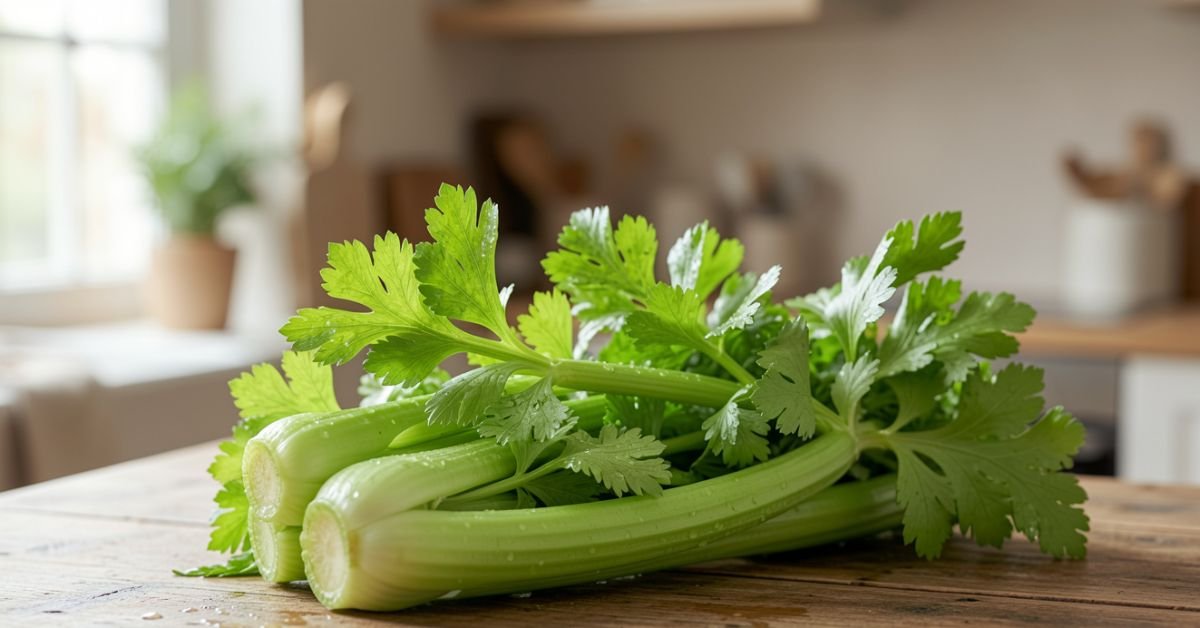
Pravi celer known botanically as Apium graveolens var. dulce and commonly called stalk celery or Pascal celery is one of the most versatile and widely consumed vegetables in the world. Its crisp, ribbed green stalks, with their distinctive mild, slightly salty flavor, are a staple in kitchens from the Mediterranean to North America.
Unlike its close relative celeriac (koren celera, Apium graveolens var. rapaceum), which is cultivated for its bulbous, edible root, pravi celer is grown primarily for its long, fibrous petioles and aromatic leaves. Understanding this distinction is essential for cooks, gardeners, and health-conscious consumers alike.
This comprehensive guide covers everything you need to know: botanical classification, nutritional value, health benefits, culinary applications, cultivation techniques, selection and storage, and important safety information.
What is Pravi Celer? Classification & Botanical Overview
Taxonomy and Botanical Classification
Pravi celer belongs to the family Apiaceae (formerly Umbelliferae), a large family of flowering plants that also includes carrots, parsley, dill, fennel, and coriander. Its full scientific name is Apium graveolens var. dulce (Dulce Group). The species Apium graveolens encompasses three major cultivated groups:
- Dulce Group (Pravi Celer / Stalk Celery): Grown for its long, thick, crisp petioles. The most commonly consumed form in Western markets.
- Rapaceum Group (Celeriac / Root Celery): Cultivated for an enlarged, turnip-like hypocotyl. Has a stronger, earthier flavor. Often confused with pravi celer.
- Secalinum Group (Leaf Celery / Cutting Celery): Grown primarily for its aromatic leaves, used as an herb. Thin, hollow stalks with a more intense flavor.
Pravi Celer (Stalk) vs Celeriac (Root) Key Differences
| Feature | Pravi Celer (Stalk) | Celeriac (Root) |
| Part Used | Petioles (stalks) and leaves | Enlarged hypocotyl (root) |
| Texture | Crisp, fibrous, crunchy | Dense, firm, smooth when cooked |
| Flavor | Mild, fresh, slightly salty | Earthy, nutty, more intense |
| Common Uses | Raw in salads, juicing, snacking, mirepoix | Roasted, pureed, soups, gratins |
| Appearance | Long green ribbed stalks in a bunch | Round, knobby, brownish-white globe |
| Water Content | ~95% | ~88% |
| Calories (100g) | 14 kcal | 42 kcal |
Physical Description
A mature head of pravi celer consists of a tightly packed cluster of 8–12 upright petioles (stalks), each measuring 30–50 cm in length. The stalks are deeply ribbed longitudinally and feature angular collenchyma cells the fibrous “strings” that run along the outer surface and can be removed before eating.
Leaves: Pinnate, compound, dark green, with a distinctive aromatic scent. Used dried or fresh as a flavoring herb.
Flowers: Tiny, creamy-white, arranged in compound umbels. Appear in the plant’s second year (it is a biennial).
Seeds: Small, brown, aromatic used whole or ground as a spice.
The variety known as “Pascal celery” the dominant commercial type features large, solid, pale-green petioles prized for their mild flavor and excellent shelf life.
Nutritional Composition and Health Benefits
Nutritional Value Per 100g (Raw Stalk)
| Component | Per 100g Raw | % Daily Value |
| Water | 95.4 g | \ |
| Energy | 14 kcal (58 kJ) | 1% |
| Carbohydrates | 3.0 g | 1% |
| Dietary Fiber | 1.6 g | 6% |
| Protein | 0.69 g | 1% |
| Fat | 0.17 g | <1% |
| Vitamin K | 29.3 µg | 24% |
| Potassium | 260 mg | 7% |
| Sodium | 80 mg | 3% |
| Vitamin C | 3.1 mg | 4% |
| Folate (B9) | 36 µg | 9% |
Pravi celer is primarily water (over 95%), making it one of the lowest-calorie vegetables available. Its nutritional profile, while not as dense as leafy greens, provides meaningful contributions of Vitamin K, folate, potassium, and dietary fiber.
Key Health Benefits
Rich in Antioxidants Anti-Inflammatory Properties
Celery contains specific phytochemicals notably butylphthalide and sedanolide which are responsible for its characteristic aroma and have been studied for anti-inflammatory effects. These compounds belong to the phthalide class, unique to the Apiaceae family. Regular consumption may help reduce markers of chronic inflammation.
Supports Digestive Health
With 1.6 g of dietary fiber per 100g and an exceptionally high water content, pravi celer promotes healthy digestion. Fiber supports regular bowel movements, feeds beneficial gut bacteria, and helps prevent constipation. Its mild diuretic properties also support kidney function.
Blood Pressure Regulation
Phthalides found in celery have been shown in animal studies to relax the smooth muscle of artery walls, potentially reducing blood pressure. The vegetable is also relatively low in sodium (80 mg per 100g natural) though celery salt is high in sodium and should be used sparingly.
Excellent Hydration Source
At 95% water, celery is one of the most hydrating foods available. Consuming it contributes to daily fluid intake, which supports cellular function, skin health, kidney filtration, and temperature regulation.
Vitamin K and Bone Health
A 100g serving of celery provides 24% of the recommended daily intake of Vitamin K a fat-soluble vitamin essential for blood clotting and bone metabolism. This makes celery a valuable addition to diets focused on bone density and cardiovascular health.
Culinary Uses From Mirepoix to Juice
Culinary Foundation: Mirepoix and the Holy Trinity
Pravi celer is one of the three foundational aromatics in Western cooking. In French cuisine, it forms part of the mirepoix a combination of diced celery, carrots, and onions sautéed in butter as the flavor base for stocks, soups, braises, and sauces. In Cajun and Creole cooking, it is one component of the “holy trinity” celery, bell peppers, and onions the aromatic foundation of dishes like gumbo and jambalaya.
This culinary importance means pravi celer is consumed in enormous quantities globally, not always as the star ingredient but as an essential supporting flavor.
Using the Whole Plant
Stalks (Petioles)
- Raw: Eaten as a snack (often with peanut butter or hummus), in salads (e.g., Waldorf salad), or as a garnish for cocktails such as the Bloody Mary.
- Cooked: Added to soups, stews, and casseroles. Softens and mellows in flavor.
- Juiced: A popular health drink. Celery juice has become a widespread wellness trend, valued for its hydration and mild flavor.
- Pickled: Submerged in brine (vinegar, salt, oil) for preservation. The distinctive flavor pairs well with pickled vegetables.
Leaves
- Fresh: Added to salads or used as an herb garnish similar in use to parsley.
- Dried: Ground or crumbled as a flavoring herb for soups, stews, and spice blends.
- Buffalo wings: Traditionally served alongside in American cuisine to cool the heat.
Seeds
- Whole seeds: Used as a spice in pickling brines, bread, and savory baked goods.
- Celery salt: Ground celery seed mixed with table salt used in spice rubs, the Bloody Mary, Old Bay Seasoning, and as a finishing salt.
- Essential oil: Extracted for use in the perfume and food flavoring industries. The key aromatic compounds are apiole and sedanolide.
Popular Recipes and Modern Trends
Celery Juice Trend: Over the last decade, raw celery juice has gained massive popularity as a morning health drink. Proponents claim detoxification, gut healing, and energy-boosting benefits. While clinical evidence for these specific claims is limited, celery juice is genuinely nutritious hydrating, low-calorie, and rich in Vitamin K and antioxidants.
Khoresh Karafs: A classic Persian stew made with celery, herbs (parsley, mint), and lamb or beef. One of the most beloved traditional applications of celery in Iranian cuisine.
Celery Pickling: Sliced stalks can be quick-pickled in a solution of vinegar, salt, sugar, and spices within 24 hours. Excellent as a condiment alongside fatty meats or cheese boards.
How to Select, Store, and Prepare Celery
Selecting Fresh Celery What to Look For
Choosing high-quality pravi celer ensures maximum flavor and nutritional value. Follow these criteria when shopping:
- Stalks: Should be firm and upright, not limp or flexible. Press lightly they should snap rather than bend.
- Color: Bright, pale-to-medium green. Avoid yellowed or overly pale stalks (sign of over-blanching or age) or dark, slimy outer stalks.
- Leaves: Fresh, green, and unwilted. Brown or mushy leaves indicate age.
- Base: Compact and tightly packed. A splayed or open base suggests the celery is past its prime.
- Aroma: Should smell fresh, clean, and characteristically celery-like. No sour or fermented odor.
Storage Maximizing Shelf Life
Pravi celer is sensitive to ethylene gas (produced by apples, pears, and bananas) and dries out quickly if stored improperly. Commercial producers store it at 0–2°C in anti-fogging, micro-perforated shrink wrap to maximize shelf life (2–4 weeks). At home:
- Best method: Wrap stalks tightly in aluminum foil (not plastic). Foil allows slight moisture exchange while preventing excess drying. Store in the vegetable drawer of your refrigerator.
- In water: Stand stalks upright in a glass or jar with an inch of water, cover loosely with a plastic bag. Refreshes slightly wilted celery within hours.
- Shelf life at home: 2–3 weeks when properly wrapped. Leaves will wilt within 5–7 days.
- Do not store at room temperature: Celery loses crispness rapidly and becomes limp and bitter within 1–2 days outside refrigeration.

Preparation Techniques
Removing strings: Snap the base of a stalk and pull upward along the convex (outer) surface to strip the fibrous collenchyma strings. Alternatively, use a vegetable peeler. This step is particularly recommended for older, larger stalks.
Washing: Rinse stalks individually under cold running water, paying attention to the inner concave surface where soil and grit accumulate.
Cutting: For cooking, cut into uniform pieces (1–2 cm) to ensure even heat distribution. For raw snacking, cut into sticks of 8–10 cm.
Freezing: Blanch cut pieces in boiling water for 2–3 minutes, then transfer immediately to an ice bath. Drain, dry, and freeze in portioned bags. Frozen celery loses its raw crunch but is perfectly suitable for cooked applications (soups, stews, stocks).
Growing Celery in the Garden
Growing Requirements
Pravi celer is one of the more demanding vegetables to grow at home. It requires specific conditions to thrive:
- Climate: Cool and temperate. Ideal growing temperatures are 15–21°C. It bolts (flowers prematurely) in excessive heat.
- Growing season: Long typically 120–180 days from seed to harvest. Best started indoors 10–12 weeks before the last frost date.
- Soil: Rich, fertile, well-draining loam with abundant organic matter. Prefers a slightly acidic to neutral pH (6.0–7.0).
- Water: Constant and consistent moisture is critical. Celery has shallow roots and is highly susceptible to drought stress, which causes bitterness and premature bolting.
- Sunlight: Full sun to partial shade (at least 6 hours of direct sunlight daily).
Sowing and Transplanting
Celery seeds are tiny and slow-germinating (2–3 weeks). Sow on the surface of a fine seed-starting mix do not cover deeply, as seeds need light to germinate. Keep consistently moist at 18–21°C. Transplant seedlings outdoors after all frost risk has passed, spacing plants 20–30 cm apart in rows 45–60 cm apart.
Blanching Techniques
Traditional celery cultivation involves blanching the process of excluding light from the stalks to reduce bitterness and produce pale, tender petioles. There are two methods:
- Traditional earthing-up: Soil is gradually mounded up around the base of the plants as they grow, excluding light from the lower stalks. Requires trenching and regular attention.
- Self-blanching varieties: Modern cultivars (such as ‘Golden Pascal’ or ‘Tall Utah’) are bred to produce naturally pale, mild-flavored stalks without earthing up. These are planted closer together (20 cm spacing) so plants shade each other.
Harvesting
Celery can be harvested once heads reach a marketable height of 30–45 cm. The entire head is cut at soil level with a sharp, clean blade. Alternatively, individual outer stalks can be removed progressively throughout the season. Harvest before the first heavy frost exposure to temperatures below 0°C damages the stalks. For best flavor, harvest in the morning when the plant is fully hydrated.
Safety, Allergies, and Potential Risks
Celery Allergy
Celery allergy is one of the most clinically significant food allergies in Europe, recognized under EU and UK food labeling regulations as one of the 14 major allergens requiring mandatory declaration on food packaging. Reactions range from mild oral allergy syndrome (itching, tingling in the mouth) to severe anaphylactic shock.
Celery allergy is strongly associated with pollen-food allergy syndrome. Individuals sensitive to birch tree pollen, mugwort, or ragweed pollen frequently exhibit cross-reactive responses to celery proteins. Those allergic to other Apiaceae family members particularly carrots, parsley, and coriander are also at elevated risk.
Even trace amounts of celery (seeds, leaves, stalk, or derived spice) can trigger reactions in highly sensitive individuals. Anyone with a known celery allergy should carefully read ingredient labels, as celery extract and celery seed are common components in spice blends, soups, stocks, and processed meats.
Drug Interactions Vitamin K and Blood Thinners
Pravi celer is a moderate source of Vitamin K (approximately 29 µg per 100g). Vitamin K plays a direct role in blood clotting factor synthesis. Patients taking anticoagulant medications most commonly warfarin (Coumadin) are advised to maintain consistent Vitamin K intake, as large fluctuations can alter the drug’s effectiveness. Patients on such medications should consult their physician before making significant changes to their celery consumption.
Sulfites and Pesticide Residues
Historically, sulfite compounds were applied to celery in restaurants to maintain appearance. The U.S. Food and Drug Administration (FDA) banned this practice in 1986 following reports of severe reactions in sulfite-sensitive individuals. Today, commercially sold fresh celery should be sulfite-free, though processed celery products may still contain sulfites as preservatives.
Conventionally grown celery is frequently cited in pesticide residue monitoring programs due to the multiple applications required during its long growing season. Consumers concerned about pesticide exposure may choose certified organic celery, or wash and peel stalks thoroughly before consuming.
History and Etymology of Celery
Ancient Origins
Wild celery (Apium graveolens) originated in the Mediterranean basin and was known to ancient civilizations long before its modern culinary forms were developed. In Ancient Greece, celery (called selinon σέλινον in Greek, with Mycenaean Greek records using the form se-ri-no) held significant cultural and religious importance. It was associated with death and the underworld the hero’s at the Nemean Games and Isthmian Games wore garlands of wild celery rather than laurel.
In Ancient Egypt, celery leaves have been identified among the botanical remains found in the tomb of Pharaoh Tutankhamun. References appear in Homer’s Iliad and Odyssey, where the meadows of the afterlife are described as populated with wild celery.
Medieval to Modern Use
Celery was cultivated in medieval European gardens largely for medicinal rather than culinary purposes. Charlemagne included it in his list of plants to be grown on imperial estates in the 9th century. The transition from medicinal herb to common vegetable accelerated in 17th-century Italy and France, where selective breeding reduced the bitterness of wild forms.
The word entered English via French céleri, Italian seleri (plural of selero), ultimately derived from Latin selinon, from the original Greek. The vegetable reached mass popularity in 19th-century America, where elaborate “celery vases” were displayed on dining tables as a symbol of elegance and prosperity.
Frequently Asked Questions (FAQ)
The following answers address the most commonly searched questions about pravi celer:
| Frequently Asked Question | Short Answer |
| Is celery healthy for daily consumption? | Yes low in calories, high in water and Vitamin K, with antioxidant compounds. |
| How many calories in one celery stalk? | Approximately 6–10 kcal per medium stalk (about 40 g). |
| Can celery be eaten raw? | Absolutely raw is the most common way. Provides maximum crunch and nutrients. |
| Is celery good for weight loss? | Yes very low calorie density, high fiber and water content promote satiety. |
| How do you remove the strings from celery? | Use a peeler or snap the base of the stalk and pull upward to strip the fibrous strings. |
| What is the difference between celery and celeriac? | Celery (pravi celer) is grown for its stalks; celeriac is grown for its enlarged, edible root. |
| Is celery juice really detoxifying? | No strong scientific evidence supports detox claims; however, it is hydrating and nutritious. |
| Can celery be frozen? | Yes, but blanch it first (2–3 min) to preserve color and texture before freezing. |
| Why does celery sometimes taste bitter? | Bitterness increases with age, drought stress, or if harvested too late in the season. |
Conclusion
Pravi celer (Apium graveolens var. dulce) is far more than a simple garnish or diet food. It is a botanically fascinating, historically rich, and culinarily indispensable vegetable with a distinctive chemical profile including the phthalide compounds butylphthalide and sedanolide that contribute to both its characteristic aroma and its studied health benefits.
Whether you are selecting fresh stalks at the market, growing a kitchen garden, preparing a classic French mirepoix, or navigating a food allergy, this guide provides a comprehensive foundation. Pravi celer, properly understood and utilized, is one of the most valuable and versatile vegetables in any cook’s or gardener’s repertoire.
CLICK HERE FOR MORE BLOG POSTS

“In a world of instant takes and AI-generated noise, John Authers writes like a human. His words carry weight—not just from knowledge, but from care. Readers don’t come to him for headlines; they come for meaning. He doesn’t just explain what happened—he helps you understand why it matters. That’s what sets him apart.”