
New York, United States
News Desk | Business & Finance
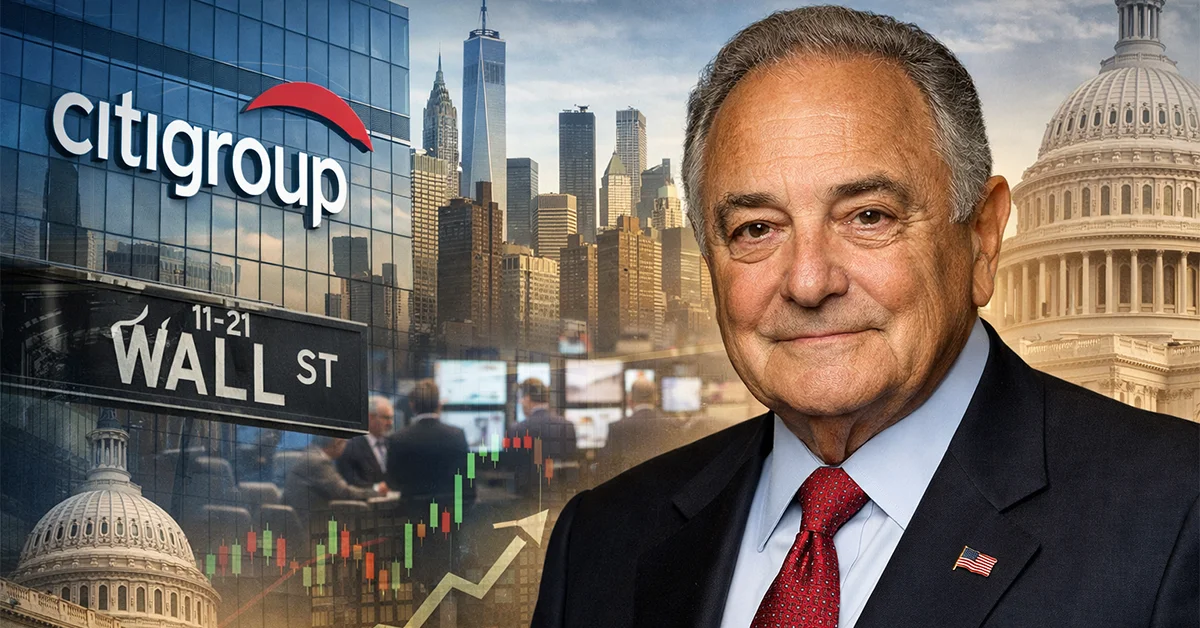
Sandy Weill, the former chairman and chief executive of Citigroup, remains one of the most influential figures in modern American finance for his central role in building the world’s largest financial supermarket and helping dismantle Depression-era banking barriers. His career, spanning decades on Wall Street, continues to shape debate over regulation, risk, and the structure of global banking.
Sandy Weill rose to prominence through a series of aggressive mergers in the 1980s and 1990s, culminating in the 1998 combination of Travelers Group and Citicorp. The deal created Citigroup, a financial giant that brought together commercial banking, investment banking, and insurance under one corporate roof, a structure that challenged long-standing regulatory limits.
At the time, the merger effectively pushed U.S. lawmakers to repeal key provisions of the Glass-Steagall Act, the New Deal-era law that separated commercial and investment banking. Congress formally eliminated those restrictions in 1999 with the Gramm-Leach-Bliley Act, a change widely viewed as enabling consolidation across the financial sector.
Citigroup quickly became a dominant global institution, operating in more than 100 countries and employing hundreds of thousands of people. Supporters credited Sandy Weill with visionary deal-making and scale, while critics argued the model increased systemic risk by concentrating diverse financial activities within a single firm.
Following the 2008 global financial crisis, Citigroup required a massive U.S. government bailout to remain solvent, reigniting scrutiny of the banking structure Weill helped create. In a 2012 interview with CNBC, Weill publicly said the largest banks should be broken up and called for a return to separating traditional banking from higher-risk trading activities.
Regulators have since imposed stricter capital requirements and oversight on large financial institutions, though the basic universal banking model remains intact. Weill retired from active management years earlier and has since focused on philanthropy, including major donations to education and medical research.
The long-term impact of Sandy Weill strategy continues to influence policy discussions as governments weigh financial stability against the efficiencies of scale in global banking.
ALSO READ: Ted Lasso Season 4 Confirmed In Development At Apple TV+
