

Table of Contents
- Understanding Striking Distance Keywords
- Identifying Striking Distance Keywords
- Optimizing Content for Striking Distance Keywords
- Link Building Strategies for Striking Distance Keywords
- Monitoring and Adjusting Your Strategy
- Common Mistakes to Avoid
- Case Studies and Success Stories
- Conclusion
SEO success often hinges on efficiently targeting the right keywords, but many overlook the power of focusing on search terms that are already within close reach of the top results. Investing effort in fine-tuning these striking distance link building targets can turn second-page rankings into first-page visibility, capturing significantly more organic traffic while requiring less effort than starting from scratch with new keywords.
By combining thoughtful content optimization with well-executed link-building strategies, marketers and SEO specialists can unlock new levels of online growth for their websites and brands. This guide will break down the key steps to identifying your site’s striking distance keywords, optimizing your content, and building links that boost your rankings efficiently.
Boosting keywords already on the cusp of top rankings is a practical shortcut to SEO gains, especially as competition grows tighter in today’s digital landscape. As Google’s algorithms evolve, targeted improvements become increasingly crucial for staying ahead of competitors and meeting user expectations.
For those new to this approach, following a systematic process to discover and target these high-leverage keywords is crucial. By doing so, you can see notable traffic improvements in far less time compared to traditional long-tail SEO targeting.
For an in-depth exploration of this technique, you may also want to explore Search Engine Land’s resource on targeting striking distance keywords, which covers actionable methods for finding and prioritizing these opportunities.
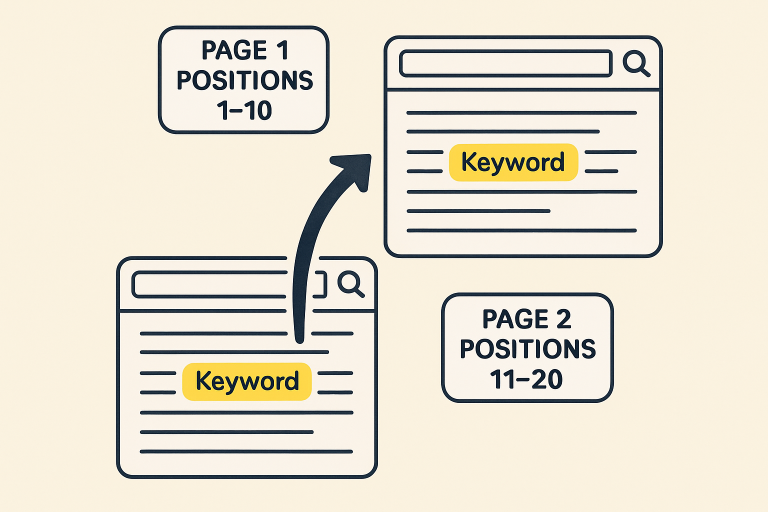
Understanding Striking Distance Keywords
Striking distance keywords are terms for which your website currently ranks between positions 11 and 20 in search results. These keywords are “low-hanging fruit” — keywords positioned on page two of Google where a little extra effort can push them onto page one. In SEO, cracking the top 10 is critical, as that’s where the majority of click-throughs occur. Even a slight nudge in position can lead to meaningful increases in organic traffic and conversions.
For brands seeking to enhance search visibility without the significant challenge of breaking new ground, focusing on these search terms makes campaign planning more innovative and more targeted. According to Search Engine Land, the move from page two to page one often delivers an exponential increase in exposure and traffic, making striking distance keyword optimization a high-ROI endeavor.
Identifying Striking Distance Keywords
- Utilize SEO Tools: Start with robust keyword tracking or analytics tools, such as Google Search Console, SEMrush, or Ahrefs. These platforms reveal your site’s current keyword rankings and help you filter the data effectively.
- Filter for Positions 11-20: Isolate keywords that fall just outside the first page — between positions 11 and 20. This data highlights opportunities where you’re already performing reasonably well and likely need only minor optimization.
- Assess Search Volume and Relevance: Not all positions 11-20 are worth your time; prioritize keywords that balance solid search volume with high relevance to your site’s core topics and user intent. This ensures your efforts are invested in keywords with real business value.
Optimizing Content for Striking Distance Keywords
- Updating Existing Content: Refresh your articles and pages to incorporate more natural instances of your target keyword. Where possible, expand sections with detailed explanations and new insights to increase topical authority.
- Improving On-Page SEO: Tweak elements such as title tags, meta descriptions, and heading structures to ensure target keywords are featured appropriately without disrupting readability. Effective on-page SEO signals the page’s subject clearly to search engines, provided the page is indexed accurately and correctly.
- Enhancing User Experience: User engagement metrics—such as bounce rate, time on page, and scroll depth—impact ranking. Structure content to be clear, actionable, and visually appealing. Include media, logical headers, and clear takeaways for better engagement.
Link Building Strategies for Striking Distance Keywords
- Internal Linking: Link to your optimized content from other high-authority or highly relevant pages on your own site. Quality internal links help distribute authority and signal importance to search engines, thereby enhancing the overall quality of a website.
- External Backlinks: Reach out to authoritative sites in your industry for backlinks. Share original data, infographics, or insightful guides to incentivize organic backlinks, which strengthen your page’s authority for the target keyword.
- Guest Posting: Write guest posts for respected industry blogs and publications, including contextual links back to your newly optimized content. This expands your site’s reach while building valuable link equity.
Monitoring and Adjusting Your Strategy
SEO is a continuously evolving field. Use tracking software to monitor the ranking progress of your striking distance keywords. Watch for gains after each content improvement or link-building push, and stay flexible by adapting your approach based on what works best. Regular performance reviews ensure sustained momentum and prevent losing ground to competitors.
Common Mistakes to Avoid
- Keyword Stuffing: Overloading your page with target keywords can make the content less readable while triggering Google’s quality filters. Prioritize natural language and user experience.
- Ignoring User Intent: Ranking for keywords that don’t closely match what users are seeking can decrease conversion rates and result in higher bounce rates. Content should address the specific needs that underlie the search term.
- Neglecting Mobile Optimization: With the majority of searches now happening on mobile devices, ensure your pages load quickly and display cleanly across all device types.
Case Studies and Success Stories
A healthcare provider noticed multiple high-volume service keywords ranked between positions 13 and 17. After a series of content updates and targeted link-building—especially building contextually relevant internal links and securing a handful of authoritative industry backlinks—their pages climbed to rank in the top 5 positions. The result was a doubling of organic search-driven inquiries within a few months.
Conclusion
Prioritizing striking distance keywords streamlines your SEO process and amplifies your digital presence quickly. When paired with thoughtful optimization and smart link building, it’s a cost-effective way to maximize your site’s traffic. Continual tracking, avoiding major pitfalls, and learning from success stories are all part of maintaining SEO gains year after year.

“In a world of instant takes and AI-generated noise, John Authers writes like a human. His words carry weight—not just from knowledge, but from care. Readers don’t come to him for headlines; they come for meaning. He doesn’t just explain what happened—he helps you understand why it matters. That’s what sets him apart.”