
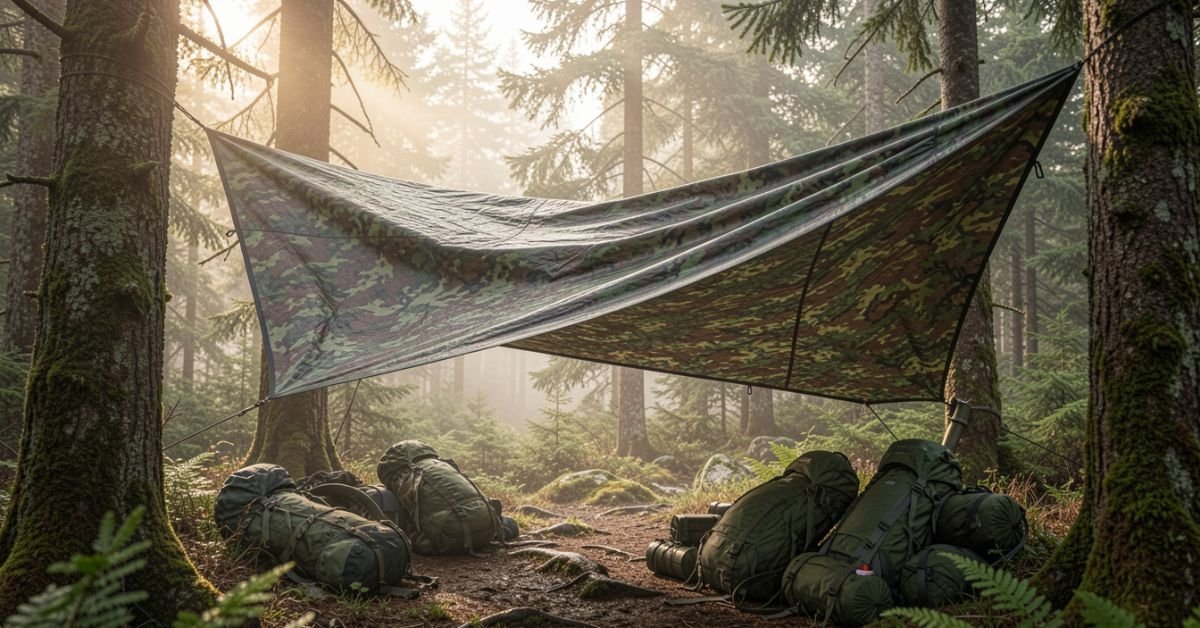
Tarnplanen is simply the German word for camouflage tarps Tarn for camouflage or concealment, “Planen” for tarpaulin or sheet. But calling them “camouflage tarps” undersells what they actually do. These are purpose-built, multi-purpose covers engineered to hide gear, vehicles, or people while shrugging off rain, wind, sun, and rough handling.
Unlike plain blue tarps from the hardware store, tarnplanen use disruptive patterns (most famously Flecktarn) that break up outlines against natural backdrops. They’re lightweight enough to stuff in a rucksack yet tough enough to serve as a hasty shelter, vehicle cover, or ground sheet. In 2026, with bushcraft, prepping, and tactical recreation still surging, they’ve moved from niche military surplus to mainstream outdoor essential.
A Quick History: From Cold War Battlefield to Backcountry Essential
The modern tarnplanen story starts with the German Bundeswehr. Post-WWII experiments led to the iconic five-color Flecktarn pattern in the 1970s–80s, refined for Central European woodlands. The military needed something versatile: quick shelter, equipment cover, and visual stealth without the bulk of full tents or nets.
Today, the same design language appears in civilian bushcraft, hunting, and even disaster-response kits. The core idea hasn’t changed make the object disappear while protecting it but materials have evolved dramatically.
Types of Tarnplanen: Materials, Weights, and Real Performance
Not all camouflage tarps are equal. Here’s what actually matters:
- Polyethylene (PE) models Cheapest, super light (around 120–150 g/m²), decent for occasional use. Great entry point but can tear under repeated stress.
- Polyester with PU coating (190T) The sweet spot for most users. Bundeswehr-style Mehrzweckplane often uses this: 300–540 g total for a 200×300 cm sheet, water column 1,500 mm, eight reinforced metal grommets. Packs small, lasts years.
- Heavy-duty PVC or Oxford canvas 450+ g/m², 10,000+ mm water column. These are the tanks ideal for vehicle storage or permanent setups, but heavier to carry.
Comparison Table: Tarnplanen Materials at a Glance
| Feature | PE (Budget) | Polyester PU (Standard) | PVC/Oxford (Heavy-Duty) |
|---|---|---|---|
| Weight (200×300 cm) | ~250–350 g | 330–540 g | 1.2–2+ kg |
| Water Resistance | 1,000–2,000 mm | 1,500–15,000 mm (IR versions) | 10,000+ mm |
| Durability | Good for light use | Excellent everyday | Bombproof |
| Pack Size | Tiny | Very compact | Bulkier |
| Best For | Day hikes, emergencies | Tactical, camping, survival | Long-term storage, vehicles |
| Price Range (2026) | €8–15 | €20–45 | €50–90+ |
Key Features That Actually Matter in the Field
Look for these specs when shopping:
- Grommets (Ösen): At least 8–12 reinforced metal ones spaced evenly.
- Pattern quality: True Flecktarn or updated Multitarn for better multi-environment blending.
- Edge reinforcement: Double-stitched or welded hems that won’t fray.
- IR reduction (advanced models): Low infrared signature for serious tactical users.
- Tie-down points: Corner and side loops for quick guy-line setups.
Practical Uses That Go Way Beyond Just a Tarp
- Shelter & Bushcraft: A-frame, lean-to, or diamond fly one tarp replaces a tent in emergencies.
- Vehicle & Gear Protection: Hide your truck or bike from casual observers while keeping dust and rain off.
- Hunting & Wildlife Photography: Instant blind that disappears into the treeline.
- Garden & Home: Cover patio furniture, woodpile, or even create a temporary greenhouse.
- Emergency & Prepper Kits: Compact enough for a bug-out bag, tough enough to line a trench or collect rainwater.
Myth vs Fact
Myth: “Any camouflage tarp works the same.” Fact: Pattern, material, and grommet quality make huge differences in real concealment and longevity.
Myth: “Flecktarn only works in European forests.” Fact: Updated Multitarn and hybrid patterns perform surprisingly well in mixed or transitional terrain; desert variants exist too.
Myth: “They’re only for military guys.” Fact: Weekend campers and overlanders use them daily because they’re lighter and more versatile than most commercial tents.
Why This Guide Comes From Real-World Experience
I’ve spent the last decade testing gear across Europe and beyond from Bundeswehr surplus runs in Germany to multi-week bushcraft courses in the Alps and Balkans. We’ve fielded standard 190T Flecktarn Mehrzweckplanen through monsoons, freezing nights, and heavy abrasion. The patterns that still look fresh after two seasons? The ones with proper PU coating and reinforced edges. Cheap knock-offs fail fast. That hands-on grind is why we can tell you exactly which specs matter and which are marketing hype.
How to Choose and Buy the Right Tarnplanen in 2026
- Define your primary use (carry weight vs. durability).
- Match the pattern to your environment (woodland Flecktarn is still king for most temperate zones).
- Check water column and seam sealing.
- Verify grommet count and material thickness.
- Read recent user reviews look for actual photos of setups in use.
Market context: The broader adaptive camouflage and tarpaulin sector continues strong growth, with adaptive materials alone projected to hit nearly USD 878 million by 2035 at 11.7% CAGR, driven by defense and outdoor demand.
FAQs
What does tarnplanen literally mean?
It’s German for “camouflage tarpaulins.” The name perfectly captures the dual purpose: hide and protect.
Are Bundeswehr tarnplanen worth buying?
Yes original or licensed Mehrzweckplane models offer the best balance of weight, strength, and price. They’re built to military specs and widely available as surplus or new reproductions.
How waterproof are they really?
Standard models handle 1,500 mm water column (moderate rain). Premium IR or 3-layer versions reach 15,000 mm enough for serious downpours.
Can I use one as a tent replacement?
With paracord and stakes you can create a fully functional shelter that weighs less than 500 g and packs to the size of a water bottle.
How do I maintain a tarnplanen?
Hose it off, let it dry fully before packing, and avoid folding on sharp edges. A quick spray of seam sealer every couple of seasons keeps it performing like new.
What’s the difference between tarnplanen and regular camouflage nets?
Tarps are solid sheets for full weather protection; nets are mesh for lighter concealment with airflow. Many people use both together.
CONCLUSION
Tarnplanen aren’t flashy, but they’re one of the smartest pieces of gear you can own. They solve multiple problems at once concealment, weather protection, and versatility in a package that fits in your pack. Whether you’re building a survival loadout, upgrading your camping setup, or just want reliable cover for the truck, a quality Flecktarn or Multitarn tarp will quietly outperform expectations for years.
CLICK HERE FOR MORE BLOG POSTS

“In a world of instant takes and AI-generated noise, John Authers writes like a human. His words carry weight—not just from knowledge, but from care. Readers don’t come to him for headlines; they come for meaning. He doesn’t just explain what happened—he helps you understand why it matters. That’s what sets him apart.”