
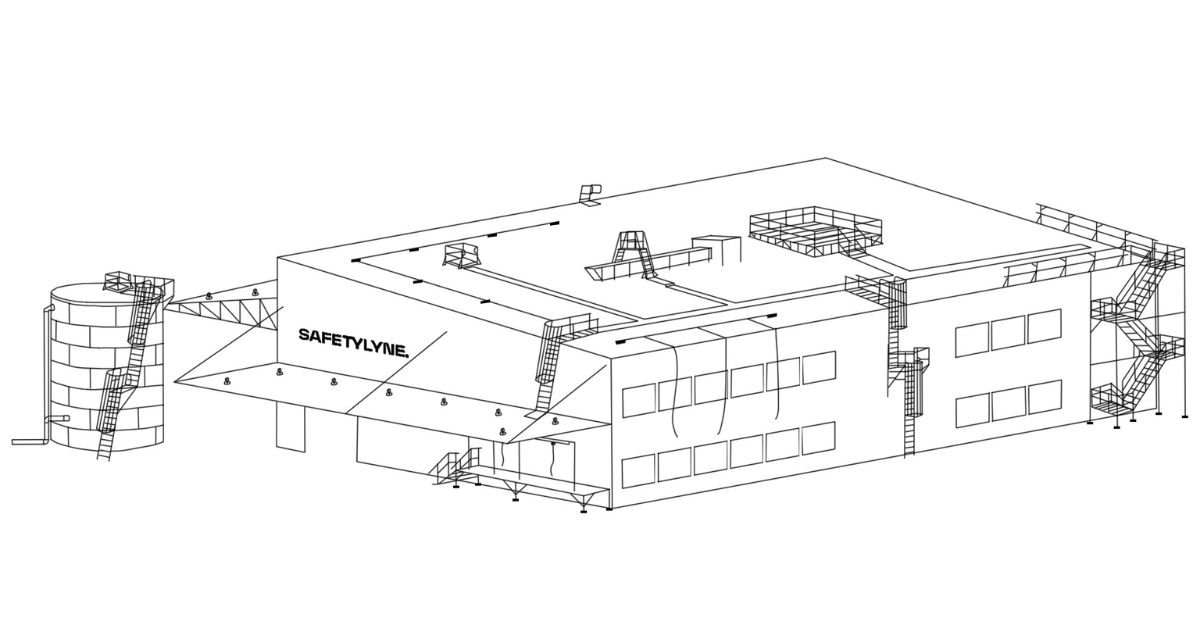
Working at heights in commercial or industrial buildings presents significant risks to workers, which is why fall protection systems are essential. These systems are designed to prevent accidents, ensuring worker safety and compliance with health and safety regulations. In commercial and industrial environments, fall protection systems help safeguard workers performing tasks such as roofing, maintenance, inspections, and installations.
This article will explore the 4 types of fall protection, their applications, and the preferred methods of fall protection in both commercial and industrial buildings, focusing on types of fall protection systems for industrial/commercial roofing.
What Are Fall Protection Systems?
Fall protection systems are a combination of equipment and strategies designed to prevent workers from falling or to arrest their fall in case an accident occurs. In industries such as construction, manufacturing, and maintenance, these systems are critical for keeping employees safe while working at heights, such as on roofs, scaffolding, ladders, or elevated platforms.
The choice of fall protection system depends on several factors, including the nature of the work, the height at which workers will be working, and the specific hazards present at the job site. There are four main types of fall protection systems, each suited to different applications and environments.
The 4 Types of Fall Protection
- Fall Restraint Systems
Fall restraint systems are designed to prevent a worker from reaching an area where a fall could occur. Instead of stopping a fall after it has happened, these systems restrict the worker’s movement, keeping them away from dangerous fall zones. For example, in a commercial or industrial building, fall restraint systems may be used to keep workers away from edges or skylights, ensuring that they cannot access areas where a fall risk is present.
Components:
- Lanyards that limit the worker’s reach
- Roof anchor points strategically placed to restrict movement
- Lanyards that limit the worker’s reach
- Fall restraint systems are commonly used for tasks where workers are required to work close to edges or on rooftops, but the risk of falling can be eliminated by limiting access to hazardous zones.
- Fall Arrest Systems
Fall arrest systems are designed to stop a worker’s fall once it has begun. These systems are typically used when there is no practical way to prevent a fall from occurring, such as when a worker is on a steep roof or working near unprotected openings. Once the worker falls, the fall arrest system will slow their descent and eventually stop the fall.
Components:
- Lanyards or rope grabs that allow for some movement but stop the fall when necessary
- Shock absorbers to reduce the impact forces on the body during a fall
- Roof anchor points capable of withstanding the forces exerted during a fall
- Lanyards or rope grabs that allow for some movement but stop the fall when necessary
- Fall arrest systems are often required in high-risk work environments, such as commercial roofs, where workers need to perform tasks at significant heights.
- Guardrails and Safety Barriers
Guardrails and safety barriers are physical barriers installed along the edges of roofs or elevated surfaces to prevent workers from falling off. Guardrails are one of the simplest and most effective methods of fall protection. They are passive systems, meaning they do not rely on the worker to use any personal protective equipment (PPE) like harnesses or lanyards. Once installed, guardrails continuously protect workers from the risk of falling.
Components:
- Metal or plastic guardrails around roof edges, skylights, or unprotected openings
- Toe boards that prevent tools or materials from falling
- Metal or plastic guardrails around roof edges, skylights, or unprotected openings
- Guardrails are often the preferred method of fall protection in situations where workers are frequently on rooftops or other elevated surfaces, as they provide constant, passive protection without the need for additional gear.
- Safety Nets
Safety nets are designed to catch workers in the event of a fall. These nets are typically installed below work areas and act as a backup fall protection system. Safety nets are used when other forms of fall protection are not feasible, such as in large open spaces or on rooftops with limited anchor points.
Components: - Safety nets are especially useful in construction sites and industrial settings where workers are engaged in activities that pose a high risk of falling, such as demolition or structural work on large buildings.
Methods of Fall Protection for Commercial/Industrial Buildings
There are several methods of fall protection that businesses can implement based on the specific needs of the workplace. These methods include a combination of physical barriers, anchor points, personal protective equipment (PPE), and safety systems. Below are the common commercial roof fall protection methods:
1. Roof Anchor Points
Roof anchor points are secure attachment points that are fixed to the roof structure. Workers can attach their safety harnesses or lanyards to these anchor points, providing a secure connection while working at height. Roof anchor points are a key component of fall arrest systems, ensuring that workers can move around the roof safely without the risk of falling.
In commercial buildings, roof anchor points are essential for maintenance workers, roofers, and HVAC technicians who need to access rooftop equipment or perform repairs. They are often installed in accordance with AS1657 (a standard for industrial safety) to ensure their strength and reliability.
2. Roof Access Hatches
Roof access hatches provide a controlled entry point to the roof, ensuring that workers can access the roof safely. These hatches are equipped with safety features such as ladders, guardrails, and non-slip steps, making it easier for workers to enter or exit the roof without falling.
Roof access hatches are particularly important for commercial roof fall protection methods because they help prevent workers from accessing areas without the necessary safety measures. They are often installed in commercial buildings for easy access to rooftop maintenance and inspections.
3. Walkways and Platforms
Installing roof walkways and elevated platforms is another method of fall protection that helps workers move across the roof safely. Walkways provide stable, non-slip paths, reducing the risk of trips and falls while walking on the roof.
Platforms and walkways are often installed in areas where workers need to perform tasks, such as inspecting HVAC systems or cleaning gutters. They help prevent workers from stepping on fragile parts of the roof, such as skylights, which may not support their weight.
Preferred Method of Fall Protection in Commercial/Industrial Roofing
The preferred method of fall protection for commercial and industrial roofing depends on the type of work being done, the specific building design, and the potential fall hazards. For example, roof anchor points and fall arrest systems are essential for workers who need to move freely across a roof and may encounter unprotected edges. Guardrails are often the first choice for preventing falls from edges, especially in situations where workers may be exposed to risk for extended periods of time.
In some cases, a combination of fall restraint and fall arrest systems may be the best solution, offering proactive protection by preventing workers from accessing fall-prone areas and providing arrest capabilities in case a fall does occur.
Conclusion
Fall protection systems are essential for ensuring the safety of workers in commercial and industrial buildings, especially in industries like construction, roofing, and maintenance. By understanding the types of fall protection systems for industrial/commercial roofing and the methods of fall protection available, businesses can choose the best solution for their specific needs.
Whether it’s roof anchor points, roof access hatches, or guardrails, implementing effective fall protection strategies is crucial for compliance with safety regulations and for preventing costly accidents. Ensuring that workers are safe while performing tasks at height is not only a legal responsibility but also an investment in the well-being of your team and the success of your operations.
Frequently Asked Questions (FAQs)
Q1: What are the most common fall protection methods for commercial roofing?
A1: The most common fall protection methods for commercial roofing include roof anchor points, roof access hatches, guardrails, static line systems, and safety nets.
Q2: What is the preferred method of fall protection for workers on industrial rooftops?
A2: The preferred method of fall protection for workers on industrial rooftops depends on the tasks being performed, but roof anchor points combined with fall arrest systems are often used for workers who need to move freely across the roof.
Q3: Are safety nets required for all commercial roof work?
A3: Safety nets are not always required but may be necessary in high-risk scenarios where other fall protection systems cannot be implemented. They are particularly useful for large construction sites or when working in areas with limited anchor points.
CLICK HERE FOR MORE BLOG POSTS
