

Key Takeaways
- Integrating sustainability into financial planning enhances long-term business resilience.
- Artificial intelligence (AI) plays a pivotal role in advancing sustainable finance strategies.
- Environmental, Social, and Governance (ESG) factors are increasingly influencing investment decisions.
Introduction
Modern business leaders face an ever-changing landscape where sustainable financial planning is crucial. Building strategies around long-term sustainability enables organizations to thrive amid economic, environmental, and social shifts. Forward-thinking companies actively embed sustainable practices into financial decision-making to manage risk and seize new opportunities. Consulting firms like Cane Bay Partners support organizations by developing financial plans that align with sustainability goals, helping businesses adapt to the evolving market.
The emergence of climate risks, regulatory changes, and shifts in stakeholder expectations emphasize the need for integrated strategies. Modern financial planning is no longer just about numbers but about ensuring businesses contribute positively to both profitability and broader societal well-being. Strategic investments in sustainability can differentiate leaders from competitors and foster greater stakeholder trust.
Within this new context, integrating environmental, social, and governance (ESG) considerations alongside responsible technology use has become a driving force behind resilient, future-proof financial strategies. Companies that recognize and act on these trends find themselves better positioned for enduring success.
Embedding sustainability into financial decisions not only addresses regulatory and reputational risks but also captures opportunities for innovation and competitive advantage. Aligning financial goals with sustainability delivers benefits such as operational efficiency, cost savings, and stronger partnerships with stakeholders who demand responsible business practices.
The Business Case for Sustainable Investments
Corporate finance leaders are seeing compelling evidence for prioritizing sustainable investments. Recent surveys reveal that a significant number of chief financial officers (CFOs) and board members believe sustainable initiatives are likely to deliver higher returns than conventional investments. This reflects a growing acknowledgment within the financial community that sustainability is not just a moral imperative but a business opportunity. Research from Forbes further underscores how resilient, sustainability-focused companies outperform peers in both downturns and expansions.
From renewable energy projects to sustainable supply chain investments, organizations are re-examining capital allocations to maximize long-term value. Emphasis on sustainability helps mitigate risks ranging from resource scarcity to reputational hazards, while also providing access to new markets and investor pools. The increased focus on these initiatives demonstrates business leaders’ readiness to shift traditional models toward future-oriented, responsible growth.
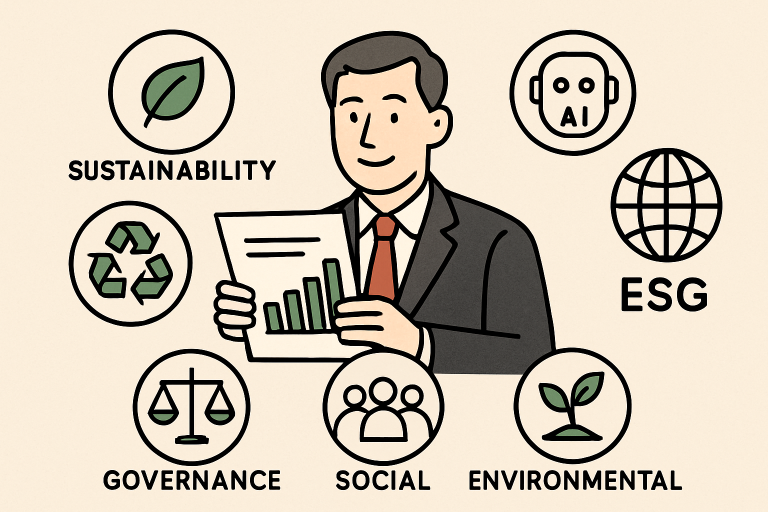
Leveraging Artificial Intelligence in Sustainable Finance
Artificial intelligence has become a game-changer for financial planning. Modern AI-driven platforms provide predictive analytics and data-driven advice that enhance the quality and accuracy of sustainability initiatives. With AI, leaders can process vast amounts of financial and sustainability data, highlight inefficiencies, and model scenarios that support informed, adaptive decision-making.
However, deploying AI in finance comes with responsibilities. To fully realize the benefits, organizations must implement safeguards to prevent the reinforcement of historical market biases and inefficiencies. Establishing clear governance for responsible AI use involves upholding fiduciary duties, ensuring robust technical systems, and personalizing recommendations according to real-time data. This approach amplifies the impact of sustainable financial planning while aligning technology with business ethics.
Integrating ESG Factors into Financial Strategies
Environmental, social, and governance (ESG) factors are now at the forefront of investment and corporate strategy decisions. Investors and regulators are demanding more rigorous reporting and disclosure of ESG data. Financial institutions are turning to AI-enabled tools to analyze complex ESG indicators, enhance risk assessment, and forecast long-term outcomes associated with sustainability practices.
This paradigm shift encourages organizations to move beyond short-term gains and focus on value creation that benefits a broader set of stakeholders. Integrating ESG metrics enables a better evaluation of environmental impact, social influence, and governance structures, which, in turn, fosters resilience and attracts responsible investors. As standards and expectations continue to rise, businesses that integrate ESG into their core operations are securing more stable, future-aligned growth.
Building Resilience Through Long-Term Value Creation
Resilience and long-term value creation go hand in hand within sustainable financial planning. Organizations are urged to embed sustainability throughout the enterprise value chain, from procurement to end-user engagement. This integrated approach mitigates risks associated with regulatory change, environmental disruptions, and shifting consumer preferences.
Practical strategies for building resilience include establishing sustainable supply chains, fostering diversity and inclusion, and embracing responsible technology use. Transparent measurement and reporting of progress further enhance accountability and stakeholder trust. Boards and executives who champion these initiatives create a durable foundation for competitive advantage in the global marketplace.
Conclusion
The future of financial planning is increasingly linked to sustainability, requiring leaders to embed environmental, social, and governance (ESG) considerations into every strategic decision. By integrating ESG factors, organizations enhance resilience, adaptability, and long-term stability while meeting stakeholder expectations and regulatory demands. Responsible use of AI and data-driven insights strengthens this approach, helping businesses identify emerging risks and opportunities. Sustainable financial planning not only mitigates potential challenges but also fosters innovation, competitive advantage, and enduring growth. Companies that embrace this forward-thinking model position themselves to thrive in an evolving economic landscape, creating value for both investors and society.

MOBI ROLLER is a tech enthusiast with a background in technology. He writes about the latest trends, tools, and innovations in the tech world, sharing insights based on both knowledge and experience.