
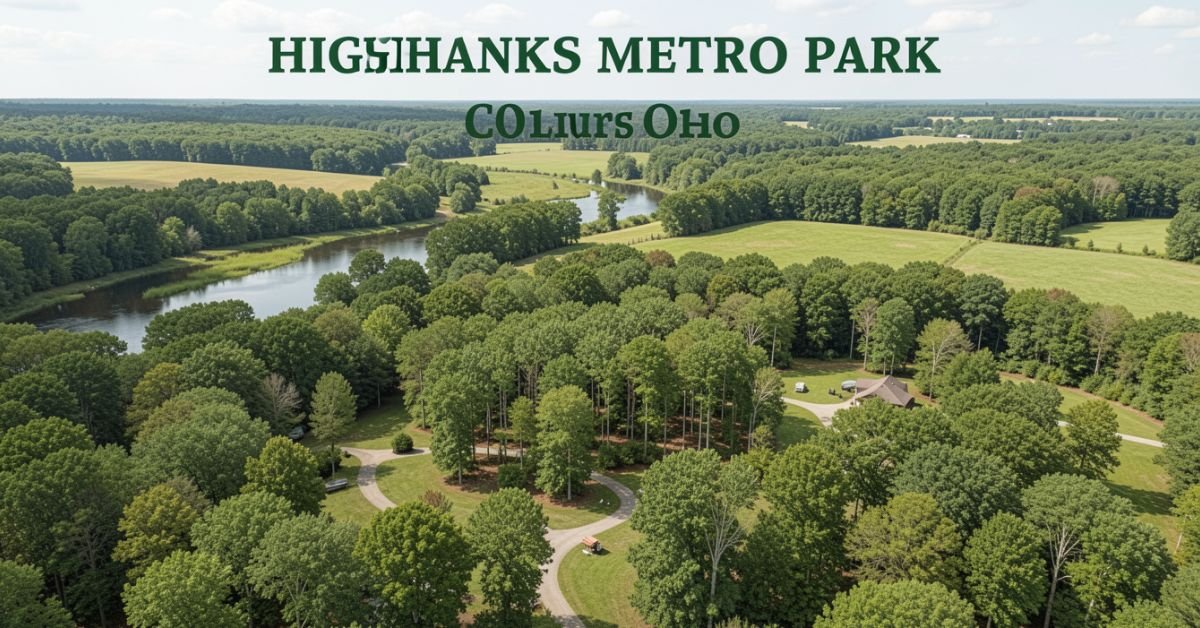
Nestled just 20 minutes north of Columbus, Highbanks Metro Park spans over 1,200 acres of diverse Ohio landscape. While many visitors come for the hiking trails, picnic shelters, and views of the Olentangy River, the park harbors something far more rare: a protected old-growth forest that has stood since before the American Revolution.
In September 2022, the Old-Growth Forest Network (OGNF) officially designated a portion of Highbanks as a protected old-growth forest one of only a handful of such designations in Ohio. This recognition places Highbanks alongside some of the most ecologically significant forests in the eastern United States.
Understanding the park’s ancient trees means understanding its geology, its Indigenous heritage, and the ecological forces that have allowed this forest to persist for centuries. This guide walks you through everything you need to know.
The Crown Jewel: Edward F Hutchins Nature Preserve
At the heart of Highbanks Metro Park lies the 206-acre Edward F. Hutchins Nature Preserve the protected core where the park’s most ancient trees and earthworks are concentrated. Named in honor of a dedicated conservationist, this preserve represents the transition zone between old-growth forest and younger regrowth woodland.
Access to the preserve is managed carefully. Off-trail activity is strictly prohibited, not as an arbitrary rule, but as a biological necessity. The root systems of old-growth trees extend far beyond their visible canopies, and even a single season of foot traffic can compact the soil enough to stress or kill trees that have stood for centuries.
Why Was This Area Protected?
The OGNF designation in 2022 came after years of ecological assessment. The preserve scored highly on all key old-growth indicators: multi-layered canopy structure, significant deadwood presence, large-diameter trees of advanced age, and minimal historical disturbance. The dedication ceremony marked the formal commitment of Metro Parks Columbus to maintain this land in its natural state in perpetuity.
Meet the Giants: Notable Old Tree Species at Highbanks
The old-growth forest at Highbanks is defined by its remarkable diversity of native hardwood species. Each tree type occupies a specific ecological niche shaped by soil type, moisture level, and distance from the Olentangy River. Here is a guide to the most significant species you will encounter.
The Ancient Oaks (Quercus)
The oaks are the undisputed monarchs of Highbanks. Several specimens within the Edward F. Hutchins Nature Preserve are estimated to be over 250 years old, placing their germination in the mid-1700s well before Ohio achieved statehood. Three primary oak species dominate the upland forest:
- White Oak (Quercus alba): The most architecturally dramatic species, with spreading horizontal limbs and deeply furrowed grey bark. White oaks grow slowly, which is precisely why the oldest specimens here are so impressive in girth and stature.
- Red Oak (Quercus rubra): Faster-growing than white oak, the red oak provides spectacular autumn color and is a critical mast producer for wildlife. Its flat-topped acorns are a keystone food source.
- Black Oak (Quercus velutina): Identifiable by its deeply furrowed, almost black bark, this species occupies the drier, ridge-top microhabitats within the preserve.
The Towering Sycamores and Cottonwoods
Along the banks of the Olentangy River, the forest transitions into a riparian zone dominated by two of Ohio’s most visually striking trees. American Sycamores (Platanus occidentalis) reach extraordinary diameters here some specimens measuring over 10 feet in circumference their distinctive white and tan mottled bark making them unmistakable landmarks along the Sycamore Trail.
Eastern Cottonwoods (Populus deltoides) grow alongside the sycamores in the floodplain, their triangular leaves creating a distinctive rustling sound in any breeze. Both species are indicators of the river’s ecological health and serve as critical nesting habitat for wood ducks, great blue herons, and other riparian wildlife.
The Diverse Hardwood Community
Beyond the signature oaks and river giants, Highbanks supports a rich assemblage of additional hardwood species:
- Ohio Buckeye (Aesculus glabra): The state tree of Ohio, identifiable by its distinctive compound leaves and spiny seed husks. Found throughout the mesic forest understory.
- Shagbark Hickory (Carya ovata): Named for its dramatically peeling bark, this slow-growing species produces nuts that are a key winter food source for squirrels and other wildlife.
- American Beech (Fagus grandifolia): Found in the moist, sheltered ravines, the smooth silver-grey bark of the beech is often marked with historical carvings a practice now prohibited to protect the trees.
- Black Walnut (Juglans nigra): A valuable timber tree that produces allelopathic chemicals in its roots, selectively suppressing the growth of competing plant species beneath its canopy.
- Silver Maple and Red Elm: Occupying the low-lying, seasonally flooded areas, these species thrive in the mesic conditions created by the shale-bedrock topography of the park.

Beyond the Trees: Ancient Earthworks and Indigenous History
The old trees of Highbanks do not stand in a historical vacuum. They grow from soil that has been significant to human civilization for thousands of years. Understanding the park’s Indigenous heritage deepens the visitor experience and underscores why this land was preserved.
The most visible evidence of this history is the Highbank Park Works a series of earthen embankments and shallow ditches constructed by the Cole Culture people between 800 and 1300 CE. These earthworks, aligned with precision across the bluffs above the Olentangy River, served ceremonial and possibly astronomical purposes. They represent a sophisticated understanding of landscape, geometry, and community organization.
Even older are the cone-shaped burial mounds associated with the Adena tradition, dating back over 2,000 years. The Hopewell Tradition, which flourished in the Scioto River Valley from roughly 100 BCE to 500 CE, also left traces in this region representing one of the most complex prehistoric cultural systems in North America.
When you walk the trails of Highbanks, the ancient oaks growing beside these earthworks are, in a very real sense, younger than the cultural history beneath them. Some of the mounds predate the park’s oldest trees by nearly two millennia.
Top Trails to View the Old-Growth Forest
Not all of Highbanks’s trails provide equal access to the old-growth areas. The following routes are specifically recommended for tree enthusiasts and nature explorers:
Overlook Trail 2.3 Miles
The primary route for experiencing both the old-growth forest and the park’s geological drama. This trail passes through the heart of the Edward F. Hutchins Nature Preserve, alongside the ancient earthworks, and delivers visitors to the 100-foot observation deck above the Olentangy River. The views of the shale cliffs from this deck rank among the most impressive natural vantage points in central Ohio. The trail passes directly beneath some of the park’s largest oak specimens.
Dripping Rock Trail 2.5 Miles
Rated moderate to difficult, this trail descends into the deep ravines that define Highbanks’s topography. The ravines create distinct microhabitats cooler, moister, and shadier than the upland forest which is why the trail passes through dense stands of beech, hickory, and black walnut. The geological feature for which the trail is named, a seeping shale rock face, demonstrates how the park’s geology directly feeds its plant communities.
Scenic River Trail and Sycamore Trail
These shorter, ADA-accessible loops follow the riverbank and are essential for viewing the massive sycamores and cottonwoods of the riparian forest. Less strenuous than the upland trails, they are ideal for families, photographers seeking the distinctive white-barked sycamores, and visitors with limited mobility who still wish to experience the park’s remarkable tree canopy.
Visitor Guide: Timing, Rules, and Etiquette
Protecting the Root Zones
The prohibition on off-trail activity in the nature preserve is not bureaucratic caution it is ecological science. The critical root zone of a mature old-growth tree can extend outward two to three times the canopy radius. Repeated foot traffic in this zone compacts the soil, reducing oxygen and water infiltration. Over time, this stress is fatal to trees that may have survived centuries of storms, droughts, and disease. Staying on marked trails is the single most impactful thing a visitor can do to protect the forest.
Best Seasons and Times to Visit
- Spring (April–May): Spring ephemerals bloom at the base of the ancient oaks before full canopy closure. Trout lily, trillium, and Virginia bluebells carpet the forest floor. Ideal for wildflower photography.
- Late October: Peak autumn color from the oaks, maples, and hickories transforms the preserve into one of the most photogenic landscapes in Ohio.
- Weekday mornings: For solitude and wildlife encounters, arrive early on weekdays. The park is considerably more peaceful before 9 AM.
- Winter: The bare canopy reveals the architecture of the ancient oaks most dramatically. Cross-country skiing is permitted on select trails after significant snowfall.
Park Hours and Practical Information
- Park Hours (April–September): 6:30 AM to 10:00 PM
- Park Hours (October–March): 6:30 AM to 8:00 PM
- Nature Center Hours (April–September): 9:00 AM to 8:00 PM | Phone: 614-846-9962
- Pets: Permitted on Big Meadows, Coyote Run, and Multiuse trails on a 6-foot leash maximum. Pets are not permitted in the Edward F. Hutchins Nature Preserve.
- Parking: Multiple lots available; main trailhead lot fills quickly on weekend mornings. Arrive before 9 AM on busy days.
Frequently Asked Questions
Where are the oldest trees in Highbanks Metro Park?
The oldest trees, including oaks estimated to be over 250 years old, are located within the Edward F. Hutchins Nature Preserve, particularly along the Overlook Trail and the interior forested ridgelines of the preserve.
Is Highbanks Metro Park actually an old-growth forest?
Yes, a significant portion of it qualifies. In September 2022, the Old-Growth Forest Network officially dedicated Highbanks as a protected old-growth forest site one of only a small number of such designations across Ohio.
Can I take my dog to see the old trees?
Dogs are welcome on designated pet trails Big Meadows, Coyote Run, and the Multiuse trail on a leash no longer than six feet. However, the Edward F. Hutchins Nature Preserve, where the oldest trees are located, has strict no-pet rules to protect the sensitive ecosystem.
What Native American sites are at Highbanks?
Highbanks contains earthworks from the Cole Culture people (approximately 800–1300 CE), visible as embankments and shallow ditches near the nature preserve. The site also contains Adena-era burial mounds and has connections to the broader Hopewell Tradition of the Scioto River Valley.
Are the trails accessible for visitors with mobility limitations?
The Scenic River Trail and the Sycamore Trail are the most accessible options, offering relatively flat, shorter routes near the riverbank. The Overlook Trail and Dripping Rock Trail involve significant elevation change and are not recommended for those with mobility limitations.
A Living Cathedral Worth Protecting
Highbanks Metro Park is, at its core, a story of survival. The oaks that shade the Overlook Trail today were seedlings when the first European settlers arrived in Ohio. The earthworks they grow beside were built by people who inhabited this same river valley a thousand years ago. The shale cliffs that define the park’s dramatic topography were laid down hundreds of millions of years before any of that.
The Old-Growth Forest Network designation ensures that this living history will continue to grow literally for generations to come. Every visitor who stays on the trail, every child who learns to read the bark of an ancient oak, every photographer who captures the fall light filtering through a 250-year-old canopy becomes part of that story.
CLICK HERE FOR MORE BLOG POSTS

“In a world of instant takes and AI-generated noise, John Authers writes like a human. His words carry weight—not just from knowledge, but from care. Readers don’t come to him for headlines; they come for meaning. He doesn’t just explain what happened—he helps you understand why it matters. That’s what sets him apart.”