
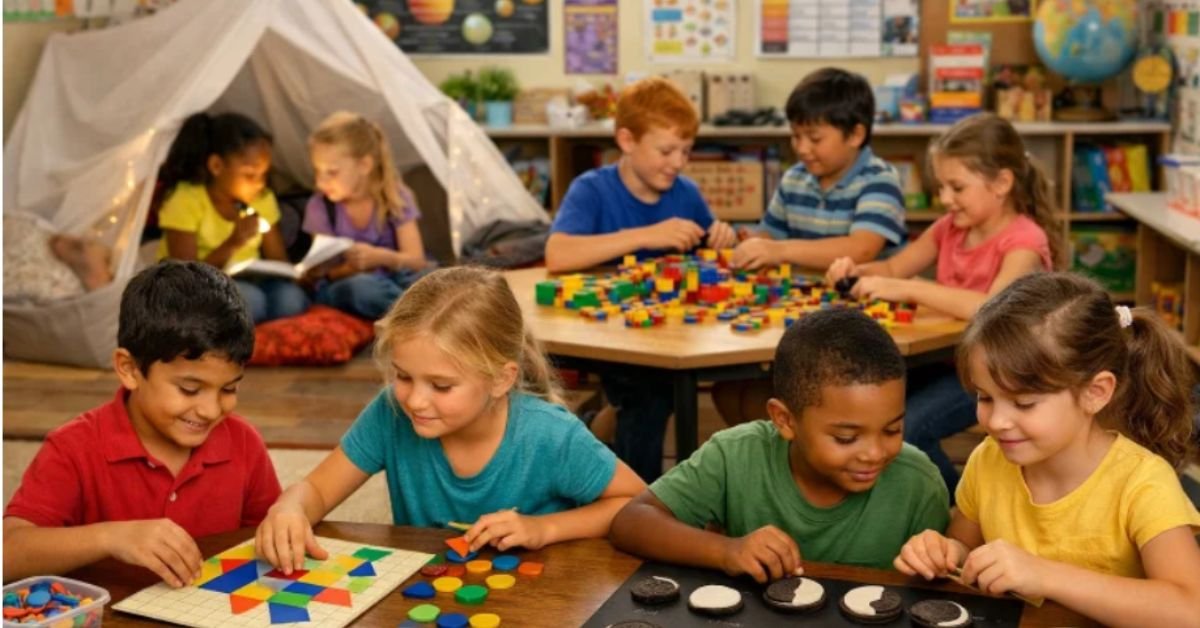
Building an effective and lively classroom environment for second graders is essential for sparking curiosity and fueling enthusiasm for learning. Young learners thrive when provided with lessons that combine interaction, creativity, and sensory experiences. Interactive and hands-on activities play a significant role in making lessons memorable and help students retain key concepts more efficiently. Learn more on this page about crafting engaging lesson plans for second grade.
From math and science to literacy and the arts, teachers can easily blend playful activities into their daily curriculum, creating a well-rounded learning experience that keeps students motivated. These approaches not only enhance academic understanding but also build social and cognitive skills that transcend the classroom.
By leveraging creative teaching strategies, educators can foster a love of learning that continues well beyond the academic year. Incorporating group work, manipulatives, and relatable real-world scenarios equips students with the confidence and adaptability they need as they advance in their educational journeys.
This article presents a variety of innovative ideas spanning multiple subjects, each thoughtfully crafted for second-grade learners. Whether you are aiming to strengthen math skills or enhance reading comprehension, these lesson ideas are adaptable, enjoyable, and impactful.
Math Work Places
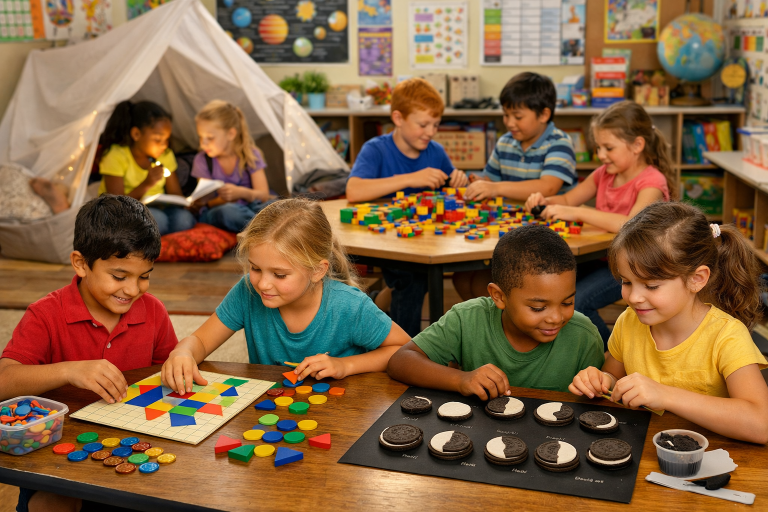
Math engagement can soar with the integration of games and interactive stations into the classroom. Math work places offer students hands-on practice with essential math concepts through playful activities. At these stations, children might use objects such as shapes, coins, and spinners to investigate foundational ideas like geometry or measurement. Rotating between stations in small groups supports peer learning and ensures every student receives opportunities to strengthen problem-solving and reasoning skills. According to Edutopia, interactive math games foster deeper understanding by encouraging students to communicate their thinking and strategies.
Lego Learning for Cognitive Flexibility
Legos can be much more than a recreational toy; they are valuable educational tools that cultivate cognitive flexibility and innovation. Through guided Lego activities, students can follow instructions to build models or creatively solve design challenges. A popular strategy involves setting up train tracks with tiles of various colors, where each color signifies a distinct action or movement. Digital apps that link to these colored paths further add an element of technology-supported critical thinking. This incorporation of play-based learning develops adaptability and helps students persist through unexpected challenges.
Camp Read-A-Lot
Immersive and thematic classroom transformations can turn regular reading periods into eagerly anticipated events. Camp Read-A-Lot transforms the classroom into a cozy retreat with tents, campfire lights, and ‘campsites’ for small groups or individual readers. This environment nurtures curiosity, teamwork, and independence. Activities might include silent reading, group discussions, and collaborative storybook projects. These experiences create positive associations with reading and motivate students to explore books on their own. The Reading Rockets initiative provides further resources for encouraging young readers at various stages.
Oreo Moon Phases
Science becomes much more accessible and engaging when students can interact directly with concepts. Demonstrating the phases of the moon using Oreo cookies is both memorable and fun. Students use the cookies’ cream filling to represent lunar stages like new moon, half moon, and full moon. After assembling a sequence of moon phases, they discuss what each represents and how the moon appears in the sky. This tactile model supports visual and kinesthetic learning, providing a concrete reference point as students study astronomy throughout the year.
Place Value Uno
Developing number sense and place value skills can be turned into a competitive and engaging experience with Uno cards. Students draw numbered cards and arrange them to form double- or triple-digit numbers, helping to solidify their understanding of the values of ones, tens, and hundreds places. By varying the difficulty, teachers can adapt the activity to suit everyone’s abilities and enable peer-to-peer learning. A leaderboard or collaborative challenges can add excitement to each round.
Shape Scavenger Hunt
Applying geometry lessons to the real world helps students recognize that math exists all around them. After an introductory lesson or a story about shapes, students search the classroom or school for examples of circles, squares, triangles, and more. Capturing photographs with a tablet and labeling each shape engages both technical and classification skills. This applied approach encourages students to see everyday objects through a mathematical lens, reinforcing key concepts outside the textbook.
Animal Alliteration
Combining language arts and creativity, this activity asks students to invent sentences featuring alliteration and animal themes, such as “Tigers tiptoe through tulips.” Illustrating their sentences and recording voice narrations using classroom technology adds an auditory and visual layer to the lesson. By connecting phonics concepts with artistic expression, students benefit from a holistic learning experience that strengthens both literacy and imagination.
Superhero Design
Superheroes inspire students to explore imagination and character-building. This lesson invites students to design their own superhero, selecting special powers and defining unique strengths. Completing a hero identification card, students detail their superhero’s history, sidekick, favorite activities, and more. This combines narrative writing, drawing, and oral presentation skills. Displaying superhero profiles builds classroom community and celebrates each student’s creativity.
By integrating these dynamic and hands-on activities, teachers can create a classroom atmosphere that is as enjoyable as it is educational. These strategies relay academic concepts through methods that resonate with second-grade learners, setting the stage for a lifelong love of learning.
CLICK HERE FOR MORE BLOG POSTS
