
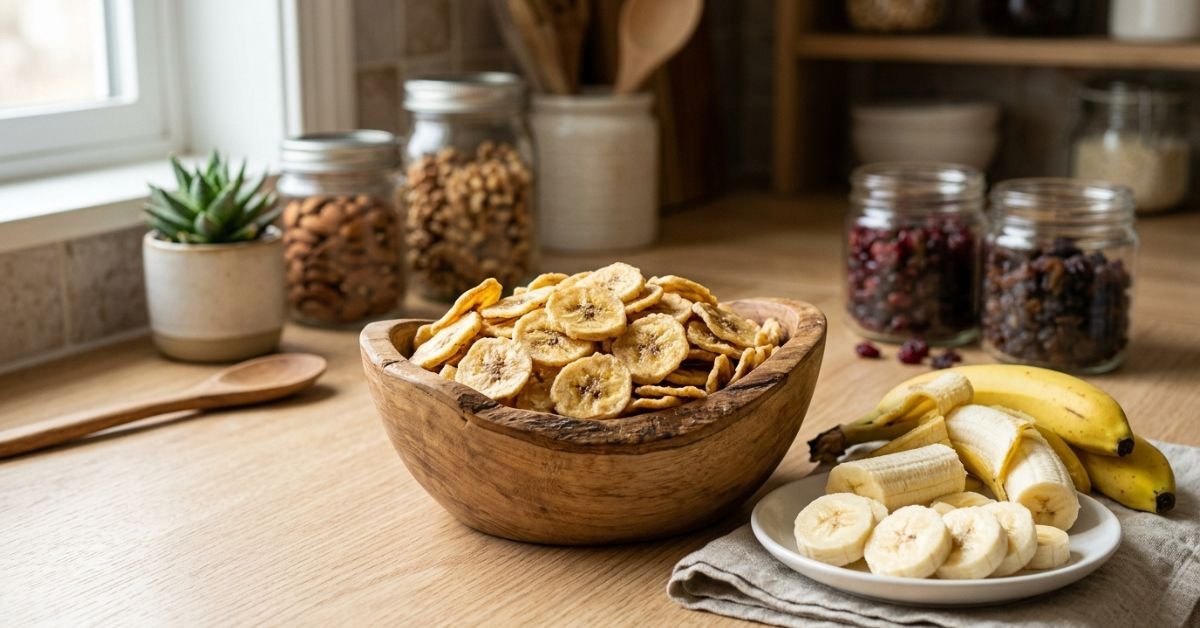
Banana chips are slices of banana that have been dehydrated, baked, or most commonly deep-fried. The store-bought versions you find in grocery aisles are often coated in sugar or honey and fried in oil, usually coconut or palm oil. This processing turns a naturally nutritious fruit into something far more calorie-dense.
Fresh bananas offer hydration, quick energy, and a gentle sweetness. Banana chips deliver crunch and portability but come with a nutritional trade-off due to how they’re made.
Nutritional Breakdown: Fresh Banana vs Banana Chips
Numbers tell the real story. Here’s a side-by-side look at a typical serving:
1 medium fresh banana (about 118g):
- Calories: ~105
- Fat: 0.4g
- Sugar: ~14.5g (naturally occurring)
- Fiber: ~3g
- Key nutrients: High in potassium (~422mg), vitamin B6, vitamin C
1 cup banana chips (72g, a common packaged serving):
- Calories: ~374
- Fat: 24g (often 21g saturated)
- Sugar: ~25g (including added sugars)
- Fiber: ~5.5g
- Potassium and B6 are present but in smaller relative amounts per calorie.
Per 100g, fried banana chips can hit over 500 calories with significant added fats and sugars more calorie-dense than many potato chips. The dehydration process concentrates the natural sugars, and frying adds oils that boost saturated fat content dramatically.
Potential Benefits of Banana Chips
They’re not entirely without merit. Banana chips retain some of the original fruit’s goodness:
- Fiber for digestion: The 5+ grams per cup supports gut health and helps you feel fuller longer.
- Potassium and minerals: They contribute to blood pressure regulation and muscle function, though you’d need to eat more to match a fresh banana.
- Convenience and energy: Great for hiking, travel, or a quick boost when fresh fruit isn’t practical.
- Antioxidants: Some varieties preserve compounds that combat oxidative stress.
In moderation, especially unsweetened or baked versions, they can be a step up from highly processed sweets. Some people use them mindfully in trail mixes or as an occasional treat.
The Downsides: Why They Often Fall Short
The main issues stem from processing:
- High calories and fats: The frying process loads them with oil, making them easy to overeat. A small handful can equal the calories of an entire fresh banana plus extras.
- Added sugars: Many brands include syrup or honey, spiking the glycemic impact and potentially affecting blood sugar and cravings.
- Saturated fat: Coconut oil is popular, but the volume in chips can push daily limits, which matters for heart health.
- Nutrient loss: Heat and processing reduce some heat-sensitive vitamins like C, though minerals hold up better.
- Portion distortion: The crunchy texture makes it hard to stop at one serving.
Compared to fresh bananas, chips lose the water content that aids hydration and satiety. They’re more like a dessert than a daily fruit serving.
For weight management, blood sugar control, or heart-conscious eating, they require careful portioning often just 1/4 cup or less.
Homemade Banana Chips: Your Healthier Option
The good news? You can make far better versions at home with minimal effort.
Simple Oven-Baked Banana Chips Recipe (makes about 50-60 chips):
- 2-3 ripe but firm bananas
- 2-3 tablespoons lemon juice (prevents browning)
- Optional: cinnamon, a touch of salt, or a light brush of coconut oil
Slice thinly (1/8-inch or thinner for crispiness), toss in lemon juice, arrange in a single layer on parchment-lined baking sheets, and bake at 200-250°F (90-120°C) for 1.5-3 hours, flipping halfway. Let them cool completely they crisp up more as they sit.
Air fryer version: Lower temp (around 200°F) for 20-35 minutes. Dehydrator works beautifully too for raw-food enthusiasts.
Homemade versions slash fat and sugar dramatically while keeping more natural flavor and nutrients. Experiment with spices like chili powder or nutmeg for variety.
Who Should Eat Them and How?
- Yes, in moderation: Active people, those needing portable snacks, or anyone craving crunch without ultra-processed junk.
- Better choices: Look for unsweetened, baked, or freeze-dried options. Check labels for minimal ingredients.
- Alternatives: Fresh bananas, apple chips (baked), or mixed nuts and seeds offer better balance.
- Special considerations: People with diabetes or watching calories should treat them as an occasional indulgence. Kids love the sweetness, but pair with protein to balance.
Conclusion
Banana chips aren’t a superfood, but they’re not evil either. In their store-bought, fried-and-sweetened form, they’re closer to candy than health food. Opt for homemade or high-quality minimally processed versions, enjoy them mindfully, and prioritize whole fresh bananas most days.
The key to any snack is how it fits your overall diet. Pair banana chips with nuts or yogurt for balance, or use them to satisfy a craving without derailing your goals. Listen to your body, read labels, and focus on variety.
CLICK HERE FOR MORE BLOG POSTS

“In a world of instant takes and AI-generated noise, John Authers writes like a human. His words carry weight—not just from knowledge, but from care. Readers don’t come to him for headlines; they come for meaning. He doesn’t just explain what happened—he helps you understand why it matters. That’s what sets him apart.”