

Key Takeaways
- Adoption of advanced technologies like Building Information Modeling (BIM) and Artificial Intelligence (AI) is enhancing project efficiency.
- Emphasis on sustainable construction practices is growing due to environmental concerns and regulatory requirements.
- Addressing labor shortages through innovative workforce strategies is becoming crucial.
- Effective risk management is essential in navigating policy volatility and material cost fluctuations.
Table of Contents
- Technology Integration in Project Management
- Sustainable Practices in Construction
- Addressing Workforce Challenges
- Risk Management Amid Policy Volatility
- Conclusion
As the construction industry evolves, project managers must stay ahead of emerging trends to ensure successful project delivery. Innovations across technology and sustainability are shaping the landscape in 2026, making it imperative to understand which strategies will drive the next era of growth. Incorporating solutions such as Construction Manager at Risk (CMAR) into modern project frameworks can enhance both efficiency and outcomes. The adoption and integration of new practices are about more than staying current; they are necessary to address ongoing industry challenges. As firms compete in a dynamic environment, harnessing technological advancements and sustainable methods not only bolsters project success but also builds lasting reputations. Adapting to new norms is no longer an option but instead a requirement for ongoing competitiveness and resilience.
Technology Integration in Project Management
The widespread adoption of digital tools is transforming construction project management. Building Information Modeling (BIM) allows teams to visualize and manage every facet of a build, supporting clearer collaboration and reducing costly misunderstandings. Artificial Intelligence (AI) is another driving force, with capabilities such as predictive analytics that help forecast project timelines, optimize schedules, and pinpoint safety issues before they escalate. As highlighted by Deloitte Insights, leveraging AI and BIM is rapidly shifting industry practices from reactive to proactive operations, thereby streamlining workflows and increasing productivity.
Using cloud-based project management platforms, teams access real-time data, leading to better decision-making both onsite and offsite. The Internet of Things (IoT) also plays a crucial role, with smart sensors tracking everything from equipment usage to environmental conditions. This integration of connected technology is helping firms complete projects with less risk and higher accuracy, a need that will only intensify in the coming years. Another significant shift is the increasing use of digital twins, which replicate physical construction sites in virtual environments. This innovation enables project managers to simulate various construction scenarios, anticipate challenges, and optimize resource allocation before breaking ground. The integration among digital twins, cloud solutions, and artificial intelligence enables unprecedented precision in budget management, forecasting, and on-site safety. As the industry continues to pivot toward more data-centric operations, training programs and certifications in digital project management are also experiencing greater demand, helping establish a knowledgeable workforce ready to leverage these emergent technologies for competitive advantage.
Furthermore, cybersecurity on project management platforms is becoming increasingly important. As sensitive data and proprietary project information are increasingly stored and transmitted digitally, industry leaders are investing in robust security protocols, regular system updates, and staff training to protect against cyber threats. This heightened focus ensures the integrity and confidentiality of project information, reducing the risk of costly breaches and maintaining clients’ trust.
Sustainable Practices in Construction
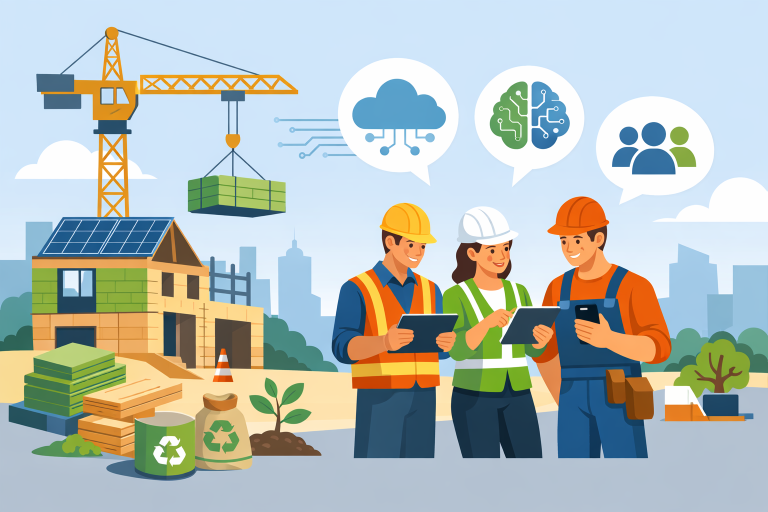
Sustainability has shifted from an optional consideration to a central strategy in construction. Clients and governments alike expect green solutions, prompting companies to adopt eco-friendly building materials, energy-efficient systems, and waste reduction techniques. These approaches are not only in response to global climate concerns but also align with evolving regulations and market preferences for environmentally responsible construction. Green building certifications such as LEED are increasingly sought after, prompting companies to refine their practices. Benefits extend beyond compliance, with many firms achieving long-term savings and improved public image. According to research from the World Economic Forum, sustainable construction delivers a competitive advantage, attracting clients committed to social responsibility and future-proof design.
In addition to these well-established practices, the concept of circular construction is gaining traction. This strategy focuses on maximizing the lifecycle of building materials through reuse, recycling, and innovative design. By incorporating modular building techniques and prefabricated elements, companies can reduce waste, streamline assembly, and improve the sustainability of their processes. Water conservation methods, such as rainwater harvesting systems and low-flow fixtures, are increasingly being integrated into projects to help address resource scarcity. Firms are also engaging with local communities to promote environmentally sound construction methods, forging long-term relationships and supporting broader sustainability goals.
Addressing Workforce Challenges
The ongoing shortage of skilled labor continues to challenge contractors and project managers across the industry. In response, companies are adopting new workforce strategies that focus on career development and leveraging automation for repetitive or dangerous tasks. Strategic recruitment, upskilling programs, and competitive compensation packages are helping attract more talent to the field, especially among younger professionals and underrepresented groups.
Diversity and inclusion initiatives are also making a difference by promoting innovation and broadening the industry’s talent pool. Technology, especially automation and robotics, is easing some of the burden by taking over labor-intensive or hazardous tasks, allowing skilled labor to focus on technical and high-value activities. By blending careful management with cutting-edge tools, companies can maintain project momentum amid ongoing worker shortages. Additionally, mentorship and apprenticeship programs are being strengthened to help new workers gain vital on-the-job experience. Partnerships with educational institutions are leading to specialized training courses, some focusing on digital skills or green construction methods, preparing workers for future demands. Emotional intelligence and leadership development are being recognized as crucial for project managers, enabling better communication and team performance on complex builds. These efforts collectively strengthen the industry’s human capital, creating resilient teams ready to meet evolving project requirements.
Risk Management Amid Policy Volatility
Change in government policy and economic volatility present unpredictable risks for construction project managers. Staying up to date on policy changes is essential, as is the ability to quickly adapt to shifts in regulation and market pricing. To reduce exposure, project leaders are focused on diversifying their supply chains, developing flexible contracts, and employing risk mitigation strategies, including scenario planning and insurance coverage.
Flexible procurement practices and collaborative approaches, such as integrated project delivery models, help teams respond to external changes with agility and confidence. Forward-thinking firms develop networks of reliable suppliers and maintain close communication with all stakeholders, making it easier to pivot strategies quickly when required. Looking ahead, data-driven risk management is becoming increasingly prevalent. Predictive analytics are used not only for scheduling and budgeting but for modeling a wide range of external risks, from weather disruptions to geopolitical instability. By integrating these tools with robust contingency planning and transparency, organizations can minimize negative surprises and take a proactive approach to risk. Regular scenario exercises and reviews ensure that teams are prepared to respond decisively, keeping projects on track despite uncertainty.
Conclusion
Remaining competitive in 2026 will require a holistic approach to project management that marries the best of technology, sustainability, workforce management, and risk preparedness. Those who embrace digital innovation, maintain a relentless focus on green building, and invest in workforce resilience will be well-positioned to thrive in a continually evolving industry. Forward-thinking leaders can ensure their organizations adapt to industry challenges and are poised for growth in the years ahead. The road to success in construction project management is paved with proactive learning, strategic partnerships, and the willingness to invest in people and technology. Firms that foster a culture of continuous improvement will stand out in a market where adaptability, collaboration, and efficiency drive long-term achievement. As the industry faces new pressures and opportunities, those who act early and decisively will set the standard for excellence in 2026 and beyond.

MOBI ROLLER is a tech enthusiast with a background in technology. He writes about the latest trends, tools, and innovations in the tech world, sharing insights based on both knowledge and experience.