

Key Takeaways
- Compare homes based on budget, daily lifestyle, condition, and long-term fit.
- Look beyond the purchase price by including taxes, insurance, utilities, and maintenance costs.
- Evaluate the layout, neighborhood, commute, and future flexibility, not just finishes or square footage.
- Use inspections, repeat visits, and a simple scorecard to make a confident, practical decision.
Choosing between two homes can feel harder than finding a home in the first place. Each property may meet most of your needs, offer appealing features, and create a strong emotional reaction. The goal is not to eliminate every compromise. It is to identify which home gives you the strongest balance of affordability, daily comfort, condition, and long-term usefulness. Local perspective can make that process more grounded. Mandeville real estate agent Allison Vencil guides residential, commercial, and investment properties across the Northshore, Greater New Orleans, and the Mississippi Gulf Coast. With experience in Mandeville, St. Tammany Parish, New Orleans, and nearby communities, Allison Vencil’s website offers property search tools, buyer resources, and market knowledge to help buyers compare neighborhood character, commute patterns, property condition, and practical long-term fit.
Start With Must-Haves, Not Wish Lists
Before comparing finishes, views, or staging, write down the truly non-negotiable items. A must-have is something that affects your finances, safety, work, health, or normal routine. A want is valuable, but it should not outweigh a serious drawback.
- Maximum comfortable monthly housing payment
- Minimum number of bedrooms and bathrooms
- Commute or school-access limits
- Accessibility needs, including stairs and entry access
- Required outdoor space, parking, or storage
- Space for remote work, hobbies, family members, or pets
Keep this list short. If every preference is labeled essential, it becomes difficult to see which property actually supports your life better.
Compare the Full Monthly Cost
The list price is only the beginning. Two similarly priced homes can have very different monthly obligations due to property taxes, homeowners’ insurance, association fees, utilities, and maintenance needs. Use a realistic mortgage estimate, then add the costs that are easy to overlook. A tool such as the Consumer Financial Protection Bureau’s mortgage rate explorer can help you understand how changes in rates may affect affordability.
Include These Costs in Both Estimates
- Principal and interest payment
- Property taxes and homeowners’ insurance
- Homeowners association dues, if applicable
- Expected utility costs
- Immediate repairs, appliance replacements, or upgrades
- A monthly reserve for routine maintenance and unexpected issues
The better financial choice is often the home that leaves more room for savings, emergencies, travel, childcare, retirement contributions, and ordinary life.
Test How Each Home Works on a Normal Day
Imagine a typical Monday in each property. Where do you set down groceries? Is there enough space for morning routines? Would you be comfortable working from home, hosting family, walking the dog, or getting everyone out the door? A house that photographs beautifully can still create daily friction. Visit both homes and their surrounding areas at multiple times of day. Check traffic, parking, street noise, lighting, nearby activity, and travel time to work, school, healthcare, shopping, parks, and family. Also consider whether the location will still work if your household changes over the next three to five years.
Judge the Layout, Not Just the Room Count
Square footage does not tell you whether a home feels useful. A smaller property with well-connected rooms, sufficient storage, and a practical kitchen may serve you better than a larger home with unused formal spaces or awkward circulation.
- Consider how the kitchen, living areas, bedrooms, and bathrooms connect.
- Check closet space, pantry space, garage storage, and laundry placement.
- Think about stairs, guest privacy, office needs, and future flexibility.
- Measure important rooms if you own large furniture or equipment.
- Look past décor and ask whether the layout still works when the home is empty.
Compare Condition and Future Maintenance
A newer home may offer fewer immediate projects, while an older property may provide charm, mature landscaping, or a more established location. Neither is automatically better. The question is whether the repairs ahead are understood, affordable, and realistic for your schedule. Separate cosmetic changes from major systems. Focus carefully on the roof, HVAC equipment, plumbing, electrical work, windows, foundation, drainage, and exterior materials. During the inspection period, prioritize safety concerns, water intrusion, structural issues, and expensive system failures. An inspection report is not a list of automatic deal breakers, but it should change the score when it reveals meaningful risk.
Check Location-Specific Risks and Rules
Ask direct questions rather than relying only on the listing description. Review available flood information, drainage patterns, insurance availability, easements, permits, zoning, and neighborhood or association restrictions. Confirm whether the property allows the changes you may want later, such as fencing, a pool, an accessory structure, short-term rentals, or a home addition. Verify school boundaries and public service details through official sources, as they can change.
Consider Resale, but Do Not Let It Run the Decision
No one can predict future value with certainty. Still, practical features often matter to future buyers: a functional floor plan, usable parking, sound condition, a manageable lot, and a location that supports daily life. Compare resale potential, but do not buy a home that does not meet your needs simply because it may appeal to someone else later.
Build a Simple Home Comparison Scorecard
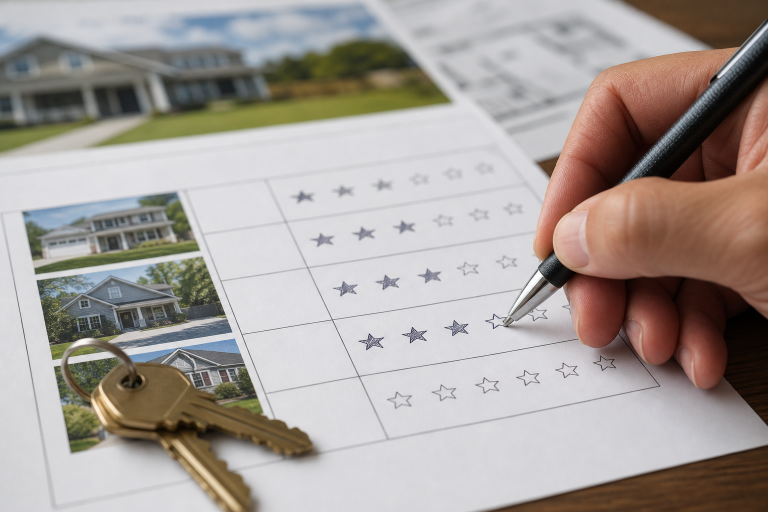
Rate each home from one to five in the same categories. Add a sentence next to each rating so the final result reflects the real reasons, not just a number.
- Monthly cost: Payment, taxes, insurance, fees, and repair reserves.
- Location: Commute, convenience, noise, services, and neighborhood feel.
- Layout: Flow, storage, privacy, accessibility, and flexibility.
- Condition: Immediate repairs, system age, and maintenance demands.
- Long-term fit: Ability to serve your likely needs over the next several years.
The scorecard should guide a calm discussion, not replace professional inspections, lender guidance, property-document review, or your own judgment.
Common Comparison Mistakes to Avoid
- Choosing the best finishes while overlooking a poor location.
- Comparing purchase prices but ignoring insurance, taxes, and repairs.
- Visiting once and missing noise, traffic, or parking issues.
- Giving too much weight to square footage instead of layout.
- Letting staging and décor override the budget.
- Assuming a beautiful home will automatically have stronger resale appeal.
- Skipping questions about permits, drainage, restrictions, and prior repairs.
Questions to Ask Before Making an Offer
- Which home fits the budget with the most breathing room?
- Which location best supports our usual week?
- Which property has fewer major costs likely to arise soon?
- Which layout will still work if our needs change?
- Which risks are understood and manageable?
- Would we still choose this home without the furniture and staging?
- What important information is still missing?
Choose the Home That Solves the Right Problem
Take a short break from showings, review your scorecard, and consider one final visit or video walkthrough. No home will be perfect. The strongest choice is usually the one that solves your most important problem, whether that means lower upkeep, more space, a shorter commute, better access to outdoor activities, or greater financial comfort. When facts support the feeling, you can move forward with more confidence.
Conclusion
When two homes both seem like strong contenders, the best decision comes from comparing how each one supports your everyday life rather than focusing on standout features alone. Review the complete monthly cost, property condition, layout, neighborhood, commute, and future flexibility before making a final choice. A simple scorecard, thorough inspections, and repeat visits can help separate emotional reactions from practical considerations. No home is perfect, but the right one should fit your budget, reduce daily stress, and leave room for future goals. By weighing facts against first impressions, buyers can choose a property that offers lasting comfort, financial confidence, and a better fit for how they truly live.

MOBI ROLLER is a tech enthusiast with a background in technology. He writes about the latest trends, tools, and innovations in the tech world, sharing insights based on both knowledge and experience.