
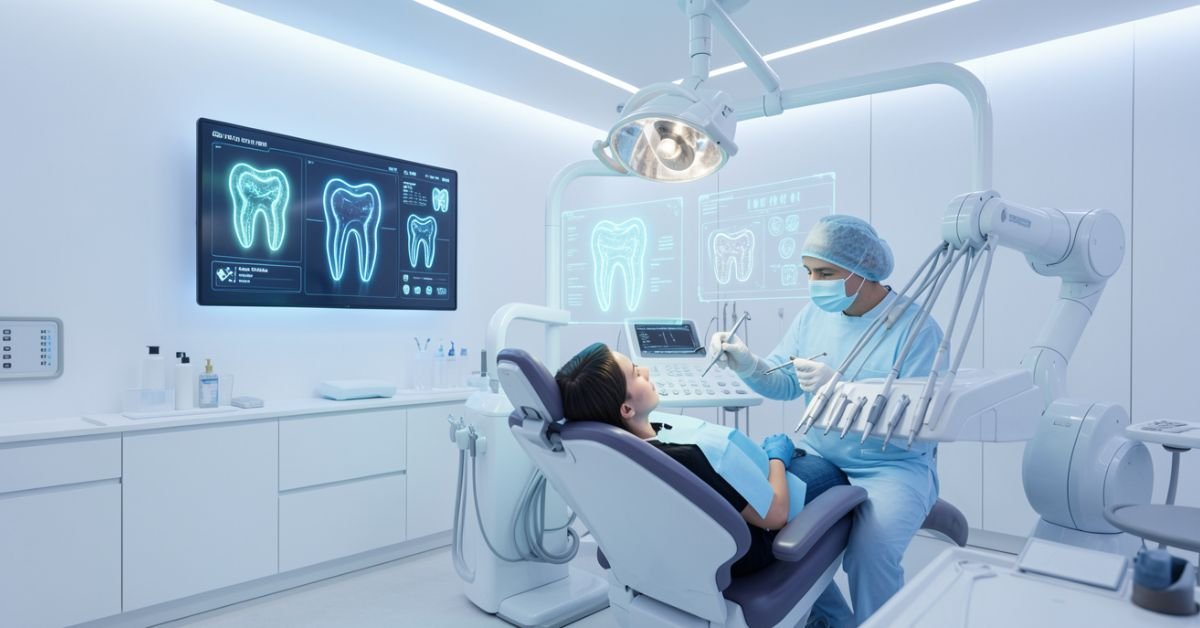
Dentistry is shifting fast. Patients expect quicker diagnoses, fewer errors, and more transparency. Dentists, on the other hand, are under pressure to do more in less time without compromising accuracy.That’s exactly where Nerovet AI dentistry comes in.Instead of relying solely on manual interpretation of X-rays and clinical judgment, AI now assists in identifying issues earlier, faster, and often more consistently.
What Is Nerovet AI Dentistry?
At its core, Nerovet AI dentistry is a system that uses machine learning and computer vision to analyze dental data, especially imaging like X-rays and scans.
What it does:
- Detects cavities, bone loss, and infections
- Highlights problem areas visually
- Assists in treatment planning
- Reduces diagnostic variability
Think of it as a second set of eyes that never gets tired.
How Nerovet AI Works in a Real Dental Clinic
Here’s what the workflow actually looks like:
Step-by-Step Integration
- Image Capture
- Standard X-rays or CBCT scans are taken
- AI Processing
- Nerovet analyzes the image in seconds
- Detection Overlay
- Problem areas are highlighted (caries, lesions, etc.)
- Clinical Review
- Dentist verifies and adjusts recommendations
- Patient Communication
- Visual proof improves trust and case acceptance
Why This Matters
Traditional diagnosis depends heavily on:
- Experience
- Fatigue levels
- Time constraints
AI adds consistency and speed.
Key Benefits of Nerovet AI in Dentistry
Faster Diagnostics
AI reduces analysis time from minutes to seconds.
Improved Accuracy
It detects patterns that are easy to miss in early stages.
Better Patient Trust
Visual overlays help patients see the issue.
Increased Case Acceptance
When patients understand the problem, they’re more likely to proceed.
Workflow Efficiency
Less time diagnosing = more time treating.
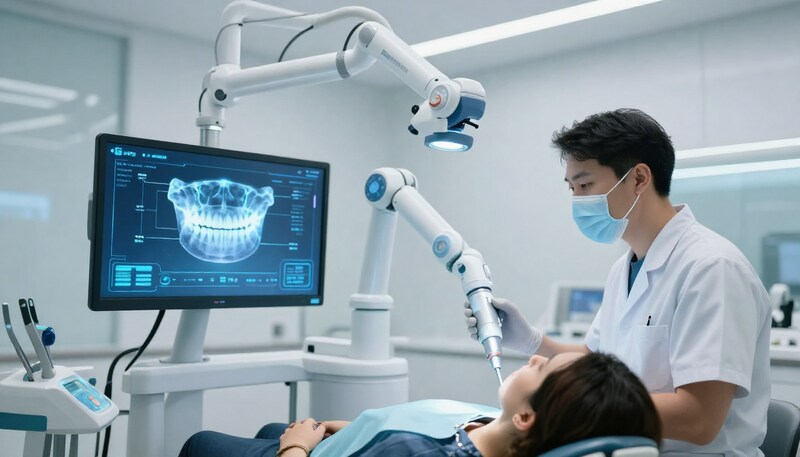
Comparison: Traditional Dentistry vs AI-Assisted Dentistry
| Feature | Traditional Dentistry | Nerovet AI Dentistry |
|---|---|---|
| Diagnosis Speed | Moderate | Instant |
| Consistency | Varies by dentist | Highly consistent |
| Early Detection | Limited | Strong |
| Patient Communication | Verbal explanation | Visual + data-backed |
| Workflow Efficiency | Manual | Automated support |
Where Nerovet AI Excels Most
High-Impact Use Cases
- Early caries detection
- Periodontal disease tracking
- Radiographic interpretation
- Preventive care planning
Real-World Impact (Stats & Trends)
- AI-assisted diagnostics can improve detection rates by up to 20–30% [Source]
- Clinics using AI report higher patient acceptance rates [Source]
- Workflow efficiency improves by 15–25% in busy practices [Source]
These numbers explain why adoption is accelerating in 2025–2026.
EEAT: Industry Insight (What Actually Happens in Practice)
From working closely with digital dental workflows, one pattern shows up consistently:
Most clinics don’t struggle with technology. They struggle with integration.
The biggest mistake?
Trying to bolt AI onto an already broken workflow.
The clinics that succeed with tools like Nerovet AI:
- Train staff properly
- Use AI as a support tool, not a crutch
- Focus on patient communication, not just diagnostics
When done right, AI doesn’t just improve accuracy. It changes how the entire clinic operates.
Potential Limitations You Should Know
No tool is perfect.
Key Considerations:
- Requires training and onboarding
- Depends on quality of input data
- May involve upfront cost
- Needs compliance with patient data regulations
FAQ Section
Q: What is Nerovet AI in dentistry?
A: Nerovet AI is a system that uses artificial intelligence to analyze dental images and assist in diagnosing conditions like cavities and gum disease. It enhances accuracy and speeds up clinical decision-making.
Q: Is AI dentistry reliable?
A: AI dentistry is highly reliable when used alongside professional judgment. It improves detection rates but should always be validated by a licensed dentist.
Q: Can Nerovet AI replace dentists?
A: No. It acts as a diagnostic support tool. Dentists remain responsible for final decisions and treatment planning.
Q: How does AI improve patient trust?
A: AI provides visual evidence through highlighted images, helping patients clearly understand their condition and recommended treatments.
Q: Is Nerovet AI suitable for small clinics?
A: Yes. Many AI tools are now scalable and designed for clinics of all sizes, not just large dental chains.
Conclusion
Nerovet AI dentistry sits at the intersection of technology, precision, and patient experience.
It’s not about replacing dentists. It’s about:
- Making diagnoses more consistent
- Improving workflow efficiency
- Building stronger patient trust
And as AI continues to evolve, the clinics that adapt early will have a clear edge.
CLICK HERE FOR MORE BLOG POSTS

“In a world of instant takes and AI-generated noise, John Authers writes like a human. His words carry weight—not just from knowledge, but from care. Readers don’t come to him for headlines; they come for meaning. He doesn’t just explain what happened—he helps you understand why it matters. That’s what sets him apart.”