

Key Takeaways
- Choose a vehicle based on your daily routine, passengers, cargo, and driving needs.
- Compare the full cost of ownership, not just the purchase price.
- Consider gas, hybrid, plug-in hybrid, and electric options based on your habits.
- Test comfort, safety, cargo space, and handling before buying.
- Compare several vehicles and inspect used models carefully before committing.
A great daily driver is not necessarily the largest, fastest, or most expensive vehicle on the lot. It is the one that makes ordinary life easier, whether that means handling a weekday commute, carrying groceries, fitting a child seat, or taking a comfortable weekend trip. Before comparing trims and colors, learn more about the available vehicle types and focus on what your routine truly requires.
The most practical choice balances purchase price, operating costs, comfort, safety, passenger room, and cargo flexibility. A vehicle that feels affordable at signing can become frustrating if it is hard to park, expensive to fuel, or too small for the gear you carry every week.
Start With Your Real Driving Routine
Your current routine should guide the search more than an imagined future lifestyle. Estimate weekly mileage, separate highway driving from stop-and-go traffic, and list who or what regularly rides with you. Include children, pets, work supplies, sports equipment, luggage, and the parking situations you face at home, work, school, and stores.
A short solo commute may make a sedan or hatchback a smart fit. A household that frequently carries kids, groceries, a dog, or outdoor gear may benefit from a compact crossover. Also consider hills, rain, road quality, and seasonal trips before deciding whether extra ground clearance or all-wheel drive is genuinely useful.
Set a Full Ownership Budget
The monthly payment is only one part of ownership. Build a realistic budget that includes the down payment, loan or lease payment, insurance, registration, taxes, fuel or charging, maintenance, tires, brakes, repairs, and likely depreciation. Use official fuel economy tools to compare projected fuel costs across vehicles before you buy.
A Simple Monthly Cost Check
- Set a payment amount that leaves room for other household priorities.
- Add estimated insurance, fuel, maintenance, and registration costs.
- Keep a separate emergency fund for repairs, tires, and routine service.
- Compare total monthly ownership costs for at least three vehicles.
A lower sticker price does not always equal a lower long-term cost. A vehicle with poor fuel economy, expensive tires, or high insurance premiums can quickly erase its initial savings.
Choose the Right Vehicle Type
Sedans
Sedans are often easy to park, comfortable on the highway, and efficient for commuting. They can be an excellent option for drivers who mostly travel alone or with one passenger, but a traditional trunk may be less convenient for bulky items.
Hatchbacks
Hatchbacks offer a small footprint with more flexible cargo access. They work well for urban drivers who want easy maneuverability without sacrificing the ability to carry a cooler, a folded stroller, or weekend gear.
Compact Crossovers
Compact crossovers provide a higher seating position, easier entry, and versatile cargo areas. They can suit small families and active drivers, although they may cost more to buy, insure, and fuel than a similarly equipped sedan.
Minivans and Larger SUVs
These vehicles make sense when passengers, car seats, pets, luggage, or equipment are part of the weekly routine. For someone who usually drives alone, however, the extra size and operating costs may outweigh the added space.
Compare Gas, Hybrid, Plug-In Hybrid, and Electric Options
- Gasoline: A straightforward choice for frequent long-distance travel, drivers without home charging, and shoppers who want a broad range of price points.
- Hybrid: Often appealing for mixed driving and traffic-heavy commutes because it can reduce fuel use without changing refueling habits.
- Plug-in hybrid: Best for drivers who can charge regularly and complete many daily trips on electricity while retaining gasoline capability for longer drives.
- Electric: A strong option for predictable routes and dependable charging access. Consider apartment charging, public charging availability, trip planning, and cold-weather range before committing.
The best question is not which powertrain is newest. Ask where the vehicle will be fueled or charged most often, how many miles it will travel, and whether the convenience fits your actual habits.
Check Comfort and Safety Before You Commit
You may spend hundreds of hours in your vehicle each year, so comfort matters. Adjust the seat and steering wheel, check visibility in every direction, try the climate controls, connect your phone, and notice road noise at city and highway speeds. Make sure the rear seat works for passengers, child seats, boosters, or mobility needs.
Useful safety features can include forward-collision warning, automatic emergency braking, blind-spot monitoring, rear cross-traffic alert, and adaptive cruise control. Features are helpful, but they should support attentive driving rather than replace it.
Match Cargo Space to Weekly Needs
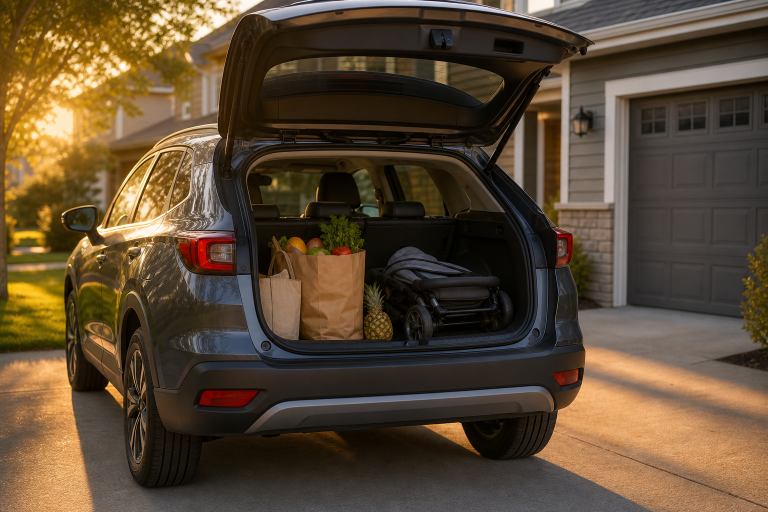
Do not rely solely on a cargo volume number. Bring real items to the test drive when possible, such as a stroller, golf bag, work case, pet crate, or sports equipment. Check the trunk opening, rear-seat access, lift-over height, and whether the seats fold flat. A vehicle can look roomy from the outside while still being awkward to load.
Use a Smart Test-Drive Plan
- Adjust the seat, mirrors, and steering wheel before moving.
- Drive on smooth pavement and rougher roads.
- Try a tight turn, parking maneuver, and highway merge if possible.
- Pay attention to brake feel, acceleration, steering, and visibility.
- Inspect rear-seat room and cargo access before leaving.
- Write down strengths, concerns, and questions immediately afterward.
Test at least three vehicles, preferably on similar roads and on the same day. Direct comparison makes differences in ride quality, cabin noise, controls, and seating comfort much easier to identify.
Decide Between New and Used
New vehicles come with full factory warranties and the latest safety technology, while used vehicles can offer a lower purchase price and more features for the money. Either can be a dependable daily driver when the vehicle fits the budget and has been evaluated carefully.
For a used vehicle, request maintenance records and a vehicle history report, inspect tires and brakes, compare local prices, and arrange an independent pre-purchase inspection. Before finalizing any purchase, use a recall lookup by vehicle identification number to identify open safety recalls.
Conclusion
The right vehicle supports the life you already live. Review your mileage, passenger needs, parking limits, cargo demands, ownership costs, charging access, and test-drive impressions before making a decision. A thoughtful choice will make commuting, errands, family obligations, and weekend plans easier for years to come.

MOBI ROLLER is a tech enthusiast with a background in technology. He writes about the latest trends, tools, and innovations in the tech world, sharing insights based on both knowledge and experience.