

Key Takeaways
- Filing for divorce in Manchester, NH, involves several legal requirements and procedural steps.
- No-fault divorce is commonly used, streamlining the process for many couples.
- Issues such as property division, child custody, and spousal support often require careful negotiation or court intervention.
- Consulting with experienced divorce attorneys can help navigate complex aspects of the divorce process.
Table of Contents
- Overview of Divorce in Manchester, NH
- Grounds for Divorce
- The Divorce Process Step-by-Step
- Property and Debt Division
- Child Custody and Support
- Spousal Support (Alimony)
- Finding Legal Help in Manchester
- Conclusion
Overview of Divorce in Manchester, NH
Divorce is a significant life event that involves making decisions about family, property, and financial matters. In Manchester, New Hampshire, the legal landscape provides for both fault-based and no-fault divorces, allowing couples a degree of flexibility depending on their situation. The process can be relatively straightforward for some, but for others, especially those with children or shared assets, it may become complex.
If you are considering ending your marriage, speaking with Top Manchester, NH Divorce Lawyers early in the process can provide crucial insight into your rights and responsibilities. Local laws and court procedures can impact everything from child custody to property division, so having professional guidance is beneficial.
New Hampshire’s family court system is designed to treat both parties fairly and to prioritize the best interests of any children involved. However, navigating paperwork, court dates, and negotiations often requires a clear understanding of state-specific divorce laws. Failing to follow the appropriate procedures can delay your case or impact the final outcome.
In addition to legal counsel, emotional support from family or friends can make the process less overwhelming. Divorce affects everyone differently, and maintaining a strong support network can be just as vital as staying informed about your legal options.
New Hampshire offers both fault and no-fault grounds for divorce. The most common ground is “irreconcilable differences,” a no-fault option meaning that the marriage has broken down beyond repair. This allows couples to part ways without assigning legal blame.
There are also fault-based grounds, such as adultery, abandonment, habitual drunkenness, and cruel treatment. While alleging fault may impact decisions about alimony or child custody in rare cases, most couples in Manchester benefit from the no-fault approach due to its simplicity and focus on moving forward amicably. You can learn more about state divorce law and grounds for divorce from WomensLaw.org’s New Hampshire Divorce Laws.
The Divorce Process Step-by-Step
1. Filing the Petition
To begin, one spouse (the petitioner) files a “Petition for Divorce” with the family division of the New Hampshire Circuit Court. The other spouse (the respondent) is then served with divorce papers.
2. Temporary Orders
During the waiting period, either party can request temporary court orders regarding child custody, child support, alimony, or sole use of the marital residence. These orders are temporary solutions that last until the divorce is finalized.
3. Discovery and Negotiation
Both parties must exchange relevant information about finances, property, and debts. Mediation or negotiation is encouraged to resolve disputes, especially concerning children and assets.
4. Settlement or Trial
If an agreement is reached, it is submitted to the court for approval. If contested issues remain, the court schedules a hearing or trial, and a judge makes the final decisions.
Property and Debt Division
New Hampshire law follows the “equitable distribution” model, which means that marital property is divided fairly, but not necessarily equally. Marital assets include real estate, bank accounts, retirement funds, and even certain debts acquired during marriage. Separate property (such as gifts or inheritances) may be excluded from division.
Court consideration includes the length of the marriage, the ages and health of both spouses, economic circumstances, and contributions to the marital home. It is crucial to provide accurate financial disclosures to ensure a fair division.
Child Custody and Support
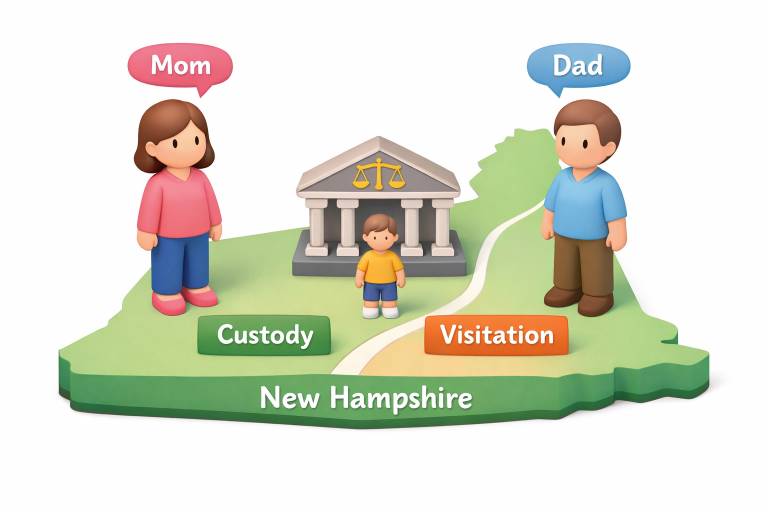
When children are involved, custody arrangements focus on the child’s best interests. New Hampshire law recognizes two aspects of custody: legal (decision-making authority) and physical (where the child resides). Joint custody is favored unless there are extenuating circumstances such as abuse or neglect.
Child support calculations are based on a formula that considers each parent’s income, childcare costs, health insurance, and the needs of the children. The goal is to maintain financial stability for children post-divorce. Modifications to custody or support orders may be made in the future if circumstances significantly change.
Spousal Support (Alimony)
Alimony, known as spousal support, is awarded in some divorces to help one spouse achieve self-sufficiency after the marriage ends. Factors influencing alimony include the length of the marriage, each spouse’s ability to earn, and contributions made during the marriage. Alimony may be temporary or, in rare cases, long-term; it can also be modified if significant changes in circumstances arise.
Finding Legal Help in Manchester
While some couples may complete their divorce without legal representation, many benefit greatly from hiring an attorney. An experienced local lawyer can help you understand your rights, advocate on your behalf, and ensure all paperwork is completed accurately and on time.
It’s important to consult with attorneys who focus on family law within Manchester or the broader New Hampshire area. Their expertise in local court procedures and judges can make a substantial difference in the efficiency and success of your case.
Conclusion
Filing for divorce in Manchester, NH, is a process that involves careful compliance with state laws and court procedures. From filing your petition to negotiating property and child custody arrangements, understanding your rights and responsibilities is crucial. With the guidance of knowledgeable divorce attorneys and the utilization of helpful resources, you can navigate this challenging transition more effectively and confidently.

MOBI ROLLER is a tech enthusiast with a background in technology. He writes about the latest trends, tools, and innovations in the tech world, sharing insights based on both knowledge and experience.