
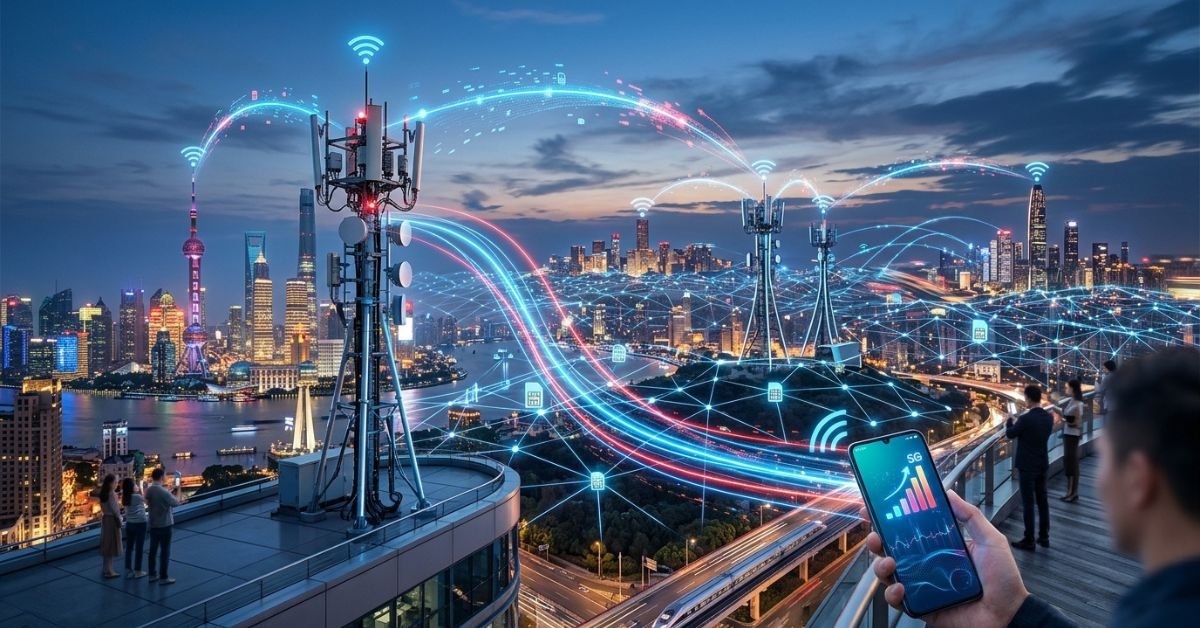
China sits at the center of the global mobile technology industry. From smartphone manufacturing and 5G deployment to next-generation network research, the country’s influence reaches nearly every corner of the mobile ecosystem.
If you’ve searched for GSM China, you’re likely looking for information about China’s mobile communications industry, smartphone brands, telecom networks, or the latest developments shaping the market.
What Is GSM China?
GSM China generally refers to China’s involvement in the Global System for Mobile Communications (GSM) ecosystem and the broader mobile technology industry.
GSM was one of the foundational standards that transformed mobile communications worldwide. China adopted GSM networks during the rapid expansion of mobile services and eventually became one of the largest mobile markets in history.
Today, the term often extends beyond GSM itself and encompasses:
- Chinese smartphone manufacturers
- Mobile network operators
- Telecom infrastructure providers
- Mobile technology news platforms
- Industry supply chains
- Emerging wireless technologies
How China’s Mobile Industry Became a Global Powerhouse
China’s rise in mobile technology did not happen overnight.
Several factors contributed to its dominance:
Massive Domestic Market
China has over a billion mobile subscribers, creating enormous demand for devices and network infrastructure.
Manufacturing Excellence
Cities like Shenzhen evolved into global technology hubs where design, manufacturing, logistics, and innovation coexist within a highly efficient ecosystem.
Government Investment
Strategic investment in telecommunications, semiconductor development, and 5G infrastructure accelerated technological growth.
Competitive Smartphone Brands
Chinese companies aggressively innovated while maintaining competitive pricing, helping them gain market share worldwide.
Leading Chinese Smartphone Brands
China is home to some of the most influential smartphone companies in the world.
| Brand | Known For | Strengths |
|---|---|---|
| Huawei | Network infrastructure and smartphones | Innovation, cameras, enterprise solutions |
| Xiaomi | Affordable flagship devices | Value for money |
| OPPO | Camera technology | Design and imaging |
| Vivo | Mobile photography | User experience |
| Honor | Performance devices | Competitive pricing |
| Realme | Budget and mid-range smartphones | Fast growth |
These brands continue competing globally across premium, mid-range, and entry-level segments.
GSM China and the Evolution from 2G to 5G
The mobile industry has progressed dramatically over the past three decades.
Network Evolution Timeline
2G GSM Era
- Voice communication
- SMS messaging
- Basic mobile connectivity
3G Era
- Mobile internet
- Multimedia services
- Enhanced data transmission
4G LTE Era
- Streaming
- Mobile commerce
- Social media growth
5G Era
- Ultra-low latency
- Smart cities
- IoT expansion
- AI-powered services
China became one of the world’s leaders in large-scale 5G deployment.
The Role of Huawei in China’s Telecom Industry
Few companies have influenced telecommunications as significantly as Huawei.
The company helped build network infrastructure across numerous countries while investing heavily in:
- 5G research
- Cloud computing
- Artificial intelligence
- Enterprise networking
- Telecommunications hardware
Its role extends beyond smartphones into the backbone infrastructure supporting modern communication networks.
Why Shenzhen Is Called the Smartphone Capital of the World
Shenzhen represents the heart of China’s mobile technology ecosystem.
Key advantages include:
- Rapid prototyping capabilities
- Dense supplier networks
- Advanced manufacturing facilities
- Access to skilled engineering talent
- Efficient logistics infrastructure
Many global technology products trace portions of their supply chains back to Shenzhen.
Emerging Trends Shaping GSM China in 2026
AI-Powered Smartphones
Artificial intelligence is becoming central to mobile experiences.
Examples include:
- Real-time translation
- Intelligent photography
- Personalized assistants
- On-device AI processing
Foldable Devices
Manufacturers continue refining foldable designs, durability, and software optimization.
eSIM Adoption
eSIM technology is gradually reducing dependence on physical SIM cards.
Satellite Connectivity
Smartphones increasingly support emergency and remote-area communication via satellite systems.
Early 6G Research
Chinese telecom companies and universities are already exploring technologies that could power future 6G networks.
GSM China Market Statistics
Key Industry Numbers
- China remains one of the largest smartphone markets globally.
- The country leads worldwide 5G infrastructure deployment.
- Chinese smartphone brands collectively account for a significant share of global shipments.
- Shenzhen hosts thousands of electronics manufacturers and suppliers.
[Source: GSMA Intelligence, IDC, Counterpoint Research, Statista]
Myth vs Fact
| Myth | Fact |
| Chinese phones only compete on price. | Many compete through innovation and premium features. |
| China only manufactures devices. | China also leads research, development, and network infrastructure. |
| GSM technology is outdated. | GSM laid the foundation for today’s mobile networks. |
| Chinese brands dominate only Asia. | Many now have strong global market presence. |
How GSM China Impacts the Global Mobile Industry
China influences nearly every stage of the smartphone lifecycle.
Research & Development
Companies invest heavily in:
- Camera systems
- AI capabilities
- Battery technology
- Wireless connectivity
Manufacturing
Many international brands rely on Chinese manufacturing partners.
Supply Chain Leadership
China remains critical for:
- Components
- Assembly
- Logistics
- Electronics ecosystems
Telecom Infrastructure
Chinese firms continue contributing to global network development.
EEAT Insight: Perspective From Industry Professionals
Professionals working in mobile technology consistently observe one recurring trend: consumers often underestimate how much innovation originates from China’s technology ecosystem.
Over the last decade, Chinese manufacturers have evolved from producing affordable alternatives to setting industry standards in areas such as fast charging, mobile photography, foldable displays, and AI-powered features.
Organizations evaluating smartphone suppliers or telecom partnerships increasingly focus on innovation capabilities rather than country of origin alone. The results consistently show that China’s mobile sector remains one of the strongest drivers of technological advancement worldwide.
Frequently Asked Questions
What does GSM China mean?
GSM China typically refers to China’s role in mobile communications, smartphone manufacturing, telecom infrastructure, and the broader GSM and wireless technology ecosystem.
Why is China important to the smartphone industry?
China combines massive consumer demand, advanced manufacturing capabilities, strong supply chains, and significant investments in telecommunications research and development.
Which Chinese smartphone brand is the most popular?
Popularity varies by region, but Huawei, Xiaomi, OPPO, Vivo, Honor, and Realme remain among the most recognized Chinese smartphone brands globally.
Is GSM technology still used today?
Modern networks primarily rely on 4G and 5G technologies, but GSM played a foundational role in the development of mobile communications worldwide.
What city leads China’s mobile manufacturing sector?
Shenzhen is widely considered the center of smartphone manufacturing and electronics innovation in China.
What comes after 5G?
Researchers are actively developing 6G technologies, which may offer faster speeds, lower latency, enhanced AI integration, and new communication capabilities.
Final Thoughts
GSM China represents much more than a telecommunications standard. It reflects an entire ecosystem that includes smartphone manufacturers, network operators, infrastructure providers, supply chain innovators, and emerging technology pioneers.
CLICK HERE FOR MORE BLOG POSTS

“In a world of instant takes and AI-generated noise, John Authers writes like a human. His words carry weight—not just from knowledge, but from care. Readers don’t come to him for headlines; they come for meaning. He doesn’t just explain what happened—he helps you understand why it matters. That’s what sets him apart.”