

Table of Contents
- Digital Integration and Interactive Displays
- Sustainable Materials and Eco-Friendly Designs
- Minimalist Design and Bold Simplicity
- LED Signage Enhancing Urban Aesthetics
- Advanced Wayfinding Systems
- Conclusion
In today’s evolving cities, signage is not just a tool for identification. It plays an essential role in defining the character and atmosphere of urban centers. As trends shift, signage now embraces technology, sustainability, and thoughtful design, transforming how information is communicated and how people interact with their environments. Companies like Vancouver Sign Company are at the forefront of these innovations, helping cities develop functional and visually striking cityscapes.
As more people engage with their surroundings, both physically and digitally, there is a growing demand for signage that is not only informative but also interactive and environmentally mindful. Signage must contend with the fast-paced rhythm of city life, capture attention, and contribute to a cohesive sense of place. This blend of art and technology is reshaping what we see and experience in public spaces.
The latest trends are changing expectations for what signage can achieve. Whether integrating digital features or prioritizing access to maps, transit schedules, or event information, instant access is essential in urban planning and consumer awareness.
Below, we explore the trends that are shaping urban signage, from dynamic digital displays to advanced wayfinding systems. Discover how these approaches are enhancing city life and helping communities stand out.
Digital Integration and Interactive Displays
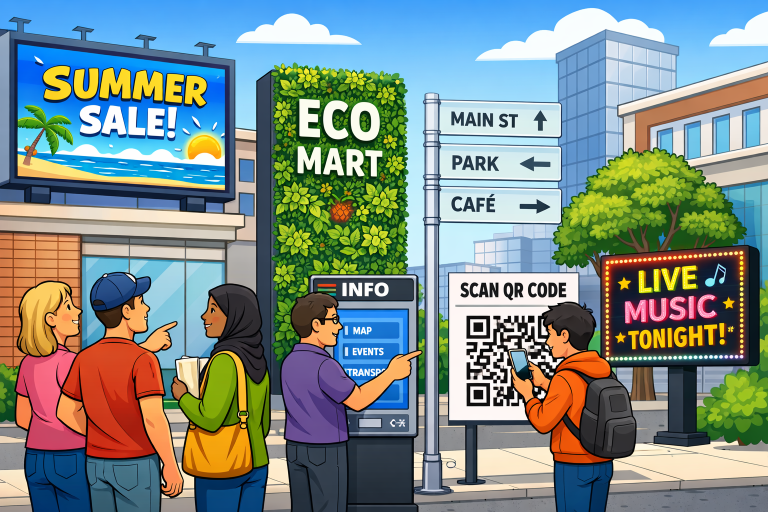
Technology now powers many forms of urban signage. Large digital billboards, touchscreen wayfinding systems, and interactive kiosks give users real-time information and engaging experiences. These interactive displays allow for updates on city events, wayfinding, public safety announcements, and even advertising that adapts to changing conditions. Digital signage can also encourage public engagement through gamification or by providing localized content based on user input. This digital evolution makes city environments more dynamic and enhances environmental responsibility for residents and tourists alike.
One notable trend is the use of augmented reality (AR) and mobile connectivity in digital signage. Through AR, pedestrians can use their smartphones to interact with signage, receiving additional layers of information or immersive guidance. The development of interactive wayfinding apps tied to physical signs allows users to scan QR codes or NFC tags to instantly access maps, transit schedules, or event information. This integration blurs the boundaries between physical signs and digital ecosystems, enhancing accessibility and personalization for city dwellers. Moreover, data collected from interactive displays helps municipalities refine public services and optimize urban planning, using visitor flows and engagement trends as feedback loops for continual improvement.
Sustainable Materials and Eco-Friendly Designs
Sustainability is now at the heart of urban design, and signage is a key part of this movement. The shift toward materials like reclaimed wood, bamboo, recycled plastics, and metals reflects a desire to minimize environmental impact and support green initiatives. These materials not only reduce waste but also add warmth and natural texture to city streets. Many projects also use energy-efficient lighting and low-impact finishes to further enhance environmental responsibility. Cities and businesses recognize that sustainable signage is a visible way to show their commitment to the community and the planet. Green building certifications, such as LEED, increasingly set standards for sign fabrication and installation, ensuring that every aspect, from adhesives to fasteners, meets rigorous environmental criteria. Some cities encourage solar-powered signs or require modular designs that can be updated or repurposed with minimal waste.
Additionally, the durability of eco-materials translates into cost savings and a reduced need for frequent replacements, which is vital in high-traffic urban settings. Municipalities are also piloting “living” signs featuring elements like green walls or moss letters, merging natural beauty with information while improving air quality and urban aesthetics. The future of sustainable signage points toward biophilic design, circular materials use, and a commitment to creating resilient cityscapes.
Minimalist Design and Bold Simplicity
Minimalism continues to influence signage, with a preference for uncluttered visuals, simple color palettes, and clear typography. Such designs are easy to recognize and read, even in busy urban environments. By eliminating unnecessary embellishments, minimalist signage ensures important information stands out. This simplicity also allows for seamless integration into various architectural styles, supporting both historical and futuristic urban settings. Minimalist design underscores clarity as the hallmark of effective communication in public spaces.
This less-is-more philosophy can be especially powerful in multicultural cities, where language barriers may exist, and universal symbols and visual cues become essential for welcoming all visitors. Through excellent spacing, contrast, and alignment, minimalism helps direct attention exactly where it’s needed, avoiding sensory overload in densely built environments. Increasingly, designers are experimenting with tactile surfaces and embossed typography in minimalist layouts, enhancing both visual appeal and touch-based navigation for individuals with visual impairments. As cities continue to densify, refinement and legibility take precedence, asserting that the most effective signs are those that respect users’ time and cognition.
LED Signage Enhancing Urban Aesthetics
LED technology has opened new possibilities for urban signage. Energy-efficient LEDs allow for vibrant, eye-catching displays on building facades, street directories, and storefronts. Beyond their luminosity and low power consumption, LEDs can be programmed for custom animation, seasonal changes, or artistic displays that transform city centers after dark. Flexible and durable, LED-based signs are now a staple in cities looking to boost visual engagement and support nighttime economies (Samsung Newsroom: Samsung Installs Momentous New LED Displays in the Heart of New York’s Times Square).
Many urban environments are leveraging “smart” LED signage that can adapt messaging and brightness to ambient light, traffic density, or special events. These adaptive qualities reduce energy consumption while ensuring important messages remain visible. In arts districts and public gathering areas, programmable LEDs facilitate community involvement, providing canvases for local artists to display digital artworks or communicate city-wide celebrations and alerts. This level of interactivity fosters a sense of ownership among residents and contributes to a lively, ever-changing city aesthetic. The transition from static signage to dynamic LED displays marks a generational leap in both visual communication and the creation of memorable urban landmarks.
Advanced Wayfinding Systems
Effective navigation across complex city areas depends on well-designed wayfinding systems. Modern signage in this realm utilizes consistent iconography, legible fonts, color coding, and intuitive layouts to streamline movement for pedestrians, cyclists, and motorists. Digital wayfinding can even provide directions that adapt to the time of day, events, or accessibility needs. The integration of tactile and audible features ensures these systems are inclusive, supporting all city residents and visitors. Clear wayfinding contributes to safety, reduces stress, and enhances the overall urban experience.
Urban planners are increasingly collaborating with behavioral scientists and accessibility advocates to ensure wayfinding signage supports all users, including those with cognitive or mobility challenges. Multilingual displays and universally recognizable design reduce friction for non-native speakers and international tourists, further enhancing urban accessibility. Additionally, wayfinding systems can now connect with navigation apps to provide seamless transitions from digital trip planning to on-the-ground navigation. As cities implement more shared transportation systems, like bike-share and micro-mobility hubs, effective wayfinding is crucial to connect these modes and encourage sustainable commuting options.
Conclusion
Today’s signage goes beyond simple markers to become an integral part of urban identity and daily life. By investing in digital advancements, sustainable practices, and thoughtful design, cities create inviting and efficient environments for everyone. As technology and design evolve, signage will continue to play a major role in how people navigate and connect with their urban worlds. Forward-thinking trends not only highlight innovation but foster stronger, more cohesive communities.
Ultimately, well-executed signage supports the flow of information, facilitates community engagement, and strengthens local identity. As urban populations grow and cities strive to accommodate greater diversity and density, the role of signage will only expand, bridging the gap between the physical and digital realms and guiding people safely and confidently through shared spaces. With ongoing innovation and inclusive design, the possibilities for signage to enhance urban life remain boundless.

MOBI ROLLER is a tech enthusiast with a background in technology. He writes about the latest trends, tools, and innovations in the tech world, sharing insights based on both knowledge and experience.