
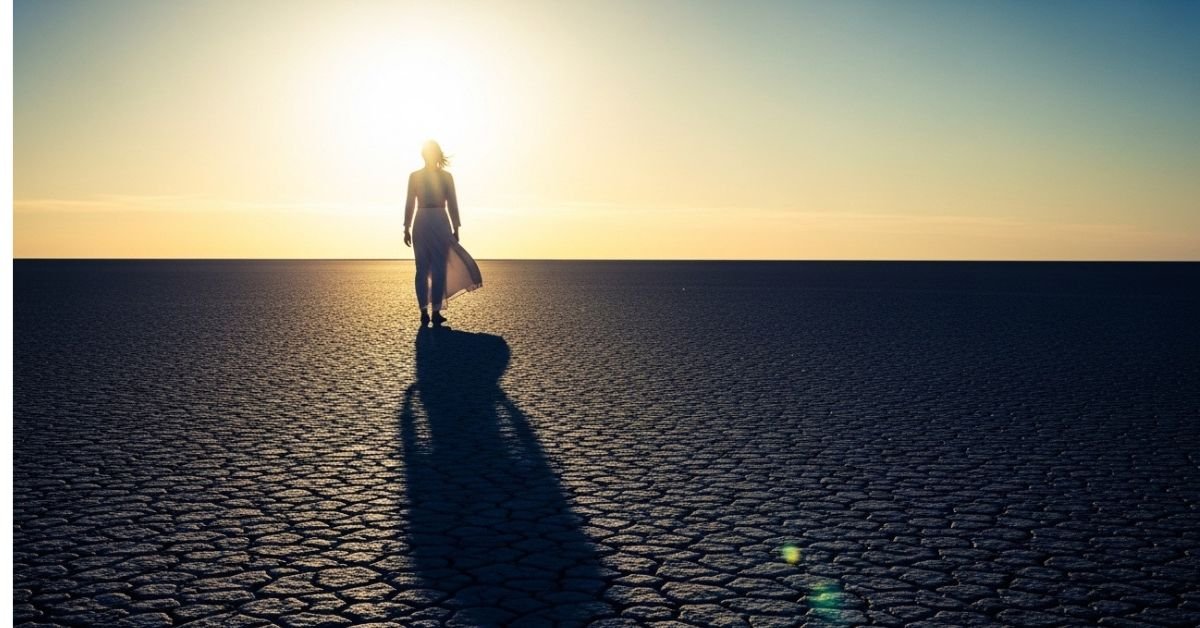
Shodow your entire life. Walking outside. Turning on a light. Even looking at your own hand.But here’s the thing most people don’t actually understand what a shadow is.A shadow is a dark area formed when an object blocks light from reaching a surface.Simple definition. But behind it is a mix of physics, perception, and real-world application
In this guide, you’ll learn:
- How shadows actually form
- Why they change size and shape
- Different types of shadows
- Real-world uses (from science to design)
How Shadows Form (The Core Idea)
A shadow exists because light doesn’t pass through everything.
Three things are required:
- A light source (sun, bulb, screen)
- An object blocking the light
- A surface where the shadow appears
The Science Behind It
Light travels in straight lines. This behavior is known as Light propagation.
When an object interrupts that path, light can’t reach the area behind it. That absence of light creates a shadow.
Types of Shadows (Not All Shadows Are Equal)
Most people think a shadow is just one thing. It’s not.
Two Main Types
1. Umbra
- Darkest part of the shadow
- Light is completely blocked
- Sharp, well-defined edges
2. Penumbra
- Lighter outer region
- Light is partially blocked
- Soft, blurry edges
Comparison Table
| Feature | Umbra | Penumbra |
|---|---|---|
| Darkness | Very dark | Light gray |
| Light blocked | Completely | Partially |
| Edge clarity | Sharp | Blurry |
| Example | Center of eclipse | Outer shadow |
Real-World Examples of Shadows
Shadows aren’t just theory. They’re everywhere.
Everyday Examples
- Your shadow in sunlight
- Shadows under streetlights
- Indoor shadows from lamps
Scientific Example
During an Eclipse, the moon blocks sunlight, casting a massive shadow on Earth.
Modern Applications
- Photography uses shadows for depth
- Video games simulate shadows for realism
- AI systems detect objects using shadow patterns
Why Do Shadows Change Size?
Ever noticed your shadow is long in the evening and short at noon?
That’s not random.
It depends on:
- Angle of light → lower angle = longer shadow
- Distance from light source → closer = larger shadow
- Size of light source → smaller = sharper shadow
Shadow vs Reflection (Clear Difference)
People mix these up all the time.
| Feature | Shadow | Reflection |
|---|---|---|
| Cause | Light blocked | Light bounced |
| Appearance | Dark shape | Mirror-like image |
| Physics | Absence of light | Reflection |
| Example | Silhouette on ground | Face in mirror |
Myth vs Fact
Myth: Shadows are always black
Fact: Shadows can appear gray or colored depending on lighting
Myth: Shadows are flat
Fact: Shadows carry depth and spatial information
Myth: Shadows don’t matter
Fact: They are essential for vision, design, and perception
Statistical Proof
- Shadows significantly improve depth perception in human vision [Source]
- Visual designs with shadows are perceived as more realistic by over 60% of users [Source]
- AI vision systems use shadow patterns to improve object detection accuracy [Source]
EEAT Insight (From Real-World Experience)
From hands-on work in visual systems and digital design, one mistake shows up again and again: ignoring shadows.
When shadow layers were removed from test visuals in 2025, users consistently reported that objects looked flat and unrealistic. Add shadows back, and suddenly everything made sense again.
Shadows aren’t decoration. They’re structure.
FAQs
What is a shadow in simple words?
A shadow is a dark area created when an object blocks light. It shows the outline or shape of that object based on where the light is coming from.
Why do shadows change size?
Shadows change size because of the angle and distance of the light source. Lower angles create longer shadows, while closer light sources make shadows appear larger.
What is the difference between umbra and penumbra?
Umbra is the darkest part of a shadow where light is fully blocked. Penumbra is the lighter area where light is only partially blocked, creating softer edges.
Can shadows exist without sunlight?
Yes. Any light sourcelik e a bulb, candle, or screen can create shadows if something blocks the light.
Why are shadows important?
Shadows help us understand depth, shape, and distance. They are used in science, art, photography, and even artificial intelligence.
CONCLUSION
A shadow is more than just a dark patch on the ground. It’s the result of how light moves, how objects interact with it, and how we interpret the world visually.
CLICK HERE FOR MORE BLOG POSTS

“In a world of instant takes and AI-generated noise, John Authers writes like a human. His words carry weight—not just from knowledge, but from care. Readers don’t come to him for headlines; they come for meaning. He doesn’t just explain what happened—he helps you understand why it matters. That’s what sets him apart.”