

Key Takeaways
- Group air travel provides custom flight solutions that simplify event coordination.
- Bulk bookings lower costs and yield more flexible scheduling to match event itineraries.
- The attendee experience is enhanced by minimizing individual travel stress and logistical complications.
- Rapid technological advancements continue to optimize group air travel logistics.
In the fast-paced world of event planning, efficiency and precision are paramount. Coordinating large-scale events involves complex logistics, with transportation often serving as the linchpin. Increasingly, group air travel has emerged as a transformative solution, streamlining event logistics for both attendees and organizers. By leveraging services such as EvoJets group aircraft charter, planners can coordinate travel for large groups with far greater ease and flexibility than ever before.
For event professionals, ensuring that guests, teams, or employees travel seamlessly is crucial. When managed well, group air charter can drastically reduce stress, eliminate travel uncertainties, and create a unified travel experience. As the demand for sophisticated event logistics grows, group air travel stands out for its ability to accommodate complex schedules and improve overall attendee satisfaction.
The Rise of Group Air Travel in Event Planning
Event organizers have historically faced numerous obstacles in arranging transportation for large groups. From misaligned individual itineraries to missed connections, traditional travel arrangements introduce unnecessary complexity. Group air travel changes this dynamic by enabling planners to book entire aircraft or reserved sections, ensuring attendees arrive together and on time for major events or conferences. Custom flight solutions also factor in attendees’ unique needs, such as special dietary requirements, mobility assistance, or equipment storage.
Furthermore, group air travel is increasingly utilized for new types of events, such as global summits and technology expos, where coordination and timely arrivals are critical. The flexibility to select departure and arrival airports that best suit an event’s location offers significant convenience and time savings. Organizers can better tailor travel schedules to fit precisely with conference sessions or event start times, resulting in fewer delays or distractions for participants. This higher level of control is often cited as one of the leading reasons why more event professionals are turning to group air travel as their preferred solution. Group travel anticipates logistical hiccups, such as connecting flights, airport congestion, or security needs, and mitigates them with advance planning and dedicated support.
Cost-Effective Solutions Through Bulk Booking
One notable advantage of group air travel is cost savings. Airlines and charter services often provide discounts for bulk bookings, making it easier to control budgets or even reallocate funds to other important event components. The option to split costs and negotiate package deals becomes especially valuable for organizations managing budget-sensitive events. Flexible scheduling also allows planners to align flight times with precise event milestones, reducing downtime and maximizing productivity.
This economic advantage can make the difference when hosting high-impact events with limited financial resources. Whether chartering private jets or arranging large commercial flights, group bookings allow organizations to receive added value from onboard amenities to ground transportation coordination, often included in comprehensive packages. Additionally, group travel providers may offer extra perks, such as priority boarding, lounge access, or upgraded meals for attendees, further justifying the investment while boosting attendee perception and overall event value.
Enhancing Attendee Experience
Delivering a seamless experience for attendees remains a top priority in professional event planning. Group air travel reduces the stress of managing individual flight bookings, layovers, and unpredictable delays. Coordinating flights for an entire group enhances camaraderie, allowing attendees to network, collaborate, and get in the right mindset before even reaching the event location. This collective approach contributes to elevated engagement and overall event success.
Insights from industry experts suggest that attendees who travel together are more likely to participate actively and enjoy the event, as shared travel can foster a sense of unity and team spirit.
Another dimension is the ability to provide tailored support throughout the travel process. Travel coordinators or on-board hosts can ensure that all guests’ requirements are met, from dietary preferences to accessibility accommodations, which can be especially vital for guests traveling internationally or those unfamiliar with the event destination. This high level of personalized care sets a positive tone for the rest of the event and helps reduce potential friction or dissatisfaction that could arise from travel challenges. As a result, the travel experience becomes a seamless extension of the overall event journey and not just a means of arrival.
Technological Advancements in Group Air Travel
Technology is transforming every aspect of group air travel, making logistics more manageable and transparent for event planners. Modern group travel platforms now offer real-time updates, simplified modifications, and streamlined communication between organizers, attendees, and airlines. Organizers can efficiently manage booking adjustments or request changes on the fly, ensuring flexibility even when last-minute changes arise. Improved user interface design and app-based communications now allow updates and notifications to be distributed instantly to all participants, reducing miscommunication and logistical errors.
Moreover, the rise of integrated travel management platforms enables the centralization of all travel-related information in a single dashboard. This gives planners greater visibility into all moving parts of their group’s journey and supports more efficient troubleshooting and contingency planning when disruptions occur. Artificial intelligence is also playing an increasingly important role in automating administrative tasks, optimizing routes, and forecasting potential delays, helping event logistics stay efficient, adaptive, and forward-looking.
Case Study: Transforming Sports Team Travel
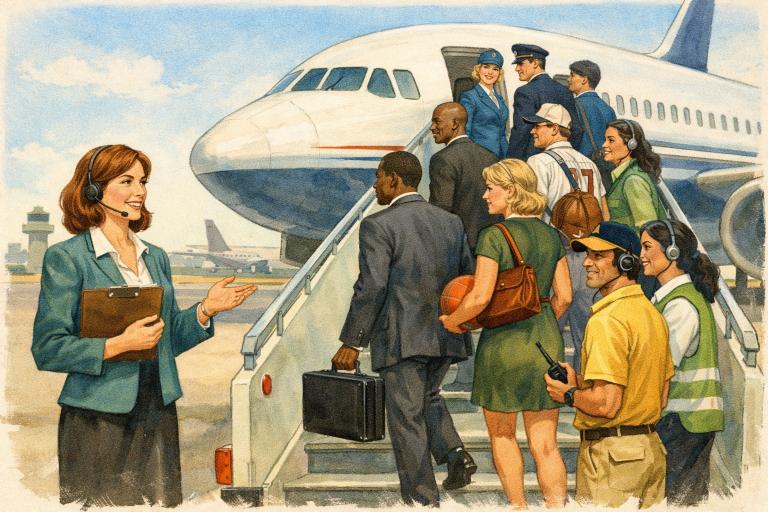
The sports industry has long relied on group air charters to maintain high performance levels amid grueling travel schedules. Professional and collegiate sports teams often travel with significant gear, coaches, support staff, and even medical specialists. Charter flights configured for these requirements provide exclusive access to the aircraft, offering privacy, comfort, and customized in-flight amenities. Close partnerships between airlines and charter companies allow teams to set precise arrival and departure dates, reducing fatigue and enabling more focused performance. This tailored approach to group travel applies across many fields, including music tours and corporate incentive trips, where logistical precision is required for success.
Environmental Considerations and Sustainability
With a rising focus on corporate responsibility and sustainable travel, group air charter can yield sustainability benefits by consolidating travelers onto fewer flights. By using larger, more fuel-efficient aircraft and streamlining event-related itineraries, organizers can help reduce their events’ carbon footprint. Airlines and charter providers are making substantial investments in next-generation aircraft, alternative fuels, and efficiency practices.
Additionally, many charter services and airlines are offering carbon offsetting programs as standard practice. Planners can now select carbon-neutral flights, further demonstrating an event’s commitment to environmental stewardship. These initiatives not only benefit the planet but also enhance the reputations of event hosts, as guests and stakeholders increasingly prefer to align with organizations that prioritize eco-friendly practices. Transparent reporting on sustainability efforts is frequently included in post-event wrap-ups, signaling a new standard for responsible event planning in today’s marketplace.
Future Outlook: The Continued Evolution of Group Air Travel
The future of group air travel promises even greater efficiency and sustainability. The integration of artificial intelligence and advanced data analytics will allow planners to optimize flight schedules, anticipate travel disruptions, and enhance guest satisfaction. As demand for global meetings, sports tournaments, and destination events continues to grow, group air travel is poised to further solidify its role as an essential tool for seamless, cost-effective, and environmentally responsible event logistics.
Group air travel has firmly established itself as an invaluable asset for logistics in large-scale event planning. With ongoing technological advances and a steady commitment to sustainability, its influence is only expected to grow as the industry continues to evolve.

MOBI ROLLER is a tech enthusiast with a background in technology. He writes about the latest trends, tools, and innovations in the tech world, sharing insights based on both knowledge and experience.