
Key Takeaways
- Integrated security systems drive operational efficiency and quick incident response.
- AI-powered cyber threats are increasingly sophisticated, demanding advanced countermeasures.
- Physical security remains a foundational part of a company’s defense posture.
- Managed security services provide adaptable and scalable security capabilities for growing enterprises.
Table of Contents
- Integrated Security Systems
- AI-Driven Threats and Cybersecurity Measures
- The Importance of Physical Security
- Managed Security Services for Scalability
- Conclusion
As businesses evolve in a landscape shaped by rapid technological advancement and new threats, the need for robust corporate security solutions has never been more urgent. Organizations are not only addressing rising cyber risks but must also manage physical security concerns seamlessly. Integrating advanced protections into daily operations is a foundational step in safeguarding digital and physical assets. Security leaders are recognizing that protecting sensitive information, infrastructure, and personnel requires adaptable strategies that keep pace with a constantly shifting risk environment.
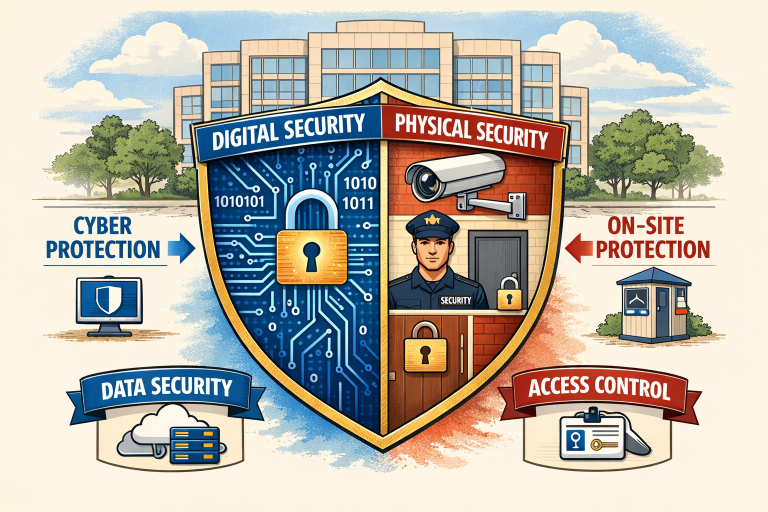
While digital transformation unlocks business opportunities, it simultaneously opens additional avenues for attack. Unifying digital and physical security measures ensures companies are resilient, compliant, and prepared, underscoring the need for modern, multilayered risk management.
Integrated Security Systems
Businesses today are moving toward integrated security systems that connect video surveillance, access controls, alarms, and more. By bringing these different components together on a single platform, there is greater visibility across the organization, allowing teams to monitor real-time threats and automate responses when incidents occur. Centralized interfaces mean that monitoring does not require switching between multiple systems, leading to improved situational awareness and faster decision-making. This integrated approach is vital in large facilities, campuses, or companies with multiple locations where coordinated responses are essential.
For organizations with substantial physical and digital assets, integrating security systems also reduces operational burdens. Automation tools can flag anomalies that human observers might miss, and unified reporting offers a clearer, data-driven understanding of potential vulnerabilities. Adopting integrated systems is closely tied to business continuity planning and compliance, particularly in sectors such as finance and healthcare, where regulatory requirements are strict. For more insights into how integration is transforming security practices, resources like this Forbes article highlight the business benefits of a unified security infrastructure.
AI-Driven Threats and Cybersecurity Measures
The emergence of artificial intelligence has fundamentally changed the nature of cybersecurity threats. While AI can enhance defenders’ detection and response capabilities, it also enables attackers to automate phishing, generate realistic social engineering schemes, and evade traditional detection systems more easily. As a result, companies need to upgrade their defensive strategies by investing in cybersecurity solutions that leverage AI and machine learning for threat intelligence, behavioral analytics, and anomaly detection.
Continuous monitoring, proactive threat hunting, and real-time incident analysis are becoming essential components of any modern cybersecurity program. By leveraging AI for both defensive and offensive insights, organizations are better positioned to prevent breaches and recover quickly if one occurs. According to CSO Online, AI-powered cybersecurity tools help organizations stay one step ahead of cybercriminals by predicting attack vectors and quickly applying countermeasures. Keeping pace with the latest in AI technology is essential for both identifying and mitigating advanced threats.
The Importance of Physical Security
While digital threats are headline news, physical security remains an indispensable aspect of holistic risk management. Physical breaches, whether theft, vandalism, or unauthorized access, can result in significant losses and compromise sensitive information. Protecting entry points with state-of-the-art access control systems, employing trained security staff, and establishing emergency protocols all contribute to creating a safer environment for employees and visitors.
Physical security strategies should be regularly reviewed and updated to respond to new threats and workplace changes. Additionally, employee training and regular drills help ensure everyone knows how to react during crises. A strong physical security plan complements digital protections and is especially critical in sectors with valuable or sensitive physical assets, such as manufacturing, logistics, and research facilities. In many incidents, integrating physical and cyber security resources results in faster incident detection and more effective containment of security events.
Managed Security Services for Scalability
As businesses expand, their security requirements often outpace their in-house capabilities. Managed Security Service Providers (MSSPs) offer expertise, continuous monitoring, and rapid response services that smaller IT teams often struggle to deliver. MSSPs can scale quickly, adjusting to new risks as a company enters new markets or adopts new technologies. This ensures that security posture remains strong without overburdening core internal resources.
Managed services can include everything from firewall management and intrusion detection to compliance reporting and incident response planning. Outsourcing these complex tasks allows organizations to focus on strategic growth priorities while maintaining best-in-class cybersecurity and physical security protocols. Partnering with MSSPs is a cost-effective way to access cutting-edge solutions, especially as the security landscape becomes more complex and regulatory environments more demanding.
Conclusion
In a world where change is constant and threats continue to evolve, adopting comprehensive corporate security solutions is vital for long-term business success. Integrating advanced technologies, keeping pace with AI-driven cyber threats, maintaining strong physical barriers, and utilizing scalable managed services equip organizations not only to survive but to thrive. Companies that invest in holistic protection strategies are better positioned to safeguard their most valuable assets, foster trust among stakeholders, and lay secure foundations for innovation and growth.

MOBI ROLLER is a tech enthusiast with a background in technology. He writes about the latest trends, tools, and innovations in the tech world, sharing insights based on both knowledge and experience.