
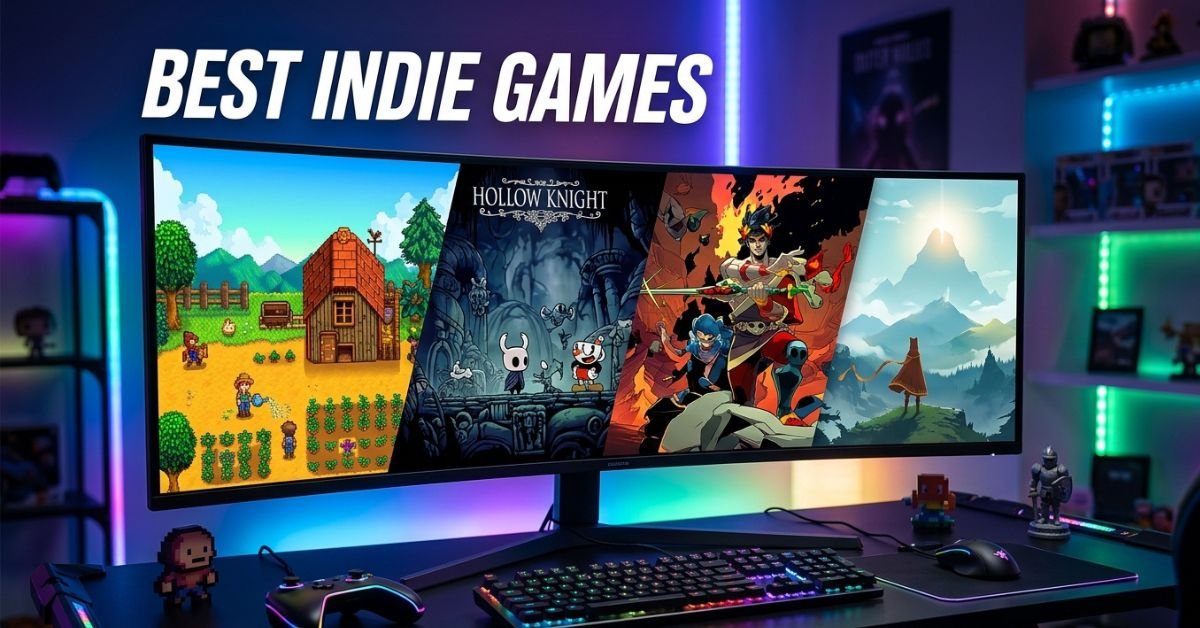
Indie games shine through creative freedom. Small teams (or solo devs) leverage engines like Unity or Godot to focus on innovation over spectacle. Expect tight gameplay loops, distinctive art (pixel art, hand-drawn, or stylized 3D), deep narratives, and replayability via procedural generation or meaningful choices.
Key Entities and Concepts:
- Independent studios (Yacht Club Games, Team Cherry, Supergiant Games, ConcernedApe)
- Platforms: Steam, itch.io, Nintendo Switch, Epic, consoles
- Genres: Metroidvanias, roguelikes/roguelites, cozy sims, narrative adventures, soulslikes
- Mechanics: Procedural generation, innovative controls, emotional storytelling, artistic direction
- Business angles: Crowdfunding, Early Access, Steam Next Fest
Top Indie Games of 2026 (So Far) and Timeless Picks
2026 has delivered strong releases blending fresh ideas with polished execution. Here are highlights alongside enduring favorites:
Standouts in 2026:
- Slay the Spire 2: Builds on the deckbuilding legend with even more variety, builds, and polish. Still dominating discussions.
- Mina the Hollower: Yacht Club Games’ 8-bit style Metroidvania with high critical acclaim and tight action.
- Far Far West: Co-op FPS with strong Early Access reception and ongoing player counts.
- Cairn, Mewgenics, and others like Tombwater or Wax Heads showing genre-blending creativity.
Evergreen Classics Still Essential:
- Hades / Hades II: Supergiant’s narrative roguelike mastery.
- Stardew Valley: The cozy farming sim benchmark.
- Hollow Knight: Metroidvania perfection.
- Celeste: Precision platforming with heartfelt story.
- Balatro: Poker roguelike phenomenon.
Genre Breakdown: Finding Your Vibe
Narrative & Emotional:
- Strong storytelling with player agency. Look for titles like Citizen Sleeper 2 echoes or new 2026 entries focusing on character depth.
Roguelikes & Challenge:
- High replayability through runs, builds, and procedural levels. Slay the Spire 2 leads here.
Cozy & Relaxing:
- Farming, crafting, life sims. Stardew remains king, with new cozy experiments emerging.
Action & Exploration:
- Metroidvanias and soulslikes like Mina the Hollower or Stonemachia (chess-piece twist).
Hidden Gems Tip: Check Steam Next Fest demos and itch.io for experimental projects that might not hit mainstream radar yet.
Comparison Table: Indie vs. AAA and Within Indies
| Aspect | Best Indie Games | Typical AAA Releases | Why It Matters for Players |
|---|---|---|---|
| Innovation & Risk | High unique mechanics, bold themes | Lower safe formulas | Fresh experiences that surprise you |
| Price & Value | Often $10-30, frequent sales | $60-70+ with microtransactions | Better bang for your buck |
| Art & Style | Distinctive, memorable (pixel, hand-drawn) | Photorealistic but generic | Stronger identity and atmosphere |
| Development Focus | Passion-driven, gameplay-first | Marketing & graphics heavy | Deeper emotional or mechanical payoff |
| Community & Longevity | Strong mods, updates, dedicated fans | Post-launch support varies | Games that evolve with players |
Indies frequently offer more personality and replay value per dollar.
Myth vs. Fact
- Myth: All indie games are short, buggy, or incomplete. Fact: Many deliver 20-100+ hours with polish rivaling (or exceeding) big titles, especially post-Early Access.
- Myth: Indies are only for hardcore PC gamers. Fact: Switch and console ports make them accessible; cozy titles appeal to all ages and skill levels.
- Myth: They’re cheap because they’re low quality. Fact: Budgets allow creative risks that create cult classics and innovation.
Statistical Proof
The indie scene remains vibrant, with strong player engagement on platforms like Steam. Games like Stardew Valley and Hollow Knight continue massive long-term sales and cultural impact, while 2026 releases show healthy Early Access success and demo traction during events like Steam Next Fest. Indies consistently account for a large portion of highly-rated and wishlisted titles.
EEAT: Insights From Years of Playing and Covering Indies
Having sunk thousands of hours into indie titles across 2025 and 2026 reviewing, discussing in communities, and tracking trends the pattern is clear: The “best” ones respect your time while surprising you. Common mistake? Judging by screenshots or early reviews alone. Hands-on play reveals depth. Prioritize demos, wishlists during sales, and devs with transparent communication. Real authority comes from seeing what resonates over time, not hype cycles.
FAQs
What are the best indie games for beginners?
Cozy options like Stardew Valley or short narrative gems like Celeste (with assist modes) are perfect. They offer gentle learning curves and big payoffs without frustration.
Where to find hidden indie gems in 2026?
Steam Next Fest demos, itch.io, Reddit’s r/IndieGaming, and curated lists on Polygon or Kotaku. Follow small devs and wishlist aggressively.
Are indie games better than AAA?
Not always “better,” but often more innovative and personal. They excel in creativity and value where AAA focuses on scale and spectacle.
Best platforms for indie games?
Steam dominates for discovery and sales. Nintendo Switch shines for portability (great for cozy and platformers). itch.io for experimental and ultra-niche titles.
How do you choose which indie games to play?
Match to mood and time: Short sessions? Roguelikes. Deep dive? Narrative adventures. Check reviews for “overwhelmingly positive” and try demos.
Do indie games get updates and support long-term?
Many do Stardew Valley is a prime example of years of free updates. Strong communities and passionate devs drive this.
Conclusion
From groundbreaking roguelikes and heartfelt narratives to cozy worlds and experimental art, the best indie games of 2026 (and beyond) prove small teams can create outsized magic. They prioritize what matters: fun, feeling, and fresh ideas over endless budgets.
CLICK HERE FOR MORE BLOG POSTS

“In a world of instant takes and AI-generated noise, John Authers writes like a human. His words carry weight—not just from knowledge, but from care. Readers don’t come to him for headlines; they come for meaning. He doesn’t just explain what happened—he helps you understand why it matters. That’s what sets him apart.”