
A dead or dangerous tree in your yard isn’t just an eyesore — it’s a liability. But before you call anyone, it helps to know what tree removal actually costs, what drives the price up or down, and how to avoid overpaying.
The Short Answer
For a straightforward removal, most homeowners pay somewhere in the low hundreds for a small tree and well over a thousand for a large, complex removal. The national average sits around $750–$1,000, but your actual quote depends on several factors.
Cost by Tree Size
Size is the single biggest price driver, so here’s a rough breakdown of what to expect:
- Small trees (under 30 feet): $150–$400. Think young ornamentals, small fruit trees, or saplings. Usually a quick job with basic equipment.
- Medium trees (30–60 feet): $400–$900. Most suburban shade trees fall here. Expect a half-day of work with a crew of two or three.
- Large trees (60–80 feet): $900–$1,500. Mature oaks, pines, and sycamores. Often needs bucket trucks or rigging.
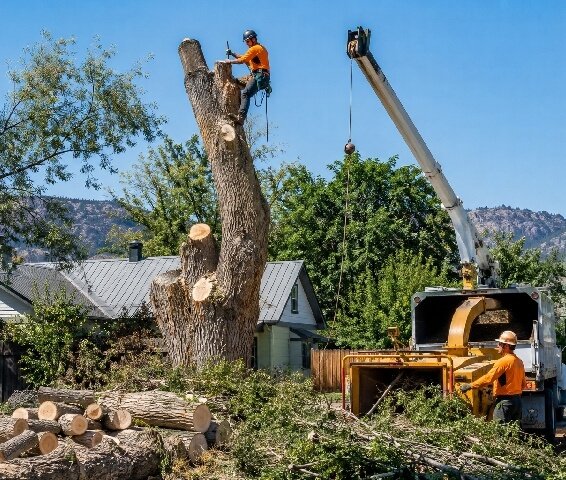
- Extra-large trees (over 80 feet): $1,500–$3,000+. Massive heritage trees near structures can require cranes, road closures, and multi-day crews.
These are ballparks — your region, the contractor, and the specific challenges of your tree move the number up or down.
What Drives the Cost
1. Tree size and height. This is the biggest factor. A 25-foot ornamental tree is a half-day job with basic equipment. An 80-foot oak near your house requires cranes, rigging crews, and a full day — sometimes more.
2. Location and access. A tree in an open backyard is easy. A tree wedged between your house, a fence, and power lines is slow, careful work. Limited access for trucks and chippers adds labor hours.
3. Condition of the tree. A healthy tree comes down in predictable pieces. A dead, hollow, or storm-damaged tree is unpredictable and dangerous — crews charge more because the risk is higher. If you need emergency tree service after a storm, expect premium pricing for the rapid response.
4. Stump handling. Cutting the tree down is only half the job. Stump grinding is usually quoted separately — and it’s worth doing, because a leftover stump attracts termites and regrows suckers. You can read more about professional stump grinding and why it matters.
5. Debris removal. Some quotes include hauling everything away; others leave you with a pile of logs. Always ask.
Hidden Costs Homeowners Miss
The quote for cutting the tree down is rarely the whole story. Watch for these extras:
- Permits. Many cities require a permit to remove a tree over a certain size, especially heritage or protected species. Fees run $50–$200, and skipping the permit can mean fines.
- HOA approvals. If you live in a managed community, you may need written approval before any removal — factor in the waiting time.
- Stump grinding. As mentioned above, this is almost always a separate line item ($100–$400 depending on stump size).
- Root removal. Grinding handles the stump, but major surface roots are a separate job if you’re replanting or laying sod.
- Landscaping repair. Heavy equipment tears up lawns. Ask whether the quote includes restoring ruts and bare patches, or whether that’s on you.
DIY vs. Hiring a Pro
Cutting down a small tree yourself can save a few hundred dollars — but only if the tree is small, healthy, far from structures, and you own (and know how to use) a chainsaw safely. For anything over 20 feet, near a house, near power lines, or already dead, hire a professional. Tree work is consistently ranked among the most dangerous jobs in America, and a falling limb doesn’t care about your weekend-warrior confidence. The hospital bill dwarfs any savings.
How to Get a Fair Quote
- Get 3 quotes minimum. Prices vary wildly between companies.
- Ask what’s included. Removal, stump grinding, debris hauling, and cleanup should each be spelled out.
- Check insurance. A legitimate tree service carries liability insurance and workers’ comp. This is non-negotiable when someone is dropping thousand-pound limbs over your roof.
- Never pay in full upfront. A small deposit is normal; full payment comes after the job is done.
- Get it in writing. A handshake quote means nothing when there’s a dispute. A written estimate protects both sides.
When Removal Can’t Wait
Some situations are emergencies: a tree leaning toward your house after a storm, a split trunk, or large dead limbs hanging over a driveway. In those cases, don’t wait for three quotes — call a local pro immediately. Most reputable tree services offer 24/7 emergency response during storm season.
The Bottom Line
Tree removal isn’t cheap, but it’s far cheaper than the roof repair, car replacement, or injury that a falling tree can cause. Get informed, get multiple quotes, and hire someone insured. Your yard — and your wallet — will thank you.
shahzad masood writes about home improvement and outdoor living.
