
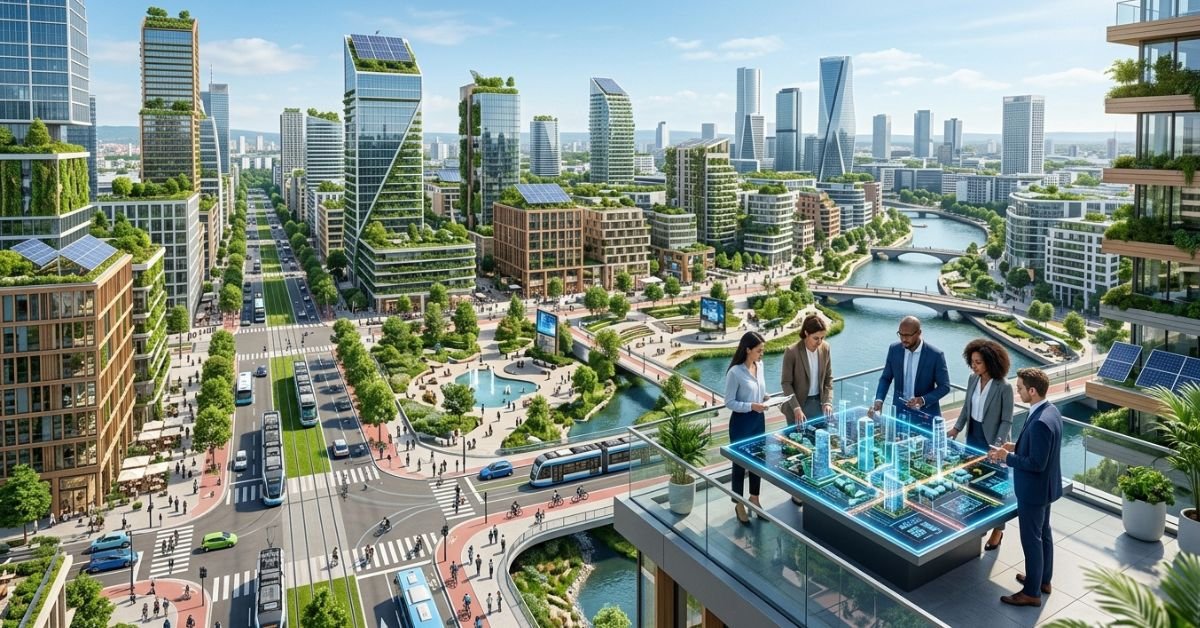
Cities are changing faster than at any point in modern history. Housing shortages, climate pressures, population growth, aging infrastructure, and rapid advances in technology are forcing governments and planners to rethink how urban environments are designed and managed.
That is why urban planning news has become essential reading not only for planners and policymakers but also for developers, investors, businesses, and residents who want to understand where cities are headed next.
The biggest stories in urban planning today go far beyond construction projects. They involve artificial intelligence, smart mobility networks, affordable housing strategies, climate adaptation programs, zoning reform, and entirely new approaches to creating healthier and more resilient communities.
Why Urban Planning Matters More Than Ever
Urban planning influences nearly every aspect of daily life.
It affects:
- Housing affordability
- Transportation access
- Economic development
- Public health
- Environmental sustainability
- Community safety
- Infrastructure resilience
According to the United Nations, nearly 70% of the world’s population is expected to live in urban areas by 2050. [Source: UN-Habitat]
That growth places enormous pressure on city governments to create urban environments that are both efficient and livable.
The Biggest Urban Planning News Trends in 2026
The Rise of the 15-Minute City
One of the most discussed planning concepts today is the 15-minute city.
The idea is simple:
Residents should be able to access most daily necessities within a 15-minute walk or bike ride.
This approach focuses on:
- Mixed-use development
- Local retail access
- Reduced car dependency
- Improved walkability
- Healthier communities
Cities including Paris, Melbourne, and Barcelona continue expanding planning initiatives based on this model.
Why It Matters
The 15-minute city can reduce traffic congestion, lower emissions, and improve quality of life while supporting local businesses.
Affordable Housing Becomes a Global Priority
Housing affordability remains one of the most urgent urban challenges.
Major cities worldwide continue struggling with:
- Rising rents
- Housing shortages
- Population growth
- Construction cost inflation
Urban planners are increasingly adopting:
- Inclusionary zoning
- Density bonuses
- Transit-oriented housing
- Mixed-income developments
- Adaptive reuse projects
These strategies aim to increase housing supply while preserving community diversity.
Smart Cities Move From Vision to Reality
Smart city projects are no longer experimental.
Cities are actively deploying:
- IoT sensor networks
- Smart traffic systems
- AI-driven planning tools
- Connected public infrastructure
- Real-time environmental monitoring
Example Applications
- Dynamic traffic signal management
- Smart parking systems
- Predictive infrastructure maintenance
- Intelligent public transportation networks
The result is greater operational efficiency and improved service delivery.
Climate Resilience Takes Center Stage
Extreme weather events are reshaping planning priorities.
Flooding, heatwaves, droughts, and storms are forcing cities to rethink infrastructure design.
Key initiatives include:
- Green roofs
- Urban forests
- Permeable pavements
- Coastal protection systems
- Stormwater management projects
Climate resilience has evolved from a sustainability goal into a critical planning requirement.
Transit-Oriented Development Gains Momentum
Transit-Oriented Development (TOD) remains one of the most influential planning strategies worldwide.
TOD focuses on concentrating housing, employment, and services near public transportation hubs.
Benefits include:
- Reduced car dependency
- Increased transit ridership
- Lower emissions
- Stronger local economies
- More efficient land use
Many cities are integrating TOD principles into long-term growth plans.
Smart Cities vs Traditional Cities
| Feature | Traditional City Model | Smart City Model |
|---|---|---|
| Traffic Management | Reactive | Data-Driven |
| Infrastructure Monitoring | Manual | Real-Time Sensors |
| Energy Use | Fixed Systems | Adaptive Systems |
| Public Services | Centralized | Digitally Connected |
| Planning Decisions | Historical Data | Predictive Analytics |
| Citizen Engagement | Limited | Digital Participation |
Artificial Intelligence Is Transforming Urban Planning
AI has emerged as one of the most significant developments in city planning.
Urban planners now use AI to:
- Forecast population growth
- Model transportation demand
- Optimize land use
- Simulate development scenarios
- Analyze environmental impacts
Digital twins have become especially valuable.
A digital twin is a virtual model of a city that allows planners to test projects before construction begins.
This technology helps reduce risk and improve decision-making.
Major Infrastructure Investments Shaping Cities
Governments worldwide are investing heavily in:
Transportation
- High-speed rail
- Metro expansion
- Bus rapid transit
- Bicycle infrastructure
Utilities
- Renewable energy grids
- Water management systems
- Smart energy networks
Public Spaces
- Parks
- Waterfront redevelopment
- Community gathering spaces
Infrastructure spending remains one of the strongest indicators of future urban growth patterns.
Myth vs Fact
| Myth | Fact |
| Urban planning only affects large cities. | Planning impacts communities of every size. |
| Density always reduces quality of life. | Well-designed density often improves services and walkability. |
| Smart cities are only about technology. | Successful smart cities balance technology, people, and sustainability. |
| Public transit reduces economic growth. | Strong transit systems often increase economic productivity. |
| Climate adaptation is optional. | Climate resilience is now a core planning requirement. |
What Leading Cities Are Doing Differently
Singapore
Widely recognized for integrated transportation planning, smart infrastructure, and long-term urban strategy.
Copenhagen
A global leader in cycling infrastructure and sustainable mobility.
Amsterdam
Known for balancing density, public transit, and livability.
Dubai
Pushing forward with smart city technologies, AI integration, and digital government services.
Paris
Leading implementation of the 15-minute city model and pedestrian-focused urban transformation.
Expert Perspective: What Most Cities Still Get Wrong
From years of observing urban development projects and planning frameworks, one recurring issue stands out.
Many cities focus on individual projects rather than integrated systems.
A new transit line, housing development, or sustainability initiative can only achieve its full potential when connected to broader goals involving land use, mobility, housing, infrastructure, and economic development.
The cities achieving the strongest outcomes in 2026 are not necessarily spending the most money. They are aligning planning decisions across multiple sectors and maintaining long-term consistency.
That systems-based approach is becoming the defining characteristic of successful urban planning.
Frequently Asked Questions
What is the biggest urban planning trend in 2026?
The integration of smart city technologies, climate resilience planning, and mixed-use development is currently driving the most significant transformation across urban areas worldwide.
Why is affordable housing important in urban planning?
Affordable housing supports economic stability, workforce accessibility, social equity, and sustainable growth. Without sufficient housing supply, cities face increasing inequality and displacement pressures.
What is a smart city?
A smart city uses data, digital technology, sensors, and connected infrastructure to improve public services, transportation, sustainability, and overall quality of life.
How does climate change affect urban planning?
Climate risks influence infrastructure design, flood protection, heat mitigation, emergency preparedness, land use decisions, and long-term city development strategies.
What is transit-oriented development?
Transit-oriented development places housing, businesses, and public services near transportation hubs to create walkable communities and reduce reliance on private vehicles.
How is AI being used in urban planning?
AI helps planners analyze data, predict growth patterns, model transportation systems, optimize land use, and evaluate development scenarios before implementation.
CONCLUSION
The most important urban planning news stories are no longer just about buildings, roads, or zoning changes.
They are about how cities adapt to population growth, climate challenges, technological disruption, and changing expectations from residents.
The key entities shaping the future include smart cities, AI-driven planning, affordable housing, climate resilience, transit-oriented development, digital twins, sustainable infrastructure, and integrated mobility systems.
CLICK HERE FOR MORE BLOG POSTS

“In a world of instant takes and AI-generated noise, John Authers writes like a human. His words carry weight—not just from knowledge, but from care. Readers don’t come to him for headlines; they come for meaning. He doesn’t just explain what happened—he helps you understand why it matters. That’s what sets him apart.”